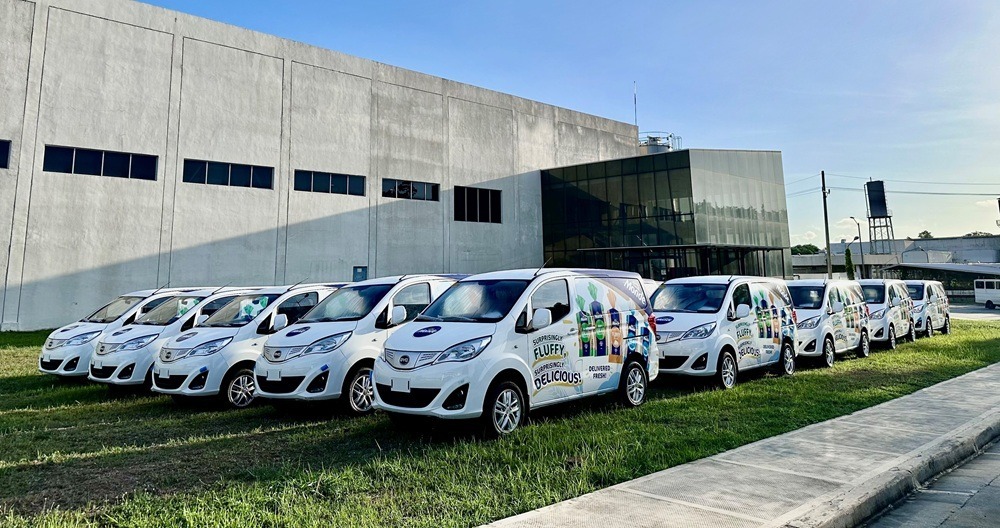
Monde Nissin has launched Monde Fresh Express, a program that integrates electric vehicles (EVs) into its bread distribution network while working with local entrepreneurs, or “salespreneurs,” to test new delivery models.
The initiative introduces electric vans for last-mile delivery in urban areas. According to Monde Nissin, the use of EVs aims to cut emissions, lower noise pollution, and support high-frequency, multi-stop servicing needed in dense communities.
The program is currently in pilot testing in Luzon, with additional entrepreneur-dealers scheduled to onboard this August.
By assigning specific territories to these salespreneurs, the system seeks to improve delivery frequency, maintain product freshness, and reduce bread spoilage — a recurring issue due to the short shelf life of baked goods.
Rizza Cajucom-Uy, Monde Nissin’s chief sustainability officer, noted that the technology-driven distribution model not only addresses food waste but also provides a framework for micro-entrepreneurs to operate more efficiently.
The electric vans used in Monde Fresh Express are supplied by a BYD dealer in northern Luzon. The company said these vehicles are designed for short-haul and high-frequency trips, making them suitable for bread distribution routes.
This development follows Monde Nissin’s broader environmental targets, including a 50% reduction in Scope 1 and 2 greenhouse gas intensity from manufacturing operations by 2025. Its bread manufacturing facilities are already powered by renewable energy.
The company expects to roll out full implementation of the Monde Fresh Express program later this year, combining EV technology with localized entrepreneurship to scale its distribution system.