The Office of the Secretary (OSEC) of the Department of Information and Communications Technology (DICT) will take the lion’s share of the agency’s proposed ₱18.9-billion budget for 2026, with ₱17.3 billion earmarked for core digital infrastructure, e-government, and cybersecurity programs.
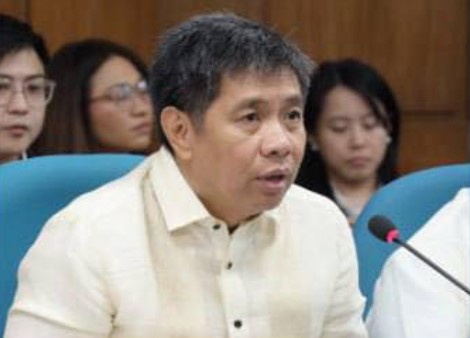
During the budget hearing before the House Committee on Appropriations on Sept. 11, DICT secretary Henry Aguda emphasized that the bulk of the allocation reflects the government’s push to strengthen the country’s digital backbone.
Of the OSEC’s ₱17.3 billion, around ₱10.9 billion is set aside for maintenance and other operating expenses (MOOE) to finance connectivity projects, cybersecurity initiatives, and digital governance efforts.
Another ₱5.3 billion will go to capital outlay for ICT infrastructure, while ₱1.02 billion is earmarked for personnel services.
“This allocation sustains both systems and people to deliver digital services nationwide,” Aguda said, underscoring that broadband expansion, cybersecurity readiness, and digital government platforms remain top priorities under the DICT’s four-pillar framework of Digital-First Economy, Inclusive Tech for All, Championing Cybersecurity and Data Privacy, and Transparency in Governance.
The remaining portion of the DICT’s proposed 2026 budget is distributed among its attached agencies: ₱1.08 billion for the National Telecommunications Commission (NTC), ₱835 million for the Cybercrime Investigation and Coordinating Center (CICC), and ₱389 million for the National Privacy Commission (NPC).
Lawmakers present at the hearing — including representatives Niko Raul Daza, Antonino Roman III, Rufus Rodriguez, and several others — expressed support for the agency’s digital agenda, particularly the continuation of flagship programs such as the National Broadband Program, Free Wi-Fi for All, and the eGovPH app.
Aguda also highlighted the DICT’s improving absorptive capacity, with a projected 97% utilization rate for 2025, compared to just 32% in 2022.
Aguda was joined by senior DICT officials and representatives of the NTC, NPC, and CICC in defending the budget proposal.