In the mid-1990s, the quiet town of Mulanay in Quezon province became the subject of the film “Mulanay: Sa Pusod ng Paraiso”, which portrayed the struggles of a rural community with limited access to modern services.
Nearly three decades later, Mulanay has changed in many ways. Today, it is working to expand opportunities for residents, including those living with disabilities.
One such effort is a partnership between the local government, the Municipal Social Welfare and Development Office (MSWD), ATRIEV (Adaptive Technology for Rehabilitation, Integration and Empowerment of the Visually Impaired), PLDT, and Smart.
The initiative offers training on entrepreneurship and the use of digital tools, with the goal of helping persons with disabilities explore business opportunities.
The program is also supported by the NORFIL Foundation and is part of PLDT Group’s Inclusion, Diversity, Equity, Advocacy through Technology (IDEATe) initiative.
“As a father to a child with autism, I understand the challenges that persons with disabilities face,” said Mulanay mayor Aristotle Aguirre.
“That is why we are working with like-minded organizations to provide them with digital skills and entrepreneurial opportunities, so they can start or grow their own businesses.”
More than 20 residents with disabilities and their caregivers joined the eight-day Digital Business Basics Training (DBBT).
The sessions were divided into two modules. The first introduced participants to the fundamentals of running a business — branding, identifying markets, sourcing funds, and managing costs.
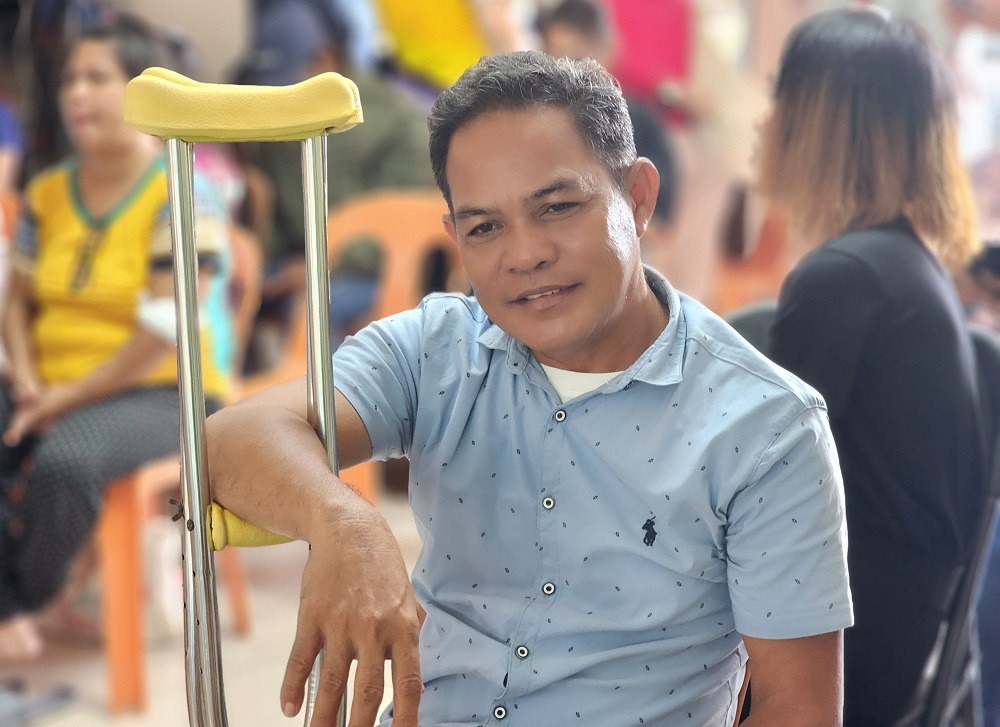
For Sergio Macarang, 55, the lessons were timely. Once a construction foreman, his work slowed after an accident limited his mobility. He began selling medical masks and wipes, but struggled with sustaining the business.
“You need careful planning,” he said. “You have to learn proper costing, so you don’t end up selling your products at a loss.”
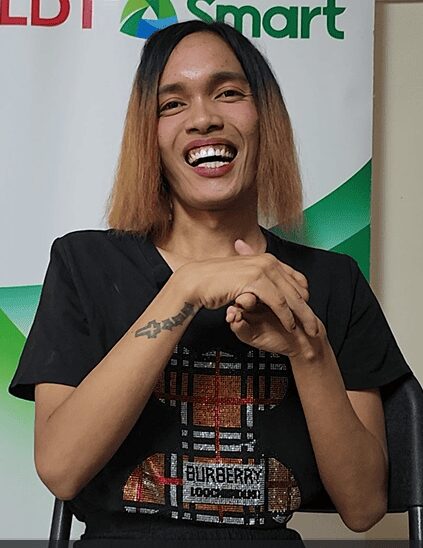
Jerald Regencia, 26, a reseller of beauty products, echoed this. Born with physical impairments, he admitted he felt rusty with numbers.
“I brushed up on my Math skills to ensure that I am earning from my business,” he said. “You have to factor in all your expenses.”
The second module introduced participants to social media and online platforms. They learned how to set up accounts, design logos, and create content to promote their products. For Macarang, this opened a new way of reaching customers.
“My business is no longer limited to foot traffic on our street,” he said. “Through Facebook and other online platforms, I can now reach more people.”
Regencia also found relief in online selling. “Before, I had to personally visit my customers to show them new items or ask if they wanted to order again,” he explained. “Now, I can just promote my products online and connect with them through messaging apps.”
The training gave participants practical skills they can continue to build on, with the hope that these tools will help them sustain their businesses in the long run.
“At PLDT and Smart, we believe that technology is a powerful equalizer,” said Stephanie Orlino, assistant vice president and head of stakeholder engagement at PLDT-Smart.
“Through programs like IDEATe, we are opening doors for persons with disabilities to participate in the digital economy.”
In Mulanay, the work of empowerment continues. For its residents with disabilities, learning to navigate both business and digital spaces has become part of shaping a new chapter in their community story.