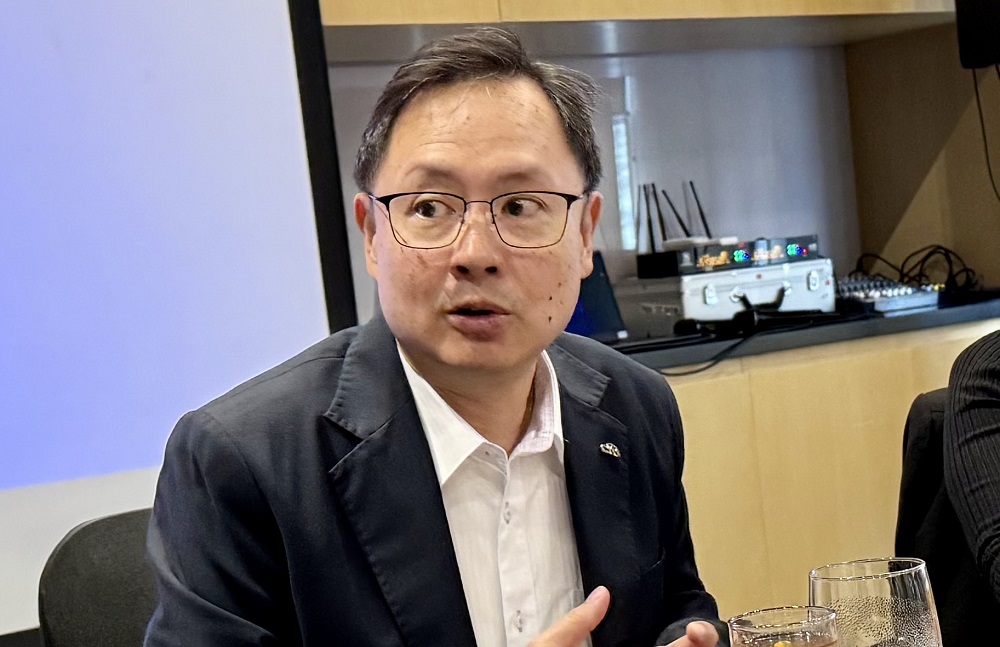
Citi Philippines is doubling down on artificial intelligence as a practical, day-to-day productivity tool — one it believes can ease workloads, sharpen decision-making, and improve work-life balance, according to Citi Philippines CEO and banking head Paul Favila.
Rather than treating AI as a disruptive threat, Favila said the bank is taking a measured and pragmatic approach, positioning the technology as a modern upgrade to how work gets done.
“AI, in its current shape and form, is actually heaven-sent,” Favila said in an interview during a year-end event in BGC Taguig City. “It allows you to get resources that are otherwise very difficult to secure. Think of it as having an intern — without requesting a headcount.”
Favila acknowledged that fear often accompanies new technology, particularly concerns about job displacement. Citi’s experience, however, suggests the opposite: AI is increasingly intertwined with daily work, handling repetitive and time-consuming tasks so employees can focus on higher-value responsibilities.
He likened AI’s role to the shift from manual typewriters to word processors — tools that didn’t replace people, but made them more productive.
“The mindset has changed,” he said. “It’s no longer about wishing for a perfect system. It’s about asking: how do I get AI to do what I thought a system could do for me?”
That shift is now visible in how Citi staff handle administrative work, policy reviews, and compliance tasks. Employees can upload lengthy policies and ask AI to generate checklists aligned with regulatory requirements — work that once took hours and now takes minutes.
Favila said legal teams, in particular, have seen immediate gains. AI tools can compare long Bangko Sentral ng Pilipinas (BSP) regulations, flag what has changed from previous issuances, and condense dense documents for easier review.
“Even our lawyers are so happy,” he said. “They put it through the machine first, then counter-check. It cuts down a lot of time and effort in very tedious work.”
Beyond productivity, Favila said AI is beginning to ease data overload by condensing large datasets into formats employees actually need — allowing bankers to focus on insights that matter.
The goal, he added, is simple: let AI handle the work people dislike, and give employees more time for higher-order thinking and better work-life balance.
“I’m hoping next year I’ll hear less of people saying they stayed up until midnight to finish something,” Favila said. “Instead, they’ll say AI took care of the dirty work.”
Citi’s push gained momentum on November 5, 2025, when Citi Philippines formally highlighted the rollout of advanced generative AI tools to local staff as part of a broader global initiative.
The tools were introduced to employees in the Philippines earlier, in September, as Citi began scaling their use across functions.
The Citi AI suite includes Citi Stylus Workspaces, which helps employees summarize, compare, and extract insights from documents; Citi Assist, a desktop assistant that helps staff navigate Citi’s internal systems; and Citi Squad, a developer tool that automates non-coding tasks such as code reviews and document generation.
Globally, more than 180,000 Citi employees across 83 jurisdictions are already using these tools to summarize large documents, draft presentations and Q&As, and automate repetitive administrative work.
Favila stressed that Citi’s AI deployment is governed by strict controls. The bank uses enterprise-grade AI within Citi’s secured environment — not public consumer platforms — ensuring data protection and accountability.
“We cannot blame the machine if it makes a mistake,” he said. “Governance around AI is top of the house.”
Citi is preparing to expand further into larger language models in the coming months, alongside training programs to help employees become comfortable using AI — particularly learning how to prompt it effectively.
“Think of the machine as an intern,” Favila said. “Extremely smart, but with no context. If you give clear instructions, limits, and objectives, it can do amazing things.”
While generative AI is new to many employees, Citi has long used AI in areas such as fraud detection. Its systems analyze payment behavior across global markets, flagging anomalies based on patterns learned worldwide — not just in the Philippines.
“Our global scale is a big advantage,” Favila said, noting that fraudsters move quickly and AI helps banks stay ahead.
Looking forward, Favila sees AI reshaping how banks build systems and manage complexity, potentially reducing development time and the need for thousands of disconnected platforms.
“It’s not dystopian, Terminator-type AI,” he said. “It’s more like the PC or the mobile phone — something that quietly but fundamentally changes how we work.”