Billed as the world’s most powerful tech event, CES 2026 opened on Tuesday, Jan. 6, with thousands of organizations showcasing their latest technologies. Among them, semiconductor behemoth AMD grabbed attention with its latest launches for artificial intelligence (AI) and gaming devices.
During her keynote address at the event, AMD chair and CEO Dr. Lisa Su outlined the company’s advancements on display at CES. The stars of AMD’s exhibit revolved around new releases for AI PCs, embedded AI, and gaming computers, namely:
- New AMD Ryzen AI 400 processors
- Latest AMD Ryzen AI Max+ Series processors
- Expansions to AMD’s ROCm software stack
- New AMD Ryzen AI Embedded Processor Series
- Latest AMD Ryzen 9000 Series processor
- FSR Redstone updates
- Boosting accessibility for AI PCs
AI PCs are one of AMD’s current primary focus areas, with the company betting that built-in AI at the edge will fundamentally augment the value of personal computers.
AMD reported that consumers are already seeing the value of AI PCs, as reflected in the company’s growth in the space from 2024 to 2025. AMD’s AI PC processors expanded to over 250 AI PC platforms last year — a growth rate of 2.5 times year over year.
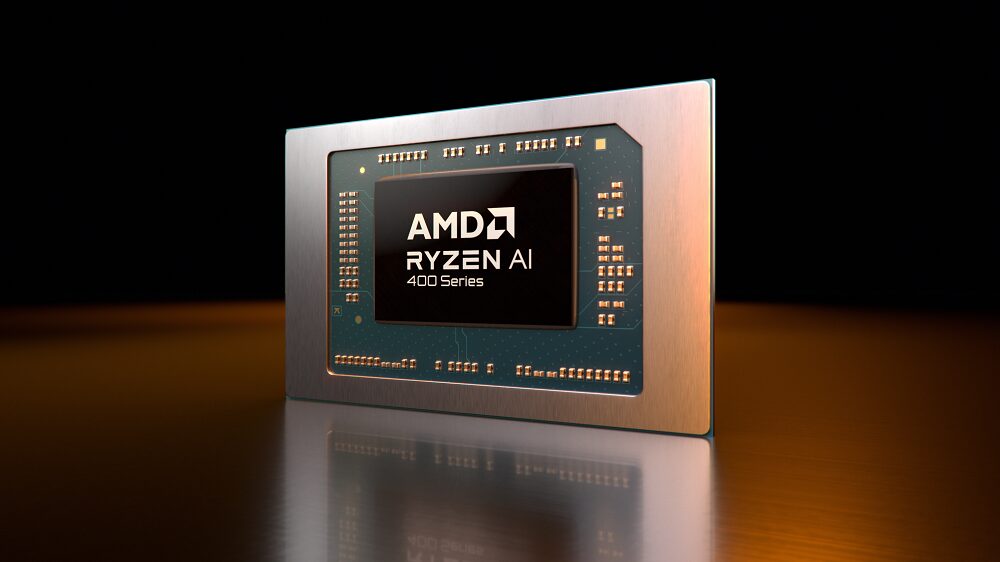
At this year’s CES, AMD launched its latest Ryzen processor for AI PCs, the Ryzen AI 400 Series, built specifically to power Copilot+ laptops and desktops for mainstream users. Whether users are creators, gamers, or professionals, the launch of this series aims to make AI PCs accessible to a broader audience.
The entire series is equipped with powerful Zen 5 CPU cores and promises higher performance, with up to 5.2 GHz CPU and 3.1 GHz GPU boost clocks, as well as higher memory speeds compared to previous generations.
Additionally, with up to 60 TOPs (trillions of operations per second) enabled by AMD XDNA NPUs — 1.2 times more than the previous Ryzen generation — the series aims to deliver faster Copilot+ and other AI experiences, while supporting multi-day battery life.
Devices equipped with the Ryzen AI 400 Series will be shipped by manufacturers including HP, Acer, Asus, Dell, Lenovo, MSI, and NEC starting in Q1 2026.
AMD is not limiting itself to serving casual, everyday AI users. The company is also targeting consumers who require significantly more compute.
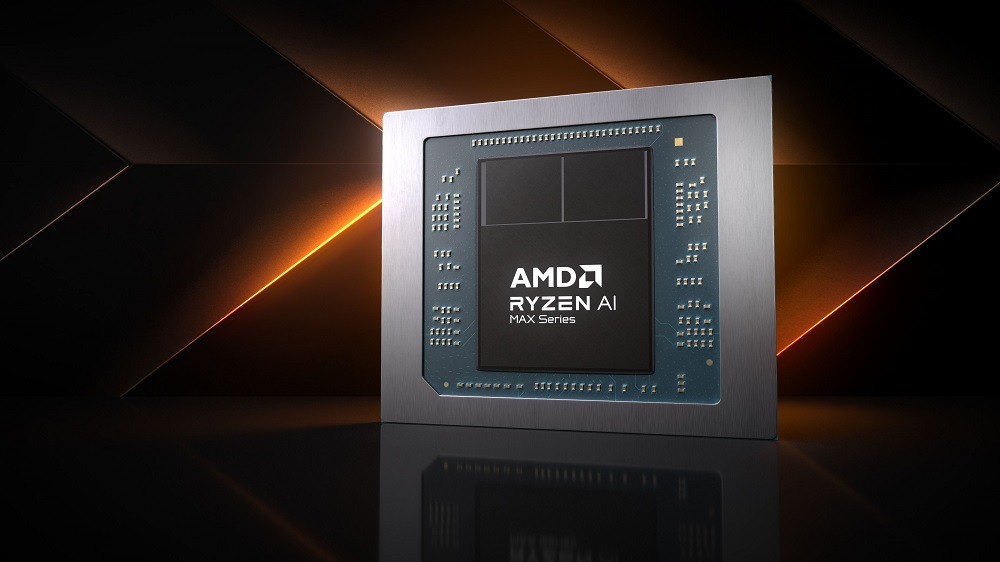
For AI developers, intensive creators such as video editors and 3D modelers, and dedicated gamers seeking full immersion, AMD designed the Ryzen AI Max+ processor series.
AMD says the Ryzen AI Max+ series can run demanding AI, creator, and gaming workloads locally and from virtually anywhere. The processor series can pack AMD’s maximum core count, with up to 16 Zen 5 CPU cores and 32 threads.
It is also capable of up to 60 TFLOPS (trillion floating-point operations per second) and supports up to 128 GB of unified memory to run compute-intensive AI applications.
To help manufacturers reach more AI developers, creators, and gamers, AMD announced during CES 2026 the addition of two new products to the AI Max series: the Ryzen AI Max+ 392 and Ryzen AI Max+ 388.
These two mid-range additions can support up to 40 compute units while retaining the series’ maximum TFLOPS capabilities.
Rounding out its AI PC lineup, AMD announced key updates to ROCm, its open software stack that provides tools to program AMD hardware from low-level kernels to high-level end-user applications.
While ROCm accelerates various workloads, AMD highlighted its effectiveness in enhancing generative AI performance. The company said the current version, ROCm 7.1, shows performance improvements of up to five times in AI text-to-image and text-to-video applications compared to ROCm 6.4, across both Ryzen AI Max processors and Radeon AI Pro GPUs.
At CES 2026, AMD announced that ROCm 7.2 would launch in January 2026 for Ryzen and Radeon processors on both Windows and Linux. Support will also be added to ensure that the latest Ryzen AI 400 processors are compatible with ROCm 7.2.
In addition, a new easy-install option via AMD Software: Adrenalin Edition 26.1.1 will also be available in January 2026.
While AI PCs often steal the spotlight, demand for AI in other technologies is mounting. From vehicles and robotics to retail kiosks, digitized factories, and autonomous systems, AI is increasingly being embedded in edge devices.
AMD’s embedded processor families aim to contribute to the expansion of these edge AI applications. Equipped with the same CPU, GPU, and NPUs as AMD’s PC and desktop offerings, these embedded processors are engineered to deliver performance while withstanding harsh, constrained environments over extended periods.
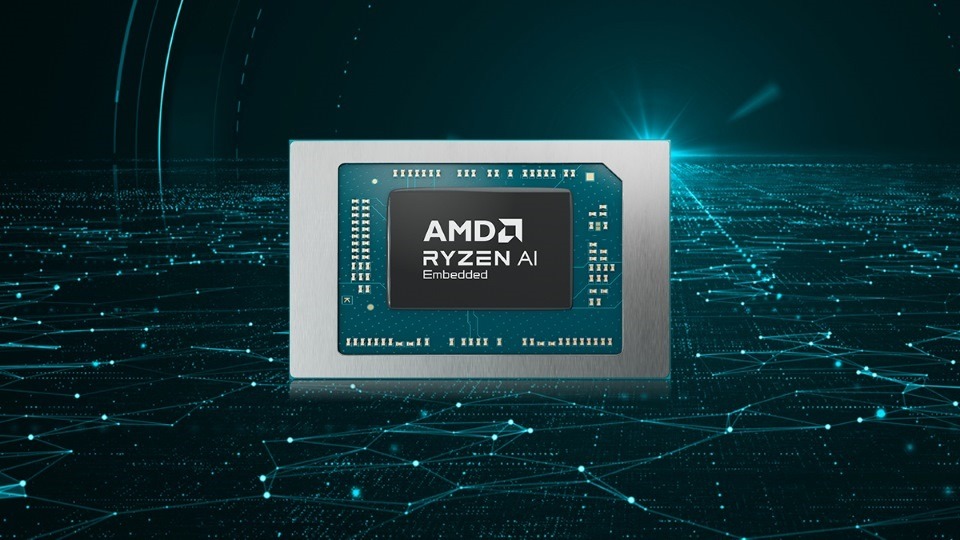
At CES 2026, AMD unveiled a new series in its Ryzen Embedded AI processor family: the AMD Ryzen Embedded P100 Series.
The P100 Series is designed to power AI-driven, immersive experiences — particularly digital cockpits for automotive applications and personalized, intelligent interfaces. It supports these capabilities with up to six AMD Zen 5 cores and up to 50 AI TOPs powered by AMD XDNA 2.
The series also comes with AMD’s 10-year longevity commitment and support for 24/7 operation, critical for industrial and automotive deployments.
The P100 variant optimized for immersive experiences launched at CES 2026. Later in H1 2026, a version designed for industrial automation, featuring up to 12 cores, will be released.
AMD also teased the upcoming Ryzen Embedded X100 Series, slated for release in the second half of 2026. This next-generation series will support up to 16 cores and is designed for more demanding workloads such as autonomous AI systems and physical AI.
Leveling up gaming
AI is not the only area where AMD continues to innovate. Alongside its Radeon GPU lineup, AMD’s Ryzen CPUs have long been a staple in gaming hardware.
At CES 2026, AMD announced the latest addition to the Ryzen 9000 lineup: the Ryzen 7 9850X3D. Marketed under the tagline “the world’s fastest gaming processor just got faster,” the chip delivers an average 27 percent performance uplift over competitors across more than 35 games.
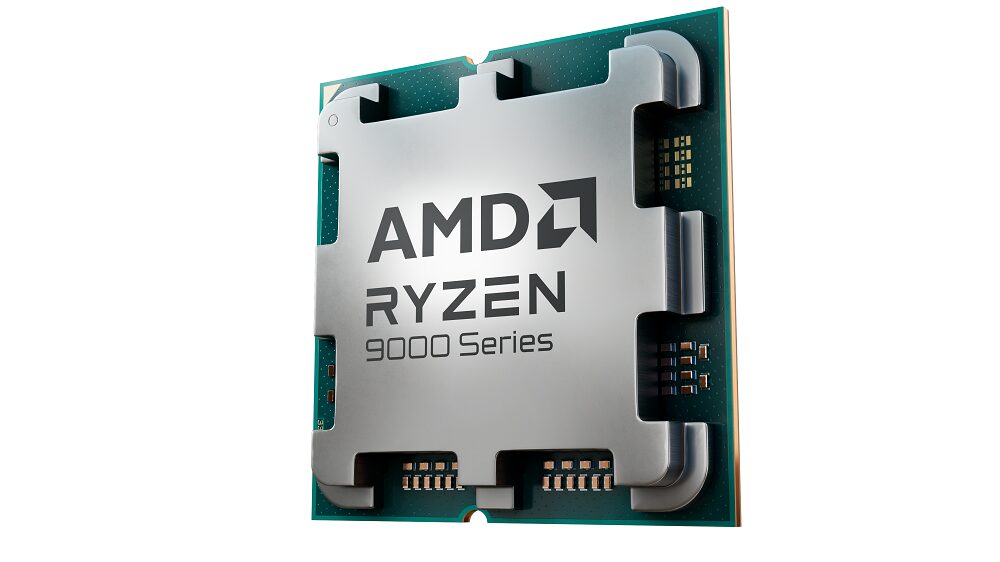
The processor features boost clocks of up to 5.6 GHz — 400 MHz higher than the previous generation. Combined with AMD’s Zen 5 architecture and a 104 MB cache, it aims to deliver top-tier gaming performance.
The Ryzen 7 9850X3D will be available in devices starting Q1 2026, with one of the most anticipated implementations expected in the next iteration of Dell’s Alienware Area-51 lineup.
Beyond hardware, AMD is enhancing gaming experiences through FSR Redstone, its machine learning-powered graphics technology designed to improve realism without sacrificing performance or smooth gameplay.
AMD demonstrated FSR Redstone using a Call of Duty: Black Ops 7 playthrough. With Frame Generation and Ray Generation enabled on AMD Radeon hardware, the demo showed a 4.7x performance uplift compared to standard 4K rendering, while maintaining ray-traced realism.
Several FSR Redstone features became available in December, including AMD FSR Radiance Caching to accelerate ray tracing, AMD FSR Ray Regeneration to restore ray-traced details, and AMD FSR Frame Generation, which inserts AI-generated frames for smoother gameplay.
As announced at CES 2026, one or more FSR Redstone features are now available in over 200 game titles — surpassing AMD’s original target of 100 games by the end of 2025.
Summing up AMD’s innovations, Dr. Su said: “At AMD, our mission is clear: deliver the computing power and AI innovation the world needs to tackle its most complex problems. From the largest supercomputers to the smallest edge devices, we are building the technologies that help advance what’s possible.”