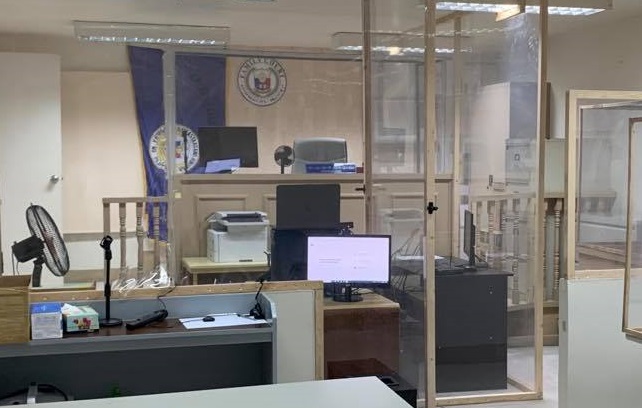
The Supreme Court (SC) has approved the Amendments to the Guidelines on the Conduct of Videoconferencing, further strengthening the rules on virtual court hearings and remote appearances of parties and witnesses.
In a Resolution dated November 4, 2025, in A.M. No. 24-11-02-SC, the SC introduced key reforms to expand access to videoconferencing, particularly for digitally disadvantaged individuals, and to enable wider participation by individuals abroad.
The Amended Guidelines apply to videoconferencing before first- and second-level courts, the Court of Appeals, the Sandiganbayan, and the Court of Tax Appeals.
It covers all actions and proceedings at any stage, including mediation, consultation, deliberation, and the promulgation of decisions and resolutions, when conducted through videoconference.
Courts are now directed to ensure access to videoconferencing for individuals who are digitally disadvantaged, including those in geographically or geopolitically marginalized areas. This may include deploying court personnel to provide temporary or mobile Internet access.
Courts may also establish designated “access points” within judicial regions where litigants, witnesses, and other participants can use computers and videoconferencing equipment under court supervision.
The Amended Guidelines expanded the list of authorized overseas venues for videoconferencing. In addition to Philippine consulates and embassies, videoconferencing abroad may now be conducted in Philippine government offices overseas, venues allowed under applicable bilateral or multilateral agreements, or other locations authorized by the SC.
Overseas litigants, witnesses, and counsel must file a motion before the court where the case is pending, subject to the Amended Guidelines, applicable laws, procedures, and any treaty-based restrictions. Courts, however, cannot compel any litigant or witness to testify via videoconference from abroad.
Justices and judges may now preside over videoconference hearings from remote locations within the country for justifiable reasons.
Judges must provide prior written notice to the Office of the Regional Court Manager when presiding within their judicial region or seek permission from the Office of the Court Administrator (OCA) when presiding outside their judicial region.
Videoconferencing may be initiated in civil and criminal cases upon motion by the parties or through their counsel, whether individually or jointly.
It is the preferred mode of hearing cases involving persons deprived of liberty and children in conflict with the law at all stages of the proceedings. It is also preferred for arraignment, bail hearings, and hearings involving minor incidents.
For child witnesses and victims of gender-based violence, courts may order that the accused be hidden from their view during videoconferencing.
Courts may also, on their own, order the conduct of proceedings through videoconferencing at any or all stages to achieve a just, speedy, and inexpensive disposition of cases.
Videoconferencing must be conducted using the authorized platform, except in small claims cases where courts may permit the use of other platforms known or available to the parties.
The constitutional right of an accused to confront witnesses is deemed satisfied through videoconferencing if the demeanor of the witness can be clearly observed by the court, the accused, and counsel; cross-examination is done effectively; and the accused executes an informed written waiver.
An accused may still invoke their right to face the witness in person at any stage of the proceedings if it can be shown that the waiver was not made freely, voluntarily, and knowingly.
Courts must ensure the confidentiality of any personal and sensitive information obtained during videoconferencing, in accordance with applicable data privacy laws.
All videoconference proceedings must be recorded, except during Court-Annexed Mediation or Judicial Dispute Resolution, which are prohibited from being recorded. In case of appeal, videoconference recordings will form part of the official records.
The amendments strengthen accountability measures. Intentional disruption of proceedings, coaching of witnesses, or the presentation of falsified digital evidence are now expressly considered gross misconduct and direct contempt of court, punishable under existing laws and rules.
The Amended Guidelines was recommended by the Committee on Virtual Hearings and Electronic Testimony, chaired by SC associate justice Jose Midas P. Marquez.
It will take effect on February 16, 2026, after posting on the SC and OCA websites.
The amendments build on earlier SC issuances that allowed electronic testimony under the Rules on Electronic Evidence, live-link testimony for child witnesses, pilot videoconferencing for detained persons in 2019, and the institutionalization of videoconferencing during the COVID-19 pandemic in 2020.