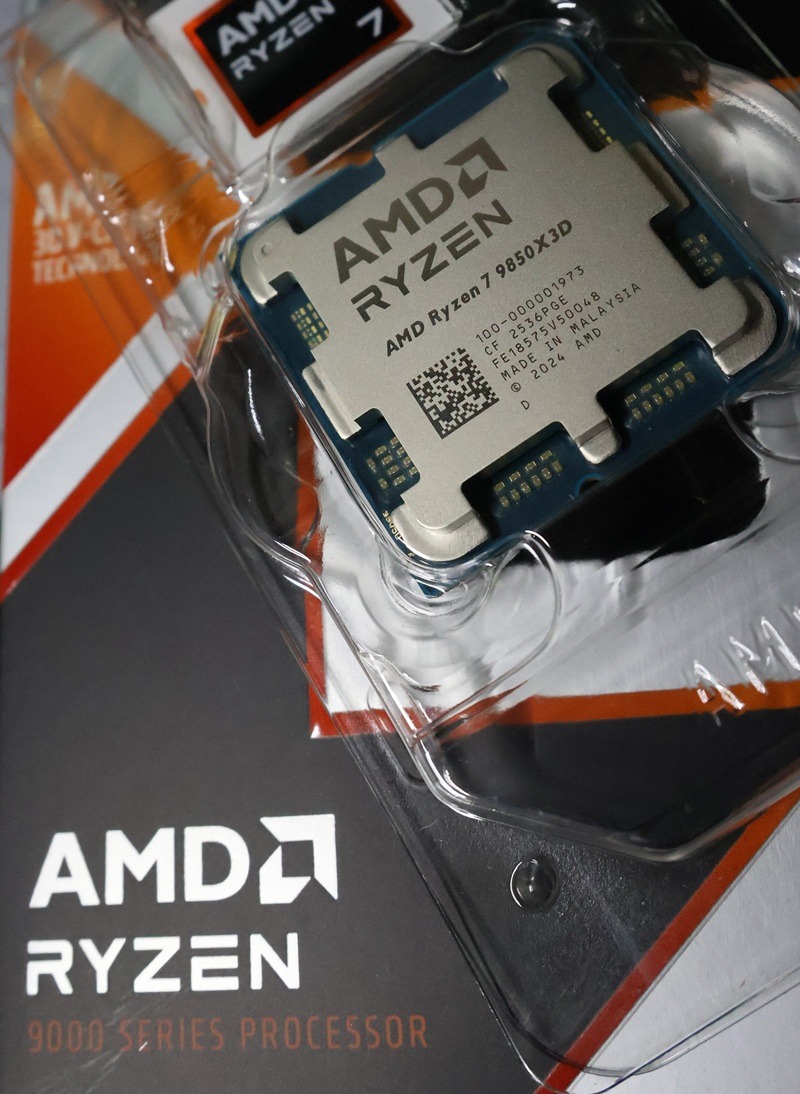
Chipmaker AMD has launched the latest addition to its Ryzen 9000 series gaming processors — the AMD Ryzen 7 9850X3D. Marketed as the fastest gaming processor in AMD’s roster, the 9850X3D aims to captivate gamers and tech enthusiasts alike, with claims of notable performance improvements over its predecessor, the Ryzen 9800X3D.
Architecture
On paper, the Ryzen 7 9850X3D appears to mirror the 9800X3D closely, featuring eight cores and sixteen threads, as well as retaining the same base clock speed and cache capacities.
Both models employ the cutting-edge Zen 5 core architecture and utilize the enhanced 2nd Gen AMD 3D V-Cache technology, which emphasizes superior thermal management and performance.
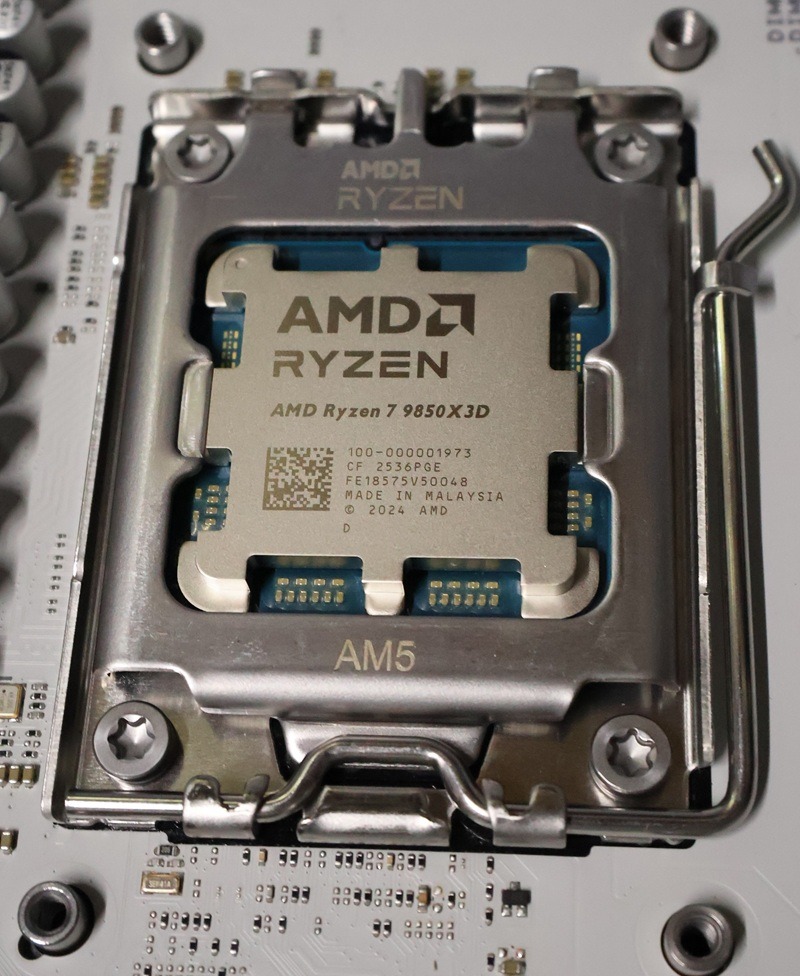
The most significant advancement seen in the new processor is its increased max boost clock speed, which jumps from 5.2GHz to 5.6GHz. This increase not only enhances the performance capabilities of the processor but also allows for full overclocking while adhering to the same clock and voltage limits as other Ryzen 9000 series models.
Benchmark Performance
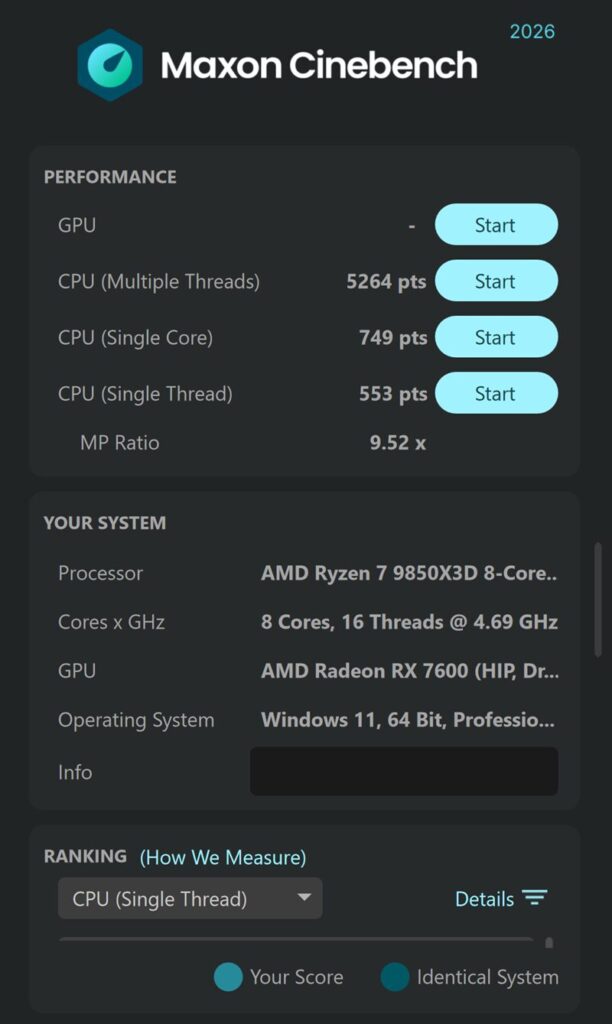
In testing conducted by Newsbytes.PH, the 9850X3D demonstrated strong results across a variety of benchmarks, showcasing its capabilities. In Cinebench 2026, the processor achieved a CPU Multiple Threads score of 5,264, with a Single Core score reaching 749 and a Single Thread score of 553.
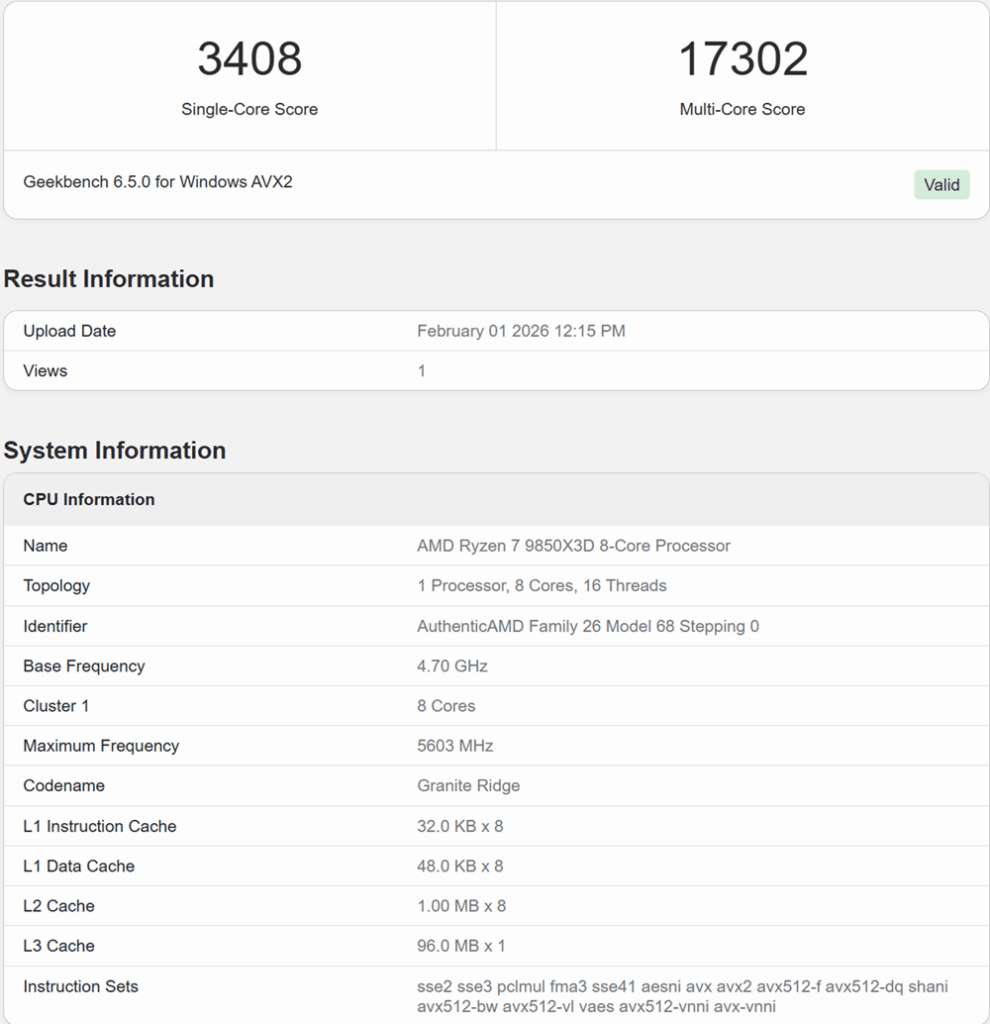
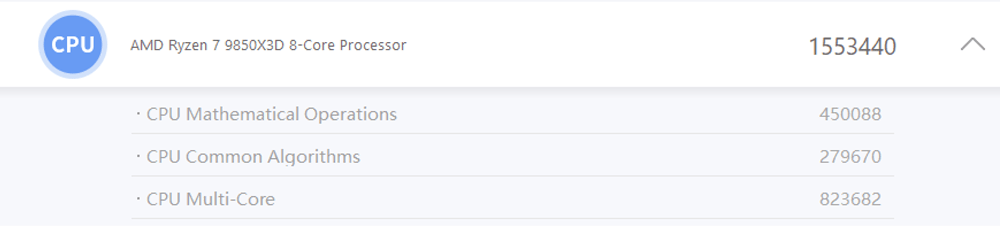
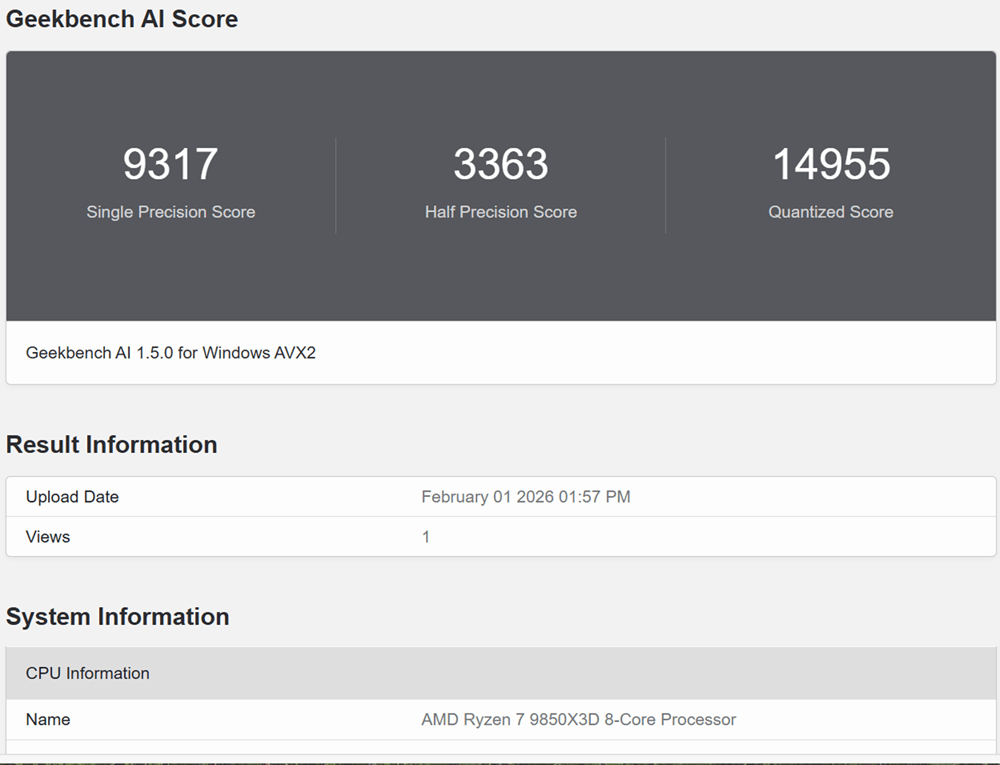
Similarly, in Geekbench 6, the processor obtained a Multi-Core Score of 17,302 and a Single-Core Score of 3,408. Additionally, the Antutu Benchmark awarded it a score of 1,553,440, while its AI processing capabilities were highlighted with a Geekbench AI quantized score of 14,955.
Gaming Performance
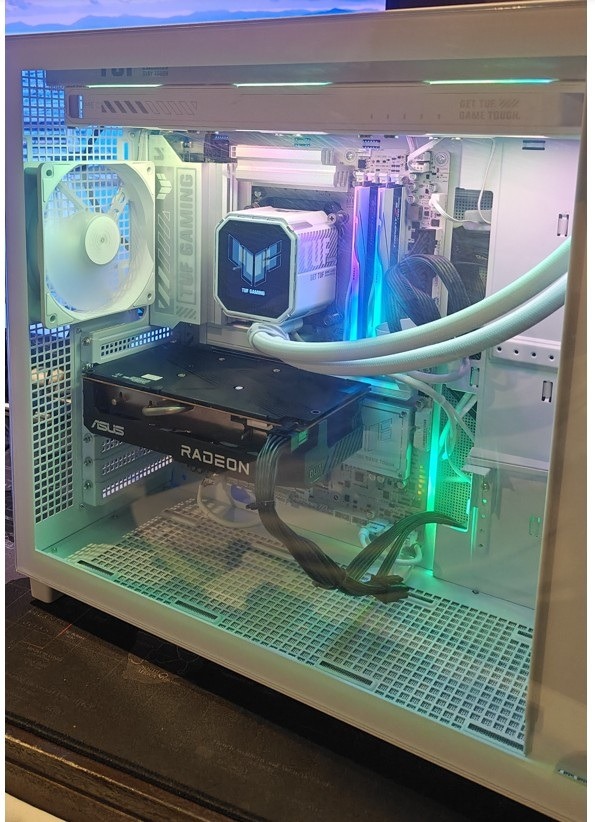
With gaming as a primary focus, the 9850X3D was subjected to tests using a setup that included an ASUS TUF Gaming X870-Pro WIFI7 W NEO motherboard, an ASUS AMD Radeon RX7600 graphics card, 32GB of DDR5 RAM, and ASUS TUF Gaming LC III 360 AIO Liquid Cooler.
AMD also provided its own set of benchmarks from a different configuration featuring a Gigabyte Aorus X870E and a Radeon 9070XT for comparison. AMD benchmarks were also duplicated using a Ryzen 7 9800X3D for comparison.
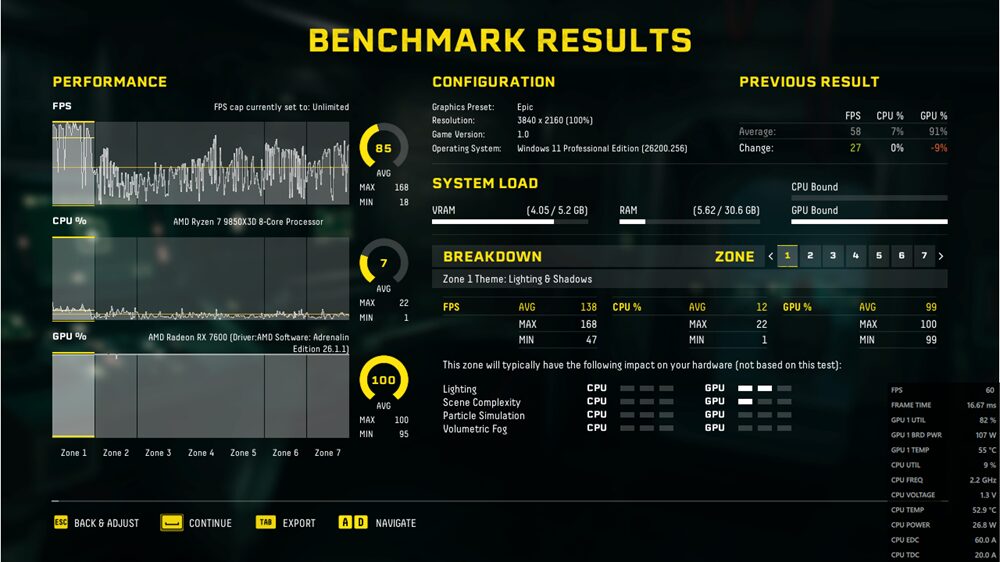
In the game “Returnal,” the 9850X3D achieved an average frame rate of 27 frames per second (FPS) at 4K resolution and “Epic” graphics settings. The CPU generated an average of 12 FPS to the overall FPS and reached a maximum of 22 FPS. While the game played smoothly, some users reported grainy visuals.

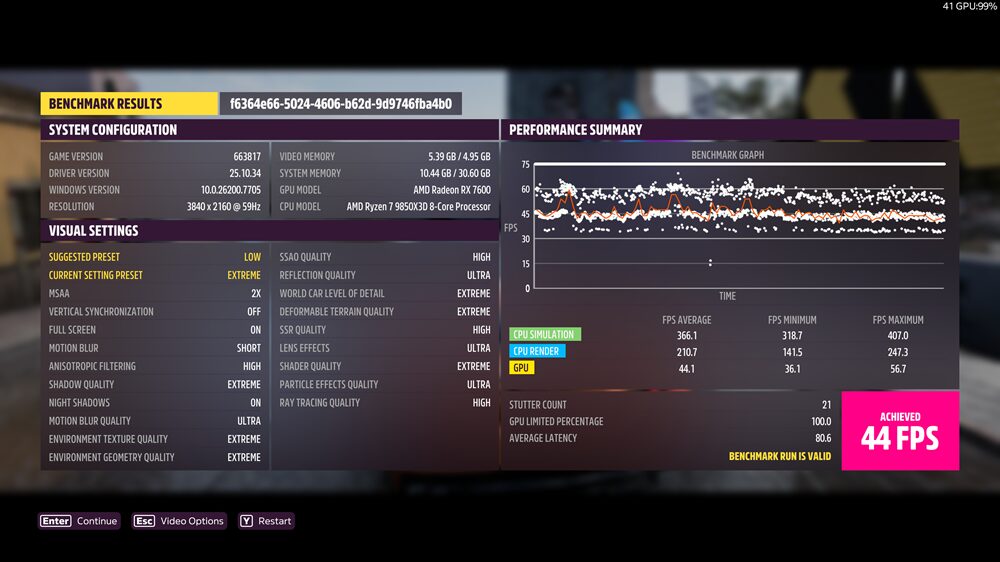
In contrast, for resource-intensive games like “Forza Horizon 5,” the processor reached a CPU Simulation average FPS of 366 under 4K and “Extreme” graphic settings, and the CPU Render reached 210.7 FPSS. The overall average, including the GPU’s performance, reached 44 FPS.
AMD’s benchmarks noted slightly lower performance than the 9800X3D; the game attained 364.4 FPS compared to the predecessor’s 371.2 FPS at 1080p resolution.

“Shadow of the Tomb Raider” yielded similar results, with the 9800X3D achieving 358.2 FPS, while the 9850X3D managed 356.5 FPS — both on 1080p and “High” settings.
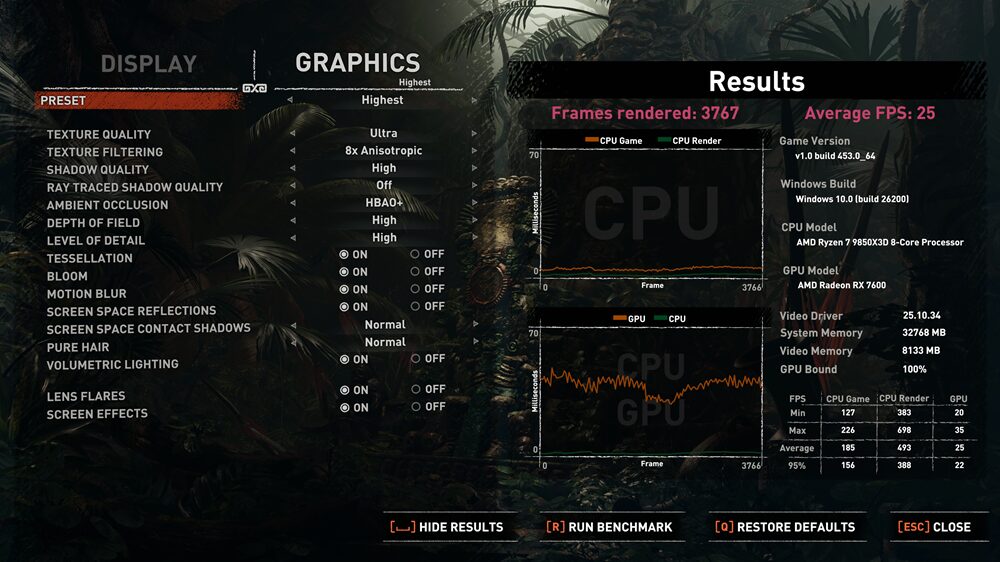
Testing at 4K resolution and the “Highest” graphics settings resulted in an overall average of 25 FPS, with the CPU Simulation reaching an average of 185 FPS, and the CPU render reaching 493 FPS.

Key Specifications
- Cores: 8
- Threads: 16
- Socket Platform: AM5
- Architecture: Zen 5
- Max Boost: 5.6GHz
- Base Clock: 4.7GHz
- L2 Cache: 8x1MB
- L3 Cache: 96MB
- Thermal Design Power (TDP): 120W
- Default Package Power Tracking (PPT): 162W
- Max Electrical Design Current (EDC): 180A
- Max Thermal Design Current (TDC): 120A
- Maximum Junction Temperature (TJMax): 95°C
- Typical Loaded Temperatures: 70-90°C
- Max Memory Speed (Non-OC): DDR5-5600 (2x16GB)
Verdict
Despite the apparent similarities between the AMD Ryzen 7 9850X3D and the 9800X3D, the new processor has been designed with overclocking at its core. While testing results may show marginally lower FPS rates, these can be addressed through overclocking techniques.
With a price point of $499, around P35,000 SRP in the Philippines, the Ryzen 9850X3D presents itself as an appealing option for gamers and power users alike, delivering performance similar to that of the 9800X3D while incorporating enhanced overclocking potential. The processor excels not only in gaming but also in office tasks, allowing for a versatile computing experience.
As users contemplate whether to upgrade from the 9800X3D, the decision largely hinges on individual requirements. While it may not warrant an upgrade for current 9800X3D owners, those interested in building a custom gaming rig designed to exploit peak capabilities will find the AMD Ryzen 7 9850X3D to be a compelling choice in the high-performance market.