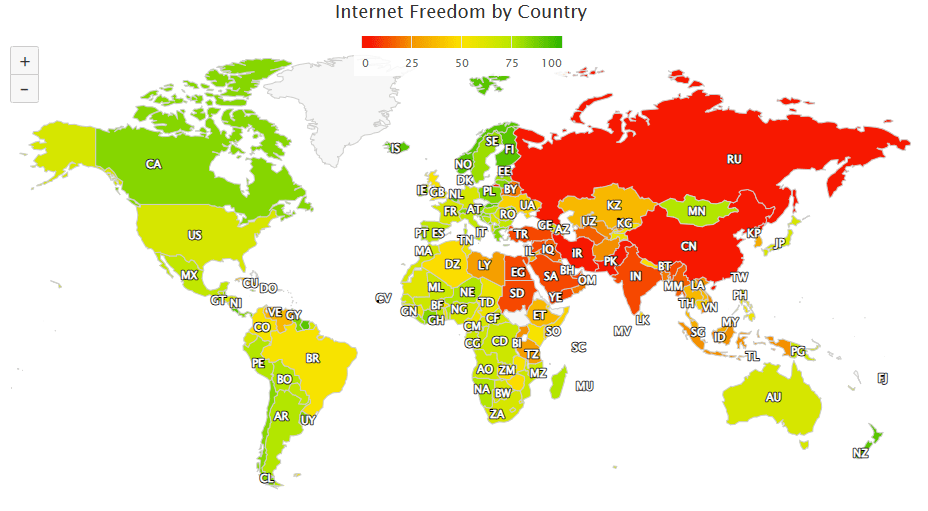
The Philippines ranked 109th out of 171 countries in a global Internet censorship index released by Cloudwards, placing it in the middle of the pack in terms of online freedom.
The study measured Internet restrictions across five indicators: access to torrent platforms, adult content, social media, diverse political and religious information, and the legality of virtual private networks (VPNs).
The country’s position suggests a mix of open access and existing limitations, particularly when compared with the world’s least restrictive environments. Eleven countries topped the index with scores of 92 out of 100, indicating minimal controls across all categories.
The ranking comes amid growing criticism of the Department of Information and Communications Technology (DICT), which has recently been labeled as the “Department of Internet Censorship and Takedowns” by former DICT undersecretary Jeffrey Ian Dy.
The remark follows a series of enforcement actions by the agency, including orders to take down certain websites and the blocking of platforms such as Groq and Telegram, raising concerns among digital rights advocates over potential overreach and the implications for online freedom.
Globally, the gap remains wide. North Korea ranked last with a score of 0, while Russia, Pakistan, Iran, and China scored just 4, reflecting heavy state control over online access.
Several advanced economies also posted moderate scores. The United States scored 64, the United Kingdom 52, and South Korea 32.
“Countries were assessed across five key areas — torrent access, adult content, social media, political and religious information, and VPN legality — to provide a comprehensive picture of global Internet censorship,” the report said.
The Philippines’ mid-tier ranking highlights ongoing tensions between maintaining an open Internet and addressing concerns around regulation, cybersecurity, and harmful online content.