
The Philippines continues to outperform the global information technology and business process management (IT-BPM) sector, registering a 5% growth rate in 2025 compared to the global average of 3%.
Industry leaders say this trajectory positions the country to become not only the world’s leading outsourcing hub but also a rising powerhouse in artificial intelligence (AI) adoption and as a hub for Global Capability Centers (GCCs).
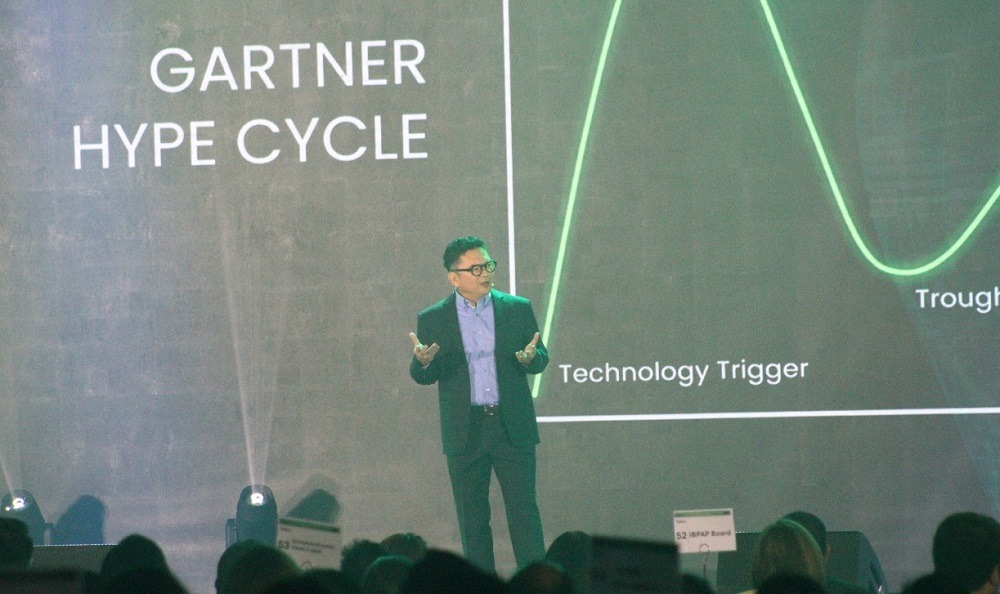
Speaking at the 17th International IT-BPM Summit (IIS) 2025, IT and Business Process Association of the Philippines (IBPAP) president and CEO Jack Madrid said the industry is on track to generate $42 billion in revenues and employ nearly 2 million Filipinos by 2026.
He stressed, however, that sustained success will depend on the sector’s ability to transform and move up the value chain.
“We are outpacing global growth, but growth alone will not secure our future. Transformation will,” Madrid told an audience of nearly 1,000 delegates at the Okada Grand Ballroom in Manila.
Madrid underscored AI as a “swing factor” for the industry. While only 12% of Philippine firms currently report high AI maturity, more than 70% expect to reach that level by 2028. Nearly half are already embedding AI in some form.
He emphasized that AI adoption in the Philippines must augment — not replace — human strengths.
“Technology alone will not win. Our winning formula is blending AI with Filipino ingenuity, empathy, and trust,” Madrid said, as he pushed for a National AI Strategy to guide adoption, workforce reskilling, and governance.
Another growth engine, Madrid said, lies in Global Capability Centers — in-house hubs of multinational firms that manage functions from finance and HR to IT, data analytics, and digital services.
The global GCC market is projected to reach $155 billion by 2027.
The Philippines, he noted, has the talent pool, cost advantages, and ecosystem maturity to compete with India, which currently dominates the GCC market.
“We can be both: a world-class outsourcing hub and a GCC hub powering enterprise transformation,” he said.
Madrid outlined six priorities for the industry to sustain its momentum:
1. Align policy, talent, and markets through public–private collaboration
2. Expand innovation hubs beyond Metro Manila
3. Evolve leadership into co-creators of global solutions
4. Scale the Philippines’ GCC footprint
5. Future-proof talent with digital fluency and problem-solving skills
6. Keep human impact at the core of digital transformation
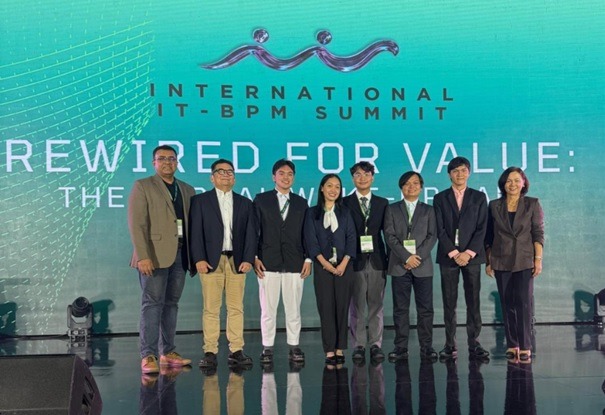
The summit also highlighted the role of young innovators. Team Merge Conflict from Silliman University, winners of the “Can You HackIT?” competition, presented their digital safety technology that helps parents monitor children’s screen exposure to harmful content.
Their showcase drew praise from IBPAP leaders and underscored how local talent from across the country can shape the industry’s future.
“This is what happens when we give young Filipinos the privilege and responsibility of shaping a future they’ll live in,” Madrid said.


