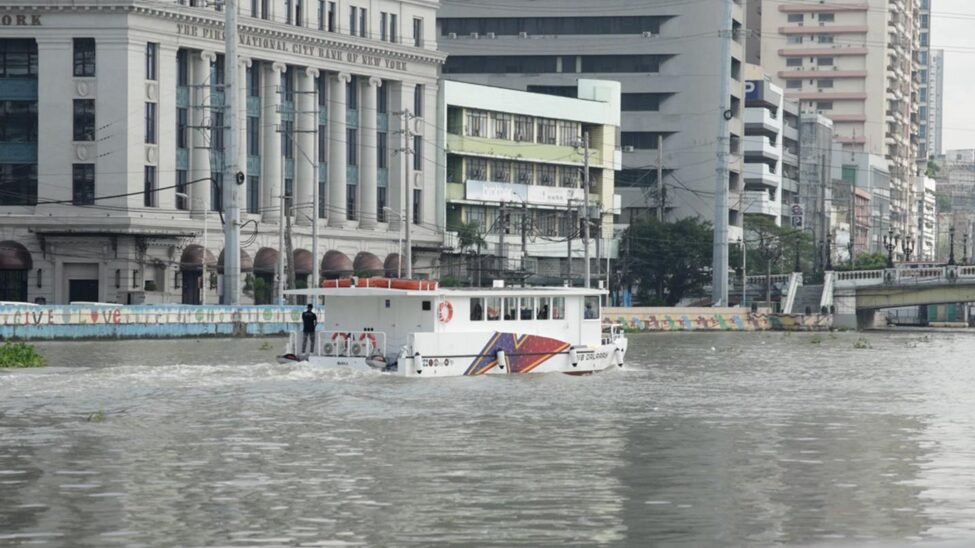
The Department of Science and Technology (DOST) on Tuesday, Oct. 7, officially launched the Philippines’ first-ever electric passenger ferry, marking a milestone in the country’s shift toward cleaner and smarter modes of transportation.
The vessel, named M/B Dalaray — meaning “flow of current” — was developed by Filipino engineers from the University of the Philippines Diliman with funding support from DOST and monitoring by the Philippine Council for Industry, Energy, and Emerging Technology Research and Development (DOST-PCIEERD).
The solar-powered ferry was unveiled at Plaza Mexico in Intramuros, Manila, and is expected to begin full operations by November 2025.
Department of Science and Technology (DOST) secretary Renato U. Solidum Jr. described the e-ferry as a symbol of the government’s commitment to sustainability and innovation, saying it embodies the vision of DOST’s Smart and Sustainable Communities Program (SSCP).
“The M/B Dalaray is the Philippines’ first locally designed and fabricated battery-electric ferry — a product of Filipino ingenuity and collaboration,” Solidum said during the launch. “It shows that sustainable transportation can be an integral part of urban life and community experience.”
The M/B Dalaray can carry up to 40 passengers and three crew members, with a total capacity of five tons. It can travel 45 kilometers at eight knots, run continuously for three hours, and recharge in just two to three hours, making it ideal for daily trips along the Pasig River.
Solidum said the ferry is not only designed to help reduce traffic congestion in Metro Manila but could also play a critical role in disaster response and resilience.
In the event of a major earthquake, when roads may become impassable, the vessel could transport people and relief goods across the Pasig River and Laguna Lake, connecting key cities such as Manila, Makati, Mandaluyong, Pasig, and Taguig, as well as surrounding towns in Rizal and Laguna.
Since 2014, DOST has invested over ₱962.6 million in electric vehicle research and development, reflecting its long-term goal of advancing sustainable mobility.
Solidum said the launch of the M/B Dalaray demonstrates how science, technology, and innovation can directly improve urban living while promoting environmental stewardship.
“This is just the beginning of a greener transport revolution,” he added.