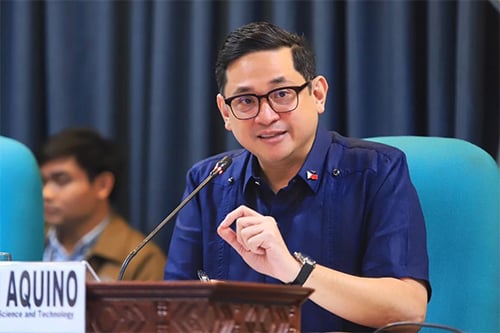
Sen. Bam Aquino is pushing for the use of blockchain technology to promote transparency and accountability in government spending through his proposed Citizen Access and Disclosure of Expenditures for National Accountability (CADENA) Act, also known as the “Blockchain the Budget” bill.
Speaking at a Senate Committee on Science and Technology hearing on Tuesday, Nov. 4, Aquino said the measure aims to record all government transactions on a secure, tamper-proof digital ledger, allowing the public to verify how every peso of taxpayer money is spent in real time.
“The CADENA Act uses digital tools — particularly blockchain — to empower citizens to track where their taxes go,” Aquino said. “We want a system where data is verifiable, immutable, and accessible to everyone. This is how technology can help fight corruption.”
Under Senate Bill No. 1330, government agencies would be required to post transaction documents — such as contracts and bills of materials — on a blockchain-backed digital platform within seven days. Failure to comply could lead to administrative and criminal charges against responsible officials.
Aquino noted that this represents the next stage of his earlier “Blockchain the Budget” proposal, refined to integrate advanced digital infrastructure for transparency.
“Through blockchain, we ensure that no record can be altered or hidden, and every expenditure is traceable to the source,” he said.
The Department of Information and Communications Technology (DICT), led by secretary Henry Aguda, expressed readiness to implement the measure within a single budget cycle once enacted.
“One year should be enough to digitize and secure the process,” Aguda said, emphasizing that most government agencies are now receptive to blockchain-based reforms.
Aquino said the integration of blockchain into public finance management marks a “digital leap for governance,” aligning with the government’s broader efforts toward open data and anti-corruption innovation.
“With this law, we are using technology not just to automate processes, but to restore public trust. Transparency through blockchain means every Filipino can see how their taxes are used — down to the last centavo,” Aquino said.