
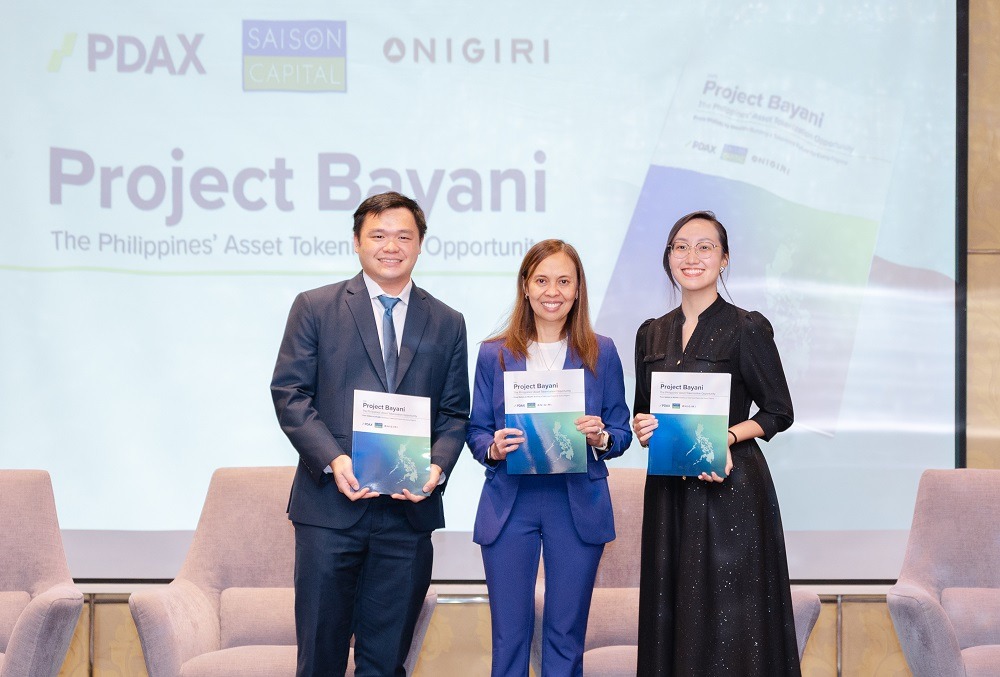
A new study from PDAX, Saison Capital, and Onigiri Capital estimates that the Philippines could build a $60-billion market for tokenized assets by 2030, driven by digital wallets and growing familiarity with blockchain-based finance.
The report, titled Project Bayani, says tokenization could become the primary way many Filipinos access investment products — from government bonds to mutual funds and equities.
The authors note that while traditional investment participation remains low, the country has rapidly adopted cryptocurrencies and mobile wallets, making the transition to tokenized financial products easier.
According to the research, about 14% of Filipinos already own cryptocurrency — far higher than the less than 5% who invest in stocks, bonds, or mutual funds.
Platforms such as GCash, Maya, Coins.ph, and PDAX already support blockchain-based wallets, giving them the ability to distribute tokenized assets without the need for new infrastructure.
PDAX CEO Nichel Gaba said the ecosystem is already in place. “The infrastructure to deliver tokenized assets to millions of Filipinos already exists in their pockets,” he said, pointing to the expansion of regulated financial products through digital wallets.
The Bureau of the Treasury has already tested the approach by issuing tokenized government bonds through PDAX and GCash, lowering the minimum investment to ₱500 and drawing in first-time retail investors nationwide.
National treasurer Sharon Almanza said the initiative has made government securities more accessible. “This partnership brought government bonds directly to the fingertips of millions of Filipinos,” she said.
The study identifies public equities ($26 billion), government bonds ($24 billion), and mutual funds ($6 billion) as the biggest tokenization opportunities. Early results from the tokenized bond rollout show that nearly half of all bond account holders now hold bonds in digital form.
Qin En Looi of Onigiri Capital and Saison Capital said the Philippines’ strong use of digital wallets places it in a favorable position to adopt tokenized investing. He noted that wallet apps have become the primary financial tools for many Filipinos, making blockchain-based products a natural next step.
The report argues that tokenization could help modernize the country’s capital markets and broaden access to investment products. Tokenization creates digital versions of real-world assets on the blockchain, allowing them to be bought and sold in smaller amounts and at lower cost.
The authors say this could open investment opportunities to millions who have traditionally been excluded from the formal financial system.


