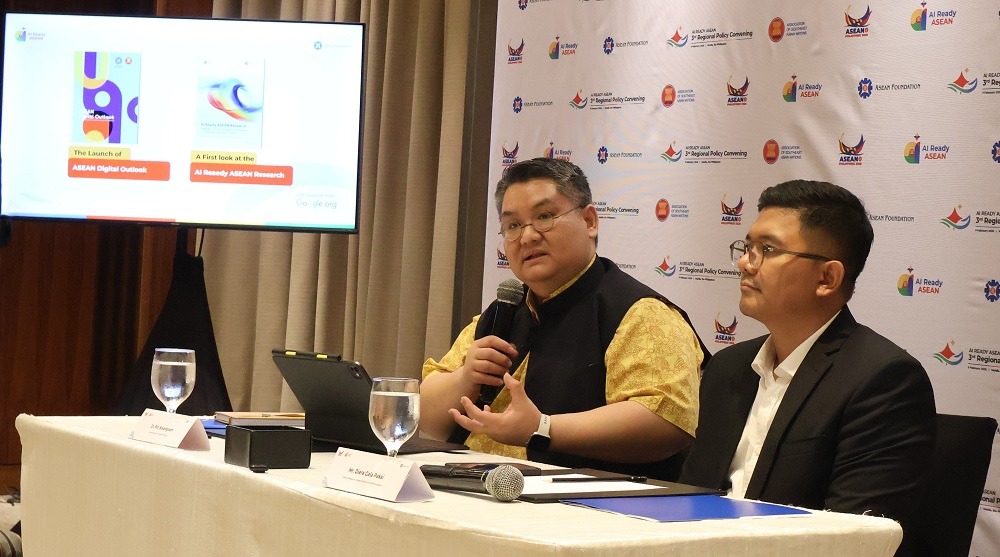
Two regional studies released during the “AI Ready Asean: 3rd Regional Policy Convening” in Pasig City highlighted both the rapid adoption of artificial intelligence in the Philippines and the country’s continuing challenges in digital governance and institutional readiness.
The reports — Asean Digital Outlook and AI Ready Asean Research — were launched at the Marco Polo Ortigas Manila by the Asean Foundation with support from Google.org.
Findings from the AI Ready Asean Research showed strong uptake of generative AI tools among Filipino students and educators.
The study found that 83.4% of students in the Philippines have used generative AI models, along with 73.07% of educators. About 76% of students reported using AI-powered writing and paraphrasing tools, compared to 42.21% of teachers, suggesting a gap in familiarity and confidence among educators.
The data reflected how quickly AI tools have entered classrooms, even as institutions are still developing policies and safeguards for responsible use.
The Asean Digital Outlook report examined digital governance, cybersecurity readiness, and policy alignment across Southeast Asia, including the Philippines.
For the country, the findings underscored the need to strengthen AI policy frameworks, improve cybersecurity defenses, and accelerate digital infrastructure development to support responsible AI deployment.
The reports noted that while adoption is growing quickly, institutional systems and regulatory harmonization require sustained investment and coordination.
The research also flagged emerging risks linked to AI use, including online scams and misinformation — issues that are particularly relevant in the Philippines, one of the world’s most active social media markets.
Initiatives such as Scam Ready Asean aim to build digital resilience by educating citizens on identifying and navigating AI-enabled fraud and deceptive content.
Dr. Piti Srisangnam, executive director of the Asean Foundation, said the findings shift attention from simple usage metrics to preparedness.
“These studies move the conversation beyond whether AI is being used, to whether our institutions, educators, and communities are truly prepared,” he said.
Asean’s digital economy is projected to grow from $300 billion to $1 trillion by 2030, making AI readiness a strategic priority for member states, including the Philippines.
The studies argued that beyond adoption rates, countries must focus on governance, digital skills development, and long-term institutional capacity to ensure AI technologies benefit both the economy and society.