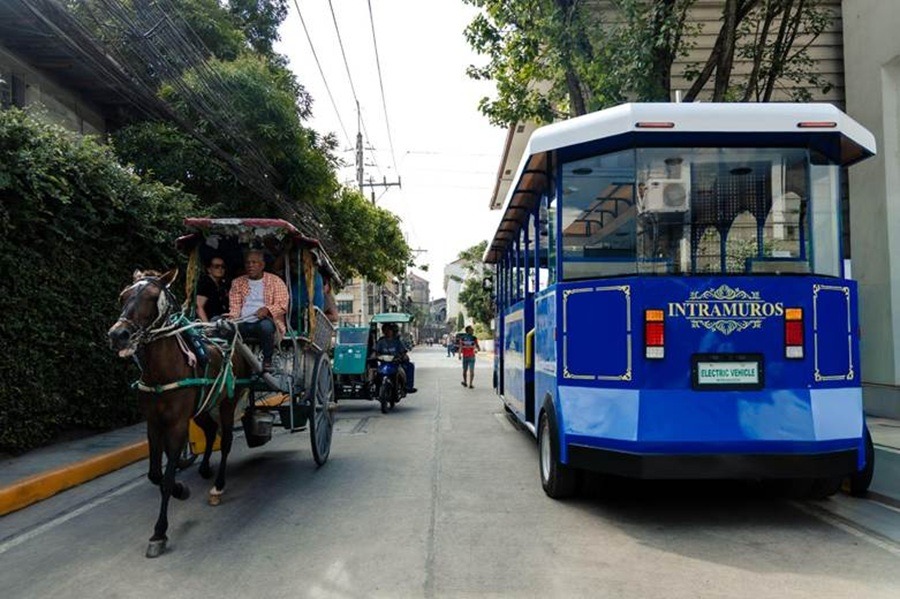
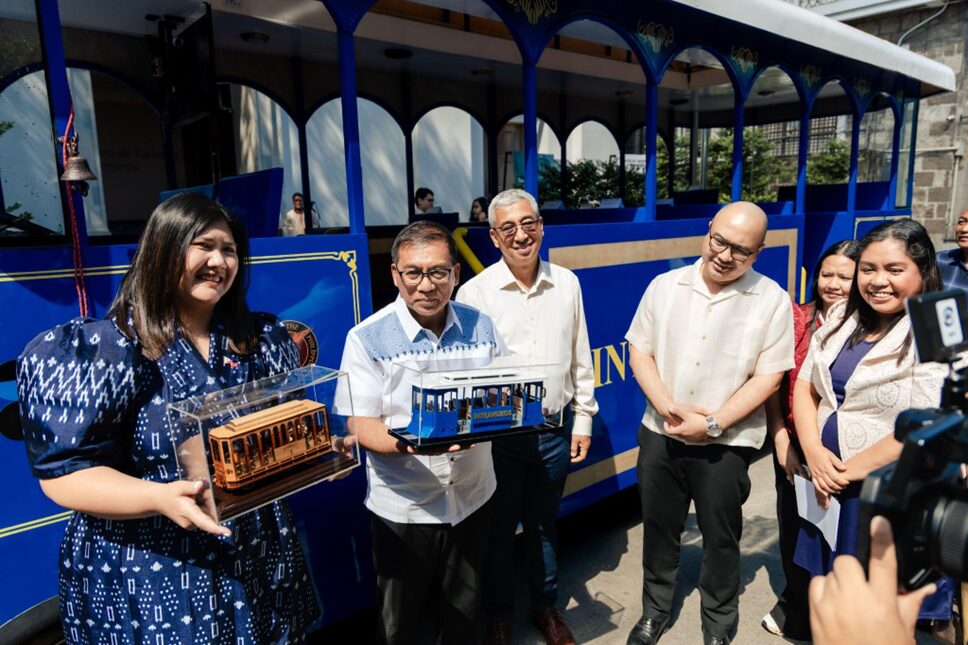
The Department of Science and Technology (DOST) and the Intramuros Administration (IA) on Thursday, March 19, unveiled a locally developed electric tram designed to ferry tourists around the historic walled city.
The 18-seater, battery-powered “e-tranvia” will operate along key Intramuros sites, including Fort Santiago, Museo de Intramuros, and the Pasig Esplanade. The service is currently available for free through a rolling tour.
Developed through a collaboration among DOST-National Capital Region, the Industrial Technology Development Institute (ITDI), the University of the Philippines Diliman, and Cagayan State University (CSU), the vehicle is positioned as the first Filipino-engineered electric tram of its kind for tourism use.
The design draws from 19th-century tranvias that once ran through Intramuros, but replaces diesel engines with a lithium-ion battery system and electric motor.
The body and roofing panels use locally developed abaca fiber composite materials, while CSU handled the vehicle’s structural design and UP Diliman led its electrical systems.
IA administrator Joan M. Padilla said the project highlights government-academe collaboration in developing practical solutions.
“This collaboration reflects the strength of partnerships between the government and the academe in delivering practical and people-centered solutions. […] May this continue to inspire similar efforts to promote greener mobility, smarter tourism systems, and a more sustainable future for our cities,” Padilla said.
Department of Science and Technology secretary Renato U. Solidum Jr. said the project also responds to rising fuel costs and supply concerns, while promoting locally developed technologies.
“Developing it ensures that electric mobility becomes practical, reliable, and accessible for all Filipinos. […] Ang mga inobasyong gawa ng Pilipino, para sa Pilipino, ang gagabay at magiging tulay ng ating mga kababayan sa panahon ng pangangailangan,” he said.
Only one unit is currently deployed in Intramuros, with three more expected to be added. Additional units are planned for South Cotabato, Cagayan, and Malacañang.
CSU said each unit costs around P2.5 million in initial materials, prompting DOST to explore partnerships with the private sector to scale production.