The Philippines has become one of the largest markets for satellite internet service Starlink in Asia-Pacific, but performance still trails traditional broadband, according to a new report by Ookla.
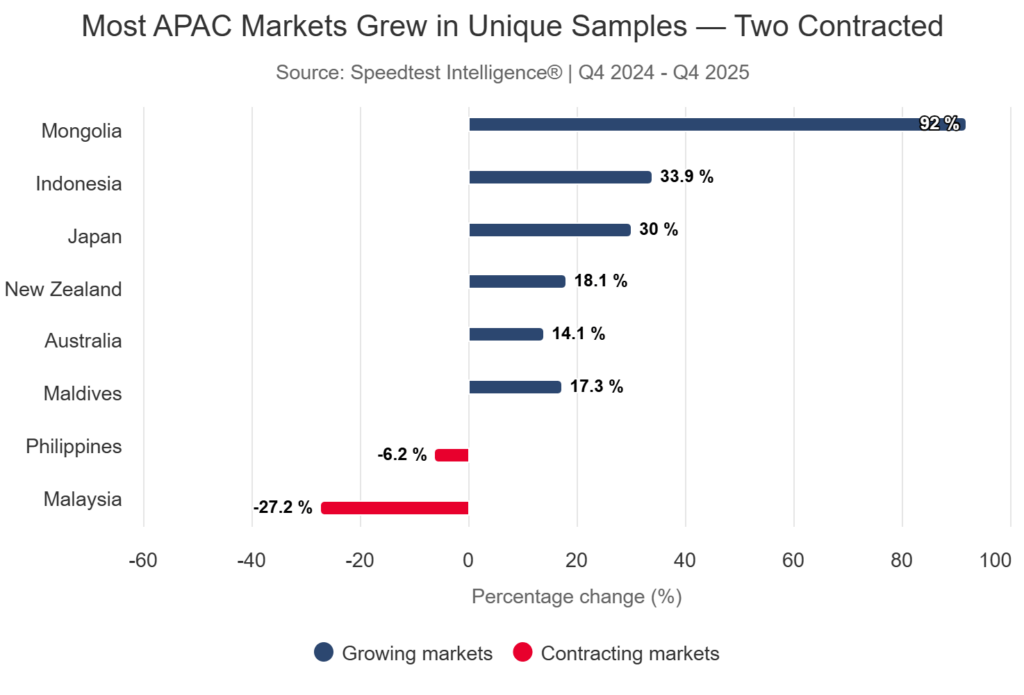
Citing data from its Speedtest Intelligence platform, Ookla said the Philippines now ranks as Starlink’s sixth largest market globally and second in Asia, accounting for about 4.2% of its worldwide subscriber base.
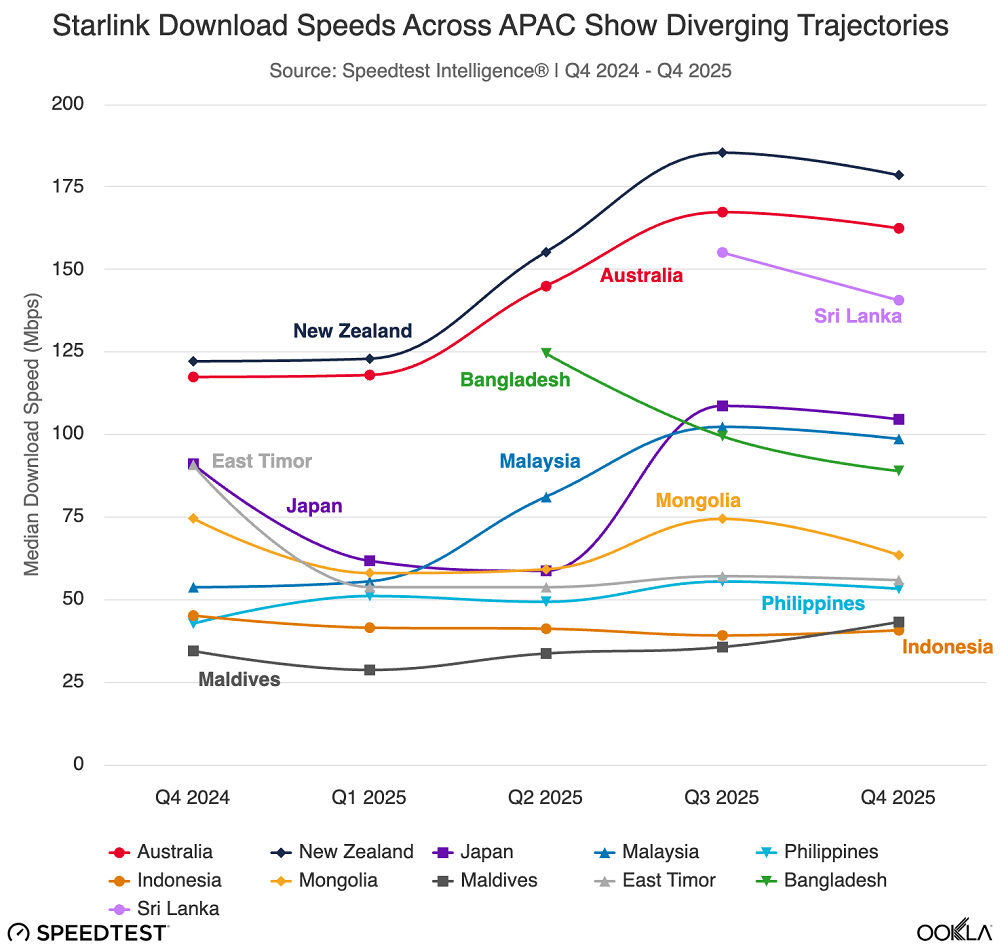
Despite strong uptake, the report noted that Starlink’s median download speed in the Philippines — around 55 Mbps — remains significantly lower than the country’s fixed broadband average of over 100 Mbps.
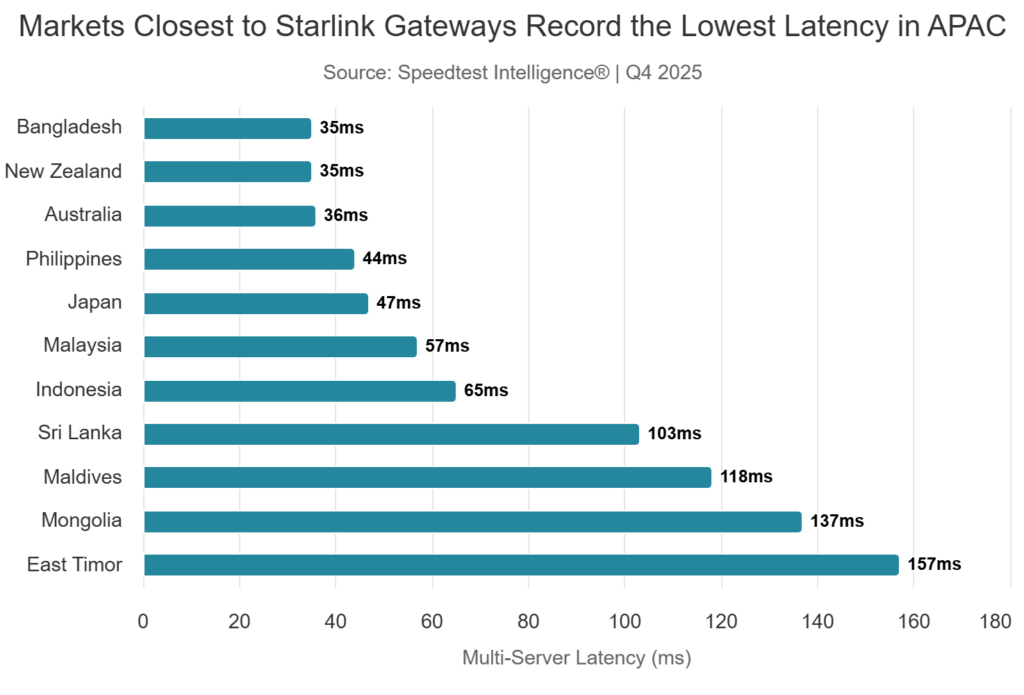
Still, Starlink performs better than traditional satellite providers due to its use of low Earth orbit (LEO) satellites, which deliver lower latency and more stable connections compared to older geostationary systems.
Ookla said this advantage makes Starlink particularly relevant in a country like the Philippines, where geography — more than 7,600 islands — continues to challenge fiber and mobile network rollouts.
Satellite connectivity has been positioned as a complementary solution for underserved and remote areas, including disaster-prone regions where terrestrial networks are vulnerable.
The report also highlighted Starlink’s growing role in partnerships with local telecom operators. In the Philippines, Globe Telecom has already signed an agreement to explore direct-to-cell services using Starlink, which could help extend coverage to areas without existing infrastructure.
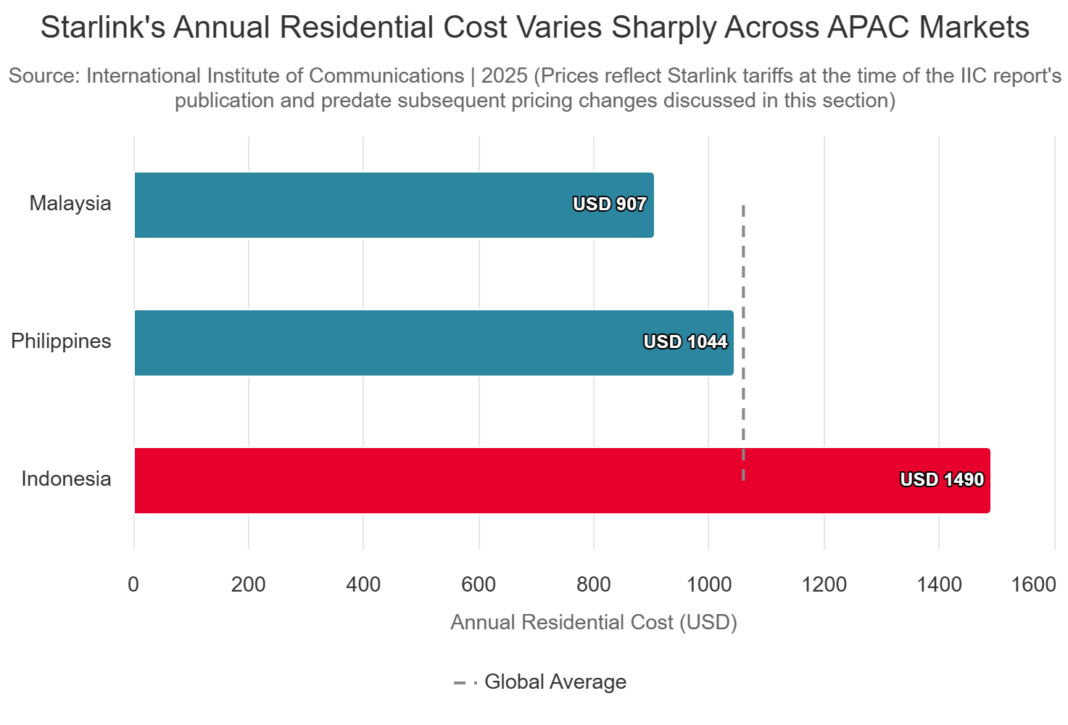
However, Ookla pointed to cost and performance gaps as key challenges to wider adoption. Satellite internet services typically come at a premium compared to fiber plans, while speeds — though improving — are still inconsistent in densely populated areas where network capacity is shared.
The report underscores a broader trend in the Asia-Pacific region, where LEO satellite providers are racing to capture markets with difficult terrain and limited connectivity.
In the Philippines, analysts see Starlink less as a replacement for fiber and more as a stopgap or niche solution for rural users, enterprises, and government connectivity programs.
As competition intensifies among satellite and traditional broadband providers, Ookla said the long-term viability of LEO services in the country will depend on improving speeds, lowering costs, and integrating with existing telecom networks.