A mobility app developed under the Department of Science and Technology’s (DOST) Balik Scientist Program is being positioned as a tool to address long-standing inefficiencies in how road space is used in Philippine cities.
Recent data from SEERMO, an AI-powered mobility platform, shows a mismatch between road usage and transport behavior: pedestrians account for only 23% of available space, while private vehicles — used by 47% of travelers — occupy as much as 77% of it.
To respond to this imbalance, Balik Scientist Dr. Syrus Gomari has enhanced the SEERMO app to support data-driven, people-focused urban planning, shifting the emphasis from vehicle flow to actual commuter movement.
“The question should not be ‘How do we move more cars?’ but ‘How do we move more people efficiently?’ When we shift from car-centric to people-centric thinking, solutions expand beyond road widening to integrated transport systems, active mobility, and smarter urban design with SEERMO,” Gomari said during a presentation in Quezon City last Feb. 20.
The updated SEERMO platform uses artificial intelligence to analyze both pedestrian and vehicle movement, allowing local governments to generate transport insights faster than traditional methods.
According to the research team, the system can deliver planning outputs up to 10 times faster by automating data collection and analysis that would otherwise require manual surveys or consultancy work.
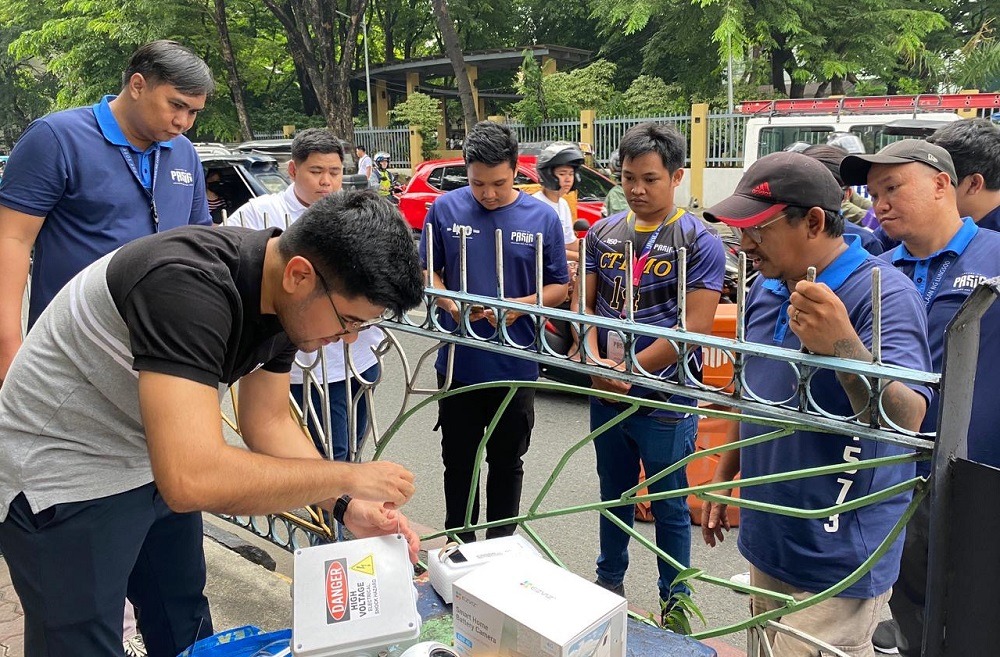
The app functions similarly to a CCTV monitoring system but replaces manual counting with algorithm-based detection. It also allows users to report on-ground incidents and infrastructure issues through smartphones, while consolidating field reports and government data into a single database.
Beyond basic traffic counts, SEERMO has been upgraded to provide granular insights at the district or road level, showing how movement patterns in one area affect others.
This is intended to help city planners move away from broad, city-wide metrics toward more localized and responsive transport interventions.
Pilot deployments have been conducted in Pasig, Taguig, and Quezon City, with the system also rolled out in other areas including Cauayan City, Porac in Pampanga, Naga City, Isabela City in Basilan, and Roxas City in Capiz.
DOST secretary Renato U. Solidum Jr. said the project highlights how returning Filipino researchers are contributing to emerging fields such as smart mobility and urban systems.
“We at DOST are proud to see how Balik Scientists like Dr. Gomari are using their global expertise to help the country, especially in emerging and interdisciplinary fields like smart mobility, urban systems, and artificial intelligence,” he said.
DOST officials also said the initiative aligns with broader efforts to integrate AI into urban planning to address congestion and improve transport systems, particularly in densely populated cities.