The Philippines is expanding its international partnerships to support artificial intelligence (AI) development and critical minerals cooperation under the US-led Pax Silica initiative, with recent engagements in the UAE, Israel, and Türkiye.
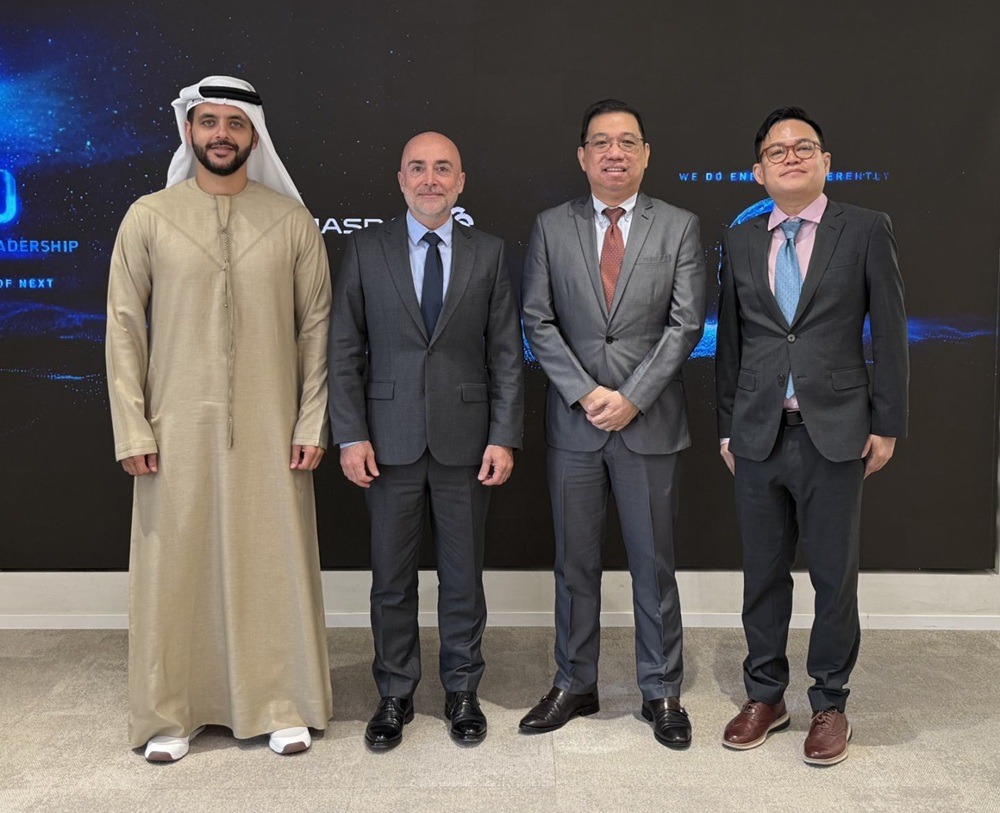
On May 4, Department of Trade and Industry (DTI) undersecretary and Board of Investments (BOI) managing head Ceferino Rodolfo met with UAE-based Masdar and DAMAC Digital in Abu Dhabi. Also present in that meeting was Vichael Angelo Roaring, trade commissioner at the Philippine Trade and Investment Center (PTIC) in Dubai.
Talks focused on renewable energy and data center investments to power the planned 4,000-acre AI-native industrial acceleration hub in Luzon. Masdar outlined renewable energy solutions, while DAMAC advanced plans for a 250-MW data center facility.
“The Luzon AI-native hub within the Pax Silica alliance integrates UAE’s renewable energy expertise and data center capabilities for the next-gen manufacturing,” Rodolfo said.
“Our collaborations with industry leaders such as Masdar and DAMAC underscore our commitment to transform Philippines into a premier destination for AI-driven technologies and sustainable industrial acceleration.”
Philippine ambassador to the UAE Alfonso Ver noted that joint membership in Pax Silica strengthens existing agreements such as the Comprehensive Economic Partnership Agreement (CEPA) and the Investment Promotion and Protection Agreement (IPPA), calling the two countries “strategic tech-allies.”
In Israel, Rodolfo met with Foreign Affairs director general Eden Bar Tal on May 1 to discuss cooperation on critical minerals processing and AI ecosystems.
The talks explored how Israel’s mining and environmental technologies could support Philippine refining of nickel, copper, and cobalt — key inputs for semiconductors and AI hardware. Both sides considered a possible memorandum of understanding on mineral processing and R&D.
Earlier, on April 28 in Türkiye, Rodolfo met deputy minister Mustafa Tuzcu to push for expanded trade and investment ties. Discussions covered defense, construction, agriculture, and manufacturing, with both sides agreeing to revive the Philippines–Türkiye Joint Committee on Economic and Technical Cooperation.
Ambassador-designate Jaime Ramon Ascalon emphasized that the Philippines’ upcoming Asean chairship in 2026 provides an opportunity to connect Türkiye with Southeast Asia’s growing market.
These engagements highlight Manila’s strategy to position itself as a hub for AI technologies and a critical supplier of minerals essential to global semiconductor and energy transition supply chains.