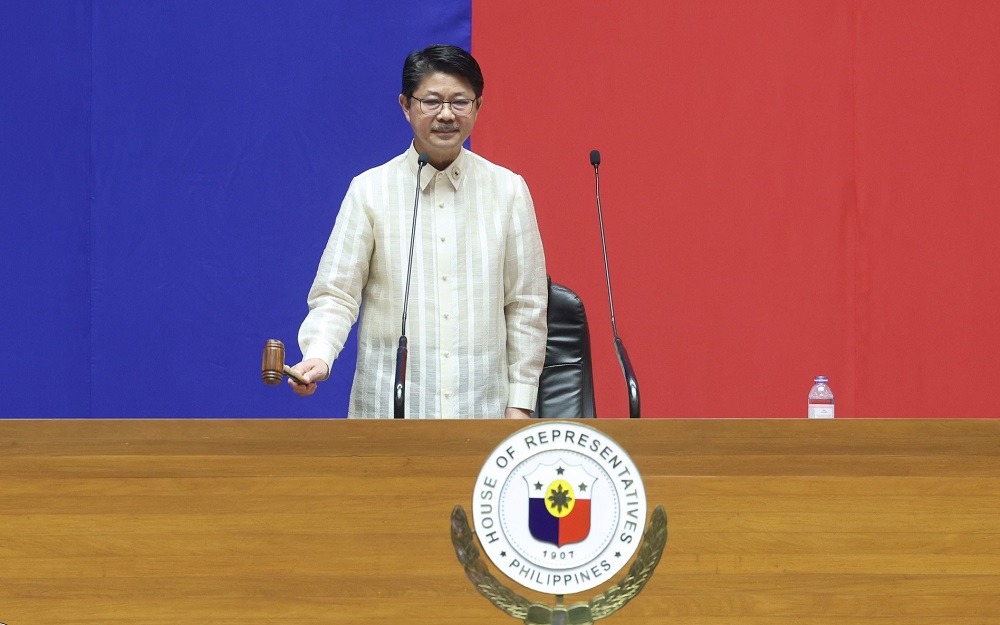
House speaker Faustino “Bojie” Dy III and House majority leader Ferdinand Alexander “Sandro” Marcos have filed a bill that would require social media companies to adopt stricter child safety measures, regulate the algorithms that recommend content to minors, and face penalties of up to P50 million for non-compliance.
House Bill No. 9965, or the proposed “Children’s Social Media Safety Act”, seeks to establish a comprehensive regulatory framework for children’s use of social media, placing new legal obligations on platform operators to verify users’ ages, obtain parental consent for minors, and limit children’s exposure to harmful content.
The measure comes as lawmakers cite growing concerns over cyberbullying, online exploitation, addictive platform designs, misinformation, and the mental health effects of excessive social media use among children.
Under the proposal, children below 13 years old would be prohibited from maintaining social media accounts. Platforms would be required to implement reliable age verification systems, disable prohibited accounts upon discovery, and prevent children from repeatedly creating new accounts to bypass the restriction.
Users aged 13 to below 18 would only be allowed access with verifiable parental or guardian consent.
Social media companies would also have to provide parents with tools to monitor activity, manage privacy settings, limit screen time, restrict interactions, and withdraw consent.
Beyond age restrictions, the bill introduces new rules governing the algorithms that determine what content children see online.
Platforms would be prohibited from using recommendation systems that promote harmful material, required to detect and limit children’s exposure to such content, and barred from deploying manipulative platform designs that could negatively affect minors’ development.
The measure would also require the removal of artificially generated or altered content that falsely depicts real events, persons, or statements, or is reasonably likely to mislead users.
To improve transparency, social media firms would have to disclose how their algorithms influence content recommendations, subject automated decisions affecting children to meaningful human oversight, and regularly submit transparency reports to the Department of Information and Communications Technology (DICT).
The bill also requires child accounts to carry the highest privacy settings by default while restricting geolocation sharing, financial transactions, and the collection of biometric and other sensitive personal information from minors.
Violations involving prohibited accounts would carry administrative fines ranging from P5 million to P10 million. Other breaches of the law’s platform obligations could result in penalties of P20 million to P50 million.
For repeated and serious violations, the DICT would be authorized, subject to due process, to temporarily restrict access to a social media platform in the Philippines or prohibit it from operating in the country.
The proposal also directs the DICT and the Department of Education to integrate digital literacy and responsible social media use into the K-to-12 curriculum, while requiring local government units to establish device-free community spaces and organize sports, arts, and civic activities that encourage children to spend more time offline.
According to the bill’s explanatory note, existing laws do not provide a comprehensive framework defining the responsibilities of social media platforms despite their growing influence on what children see and consume online.
“In the digital age, this duty extends to ensuring that children are protected from risks arising from the use of social media and other digital platforms. At its core, this bill recognizes that every child deserves a safe environment to grow, learn, and develop free from harm both in the physical and digital world,” it said.
Dy said the proposal is intended to ensure that technology benefits children without exposing them to unnecessary risks.
“Nakikita natin na malaking bahagi ang social media sa araw-araw na buhay kaya mas malaki rin ang ating responsibilidad na tiyaking ligtas ang ating mga anak habang gumagamit nito. If we will allow Filipino children to explore the online world, they should be given sufficient protections,” Dy said.
He added that protecting children online should not fall solely on parents.
“Given the reach of social media and the Internet, protecting children can no longer rest solely on the shoulders of parents. Tungkulin din ng pamahalaan na tiyakin na ang mga social media platform ay may pananagutan sa paggawa ng mas ligtas na digital environment para sa ating mga kabataan. Sa panahon ng mabilis na pag-unlad ng teknolohiya, ang kapakanan ng bawat batang Pilipino ang dapat maging pangunahing batayan ng ating mga polisiya.”