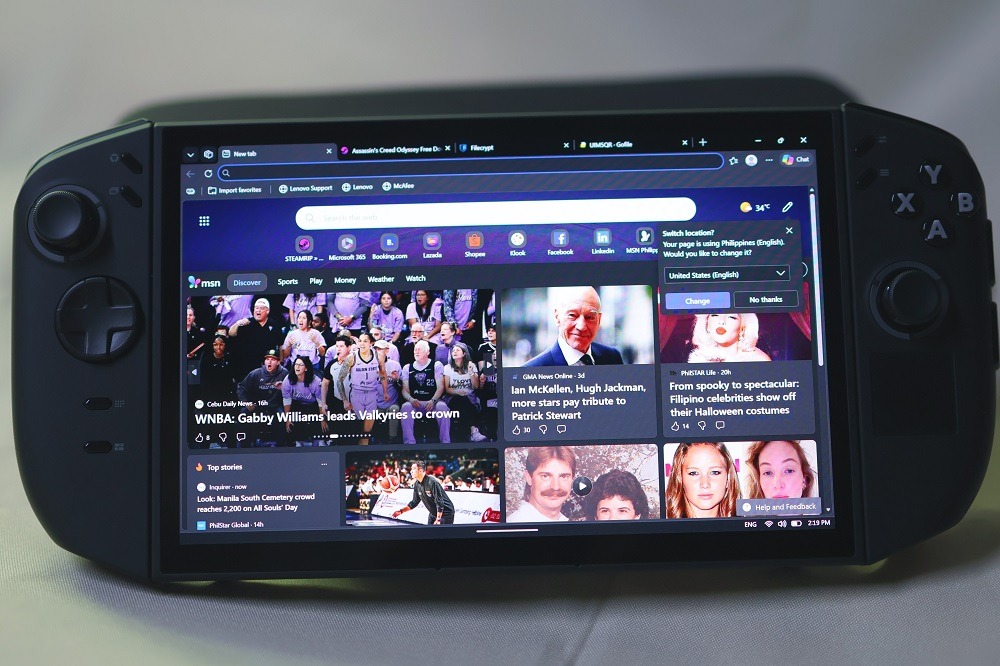
Lenovo’s Legion Go 2 brings desktop-level gaming capabilities into a portable Windows 11 handheld, combining an AMD Ryzen Z2 Extreme processor, Radeon 890M integrated graphics, and an 8.8-inch OLED display. Released in 2025, the second-generation gaming device offers detachable controllers, multiple gaming modes, and improved battery capacity.
Priced at P145,995 for the 1TB variant in the Philippines, the Legion Go 2 promises high-performance gaming on the move. However, its premium pricing places it against gaming laptops equipped with dedicated graphics cards.
Design and Display
The Legion Go 2 features an 8.8-inch WUXGA (1920 x 1200) OLED touchscreen with a variable refresh rate of up to 144Hz, 100% DCI-P3 color coverage, and a peak HDR brightness of up to 1,100 nits.
The display delivers sharp visuals, vibrant colors, and smooth animations, providing an immersive experience for gaming. Its generous screen size also makes it suitable for everyday PC applications.
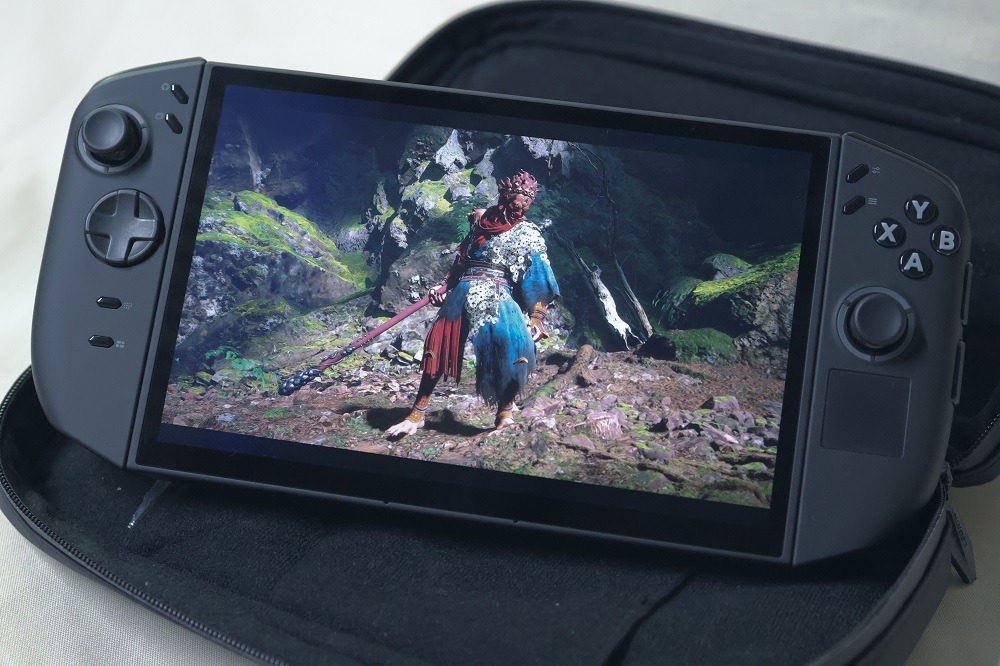
Weighing approximately 920 grams with its controllers attached, the device is relatively hefty for a handheld, although its rounded edges and textured grips help improve handling.
The detachable Legion TrueStrike controllers are among its distinguishing features and offer several gaming configurations. The right controller can function as a vertical mouse through FPS Mode, while the built-in kickstand allows the main unit to sit independently on a desk.
The controllers use Hall effect joysticks for improved precision and reduced stick drift. However, the attachment joints feel somewhat weak, raising concerns about holding the entire device by a single controller.
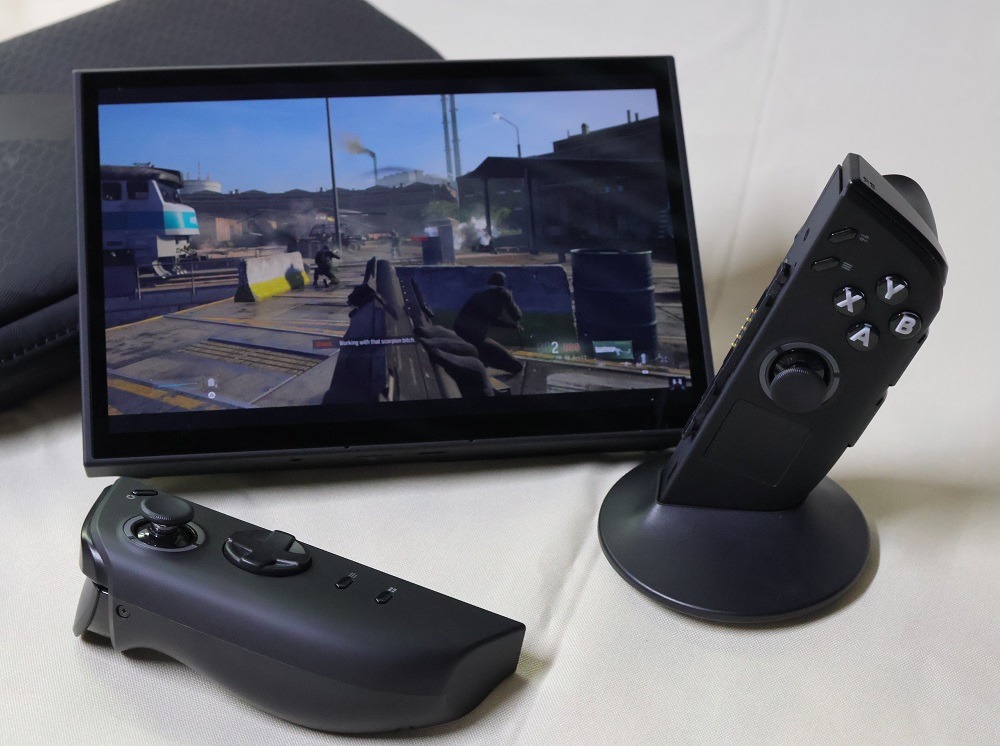
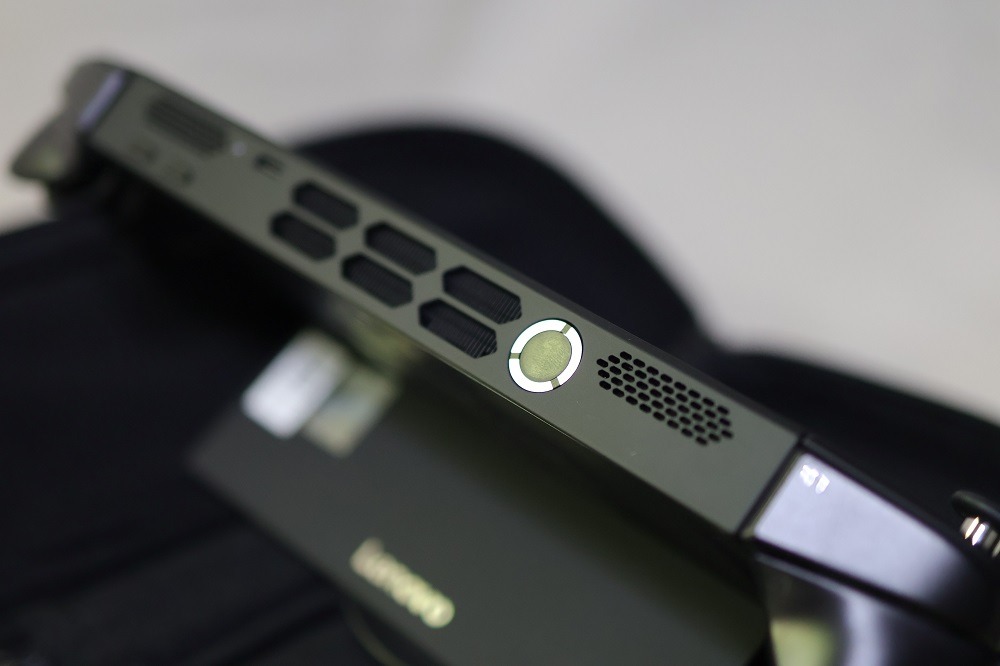
The kickstand also makes it convenient to transform the Legion Go 2 into a workstation by connecting a keyboard and mouse. Connectivity includes two USB4 Type-C ports, a microSD card reader, and a 3.5mm audio jack.
Additional connections, particularly USB-A, would be welcome. A dedicated display output would also improve convenience, although the USB-C ports already support external monitors through DisplayPort.
Performance
The Legion Go 2 is powered by AMD’s Ryzen Z2 Extreme processor, featuring eight cores and 16 threads based on Zen 5 architecture, paired with Radeon 890M integrated graphics. The tested configuration includes 32GB of LPDDR5X-8000 memory and a 1TB PCIe 4.0 SSD.
Synthetic benchmarks produced impressive CPU results. Cinebench registered 452 points in single-core and 3,084 points in multi-core tests, while Geekbench 7 recorded 1,766 and 11,194 points, respectively. AnTuTu Benchmark delivered a CPU score of 975,225 and an overall score of 2,058,773.
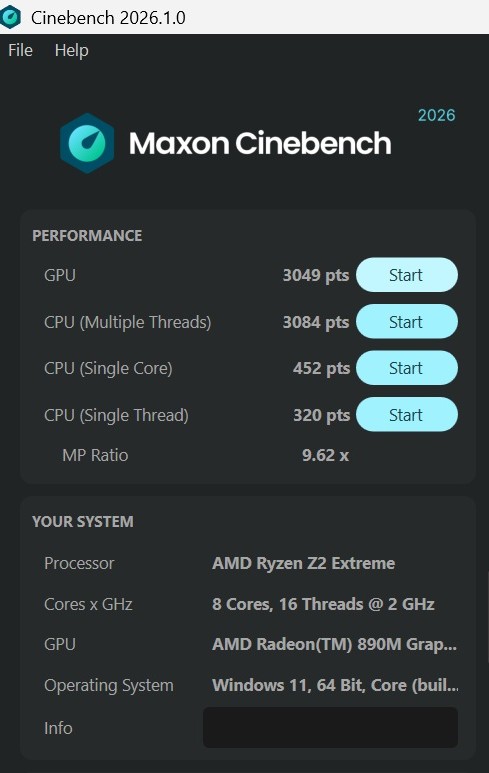
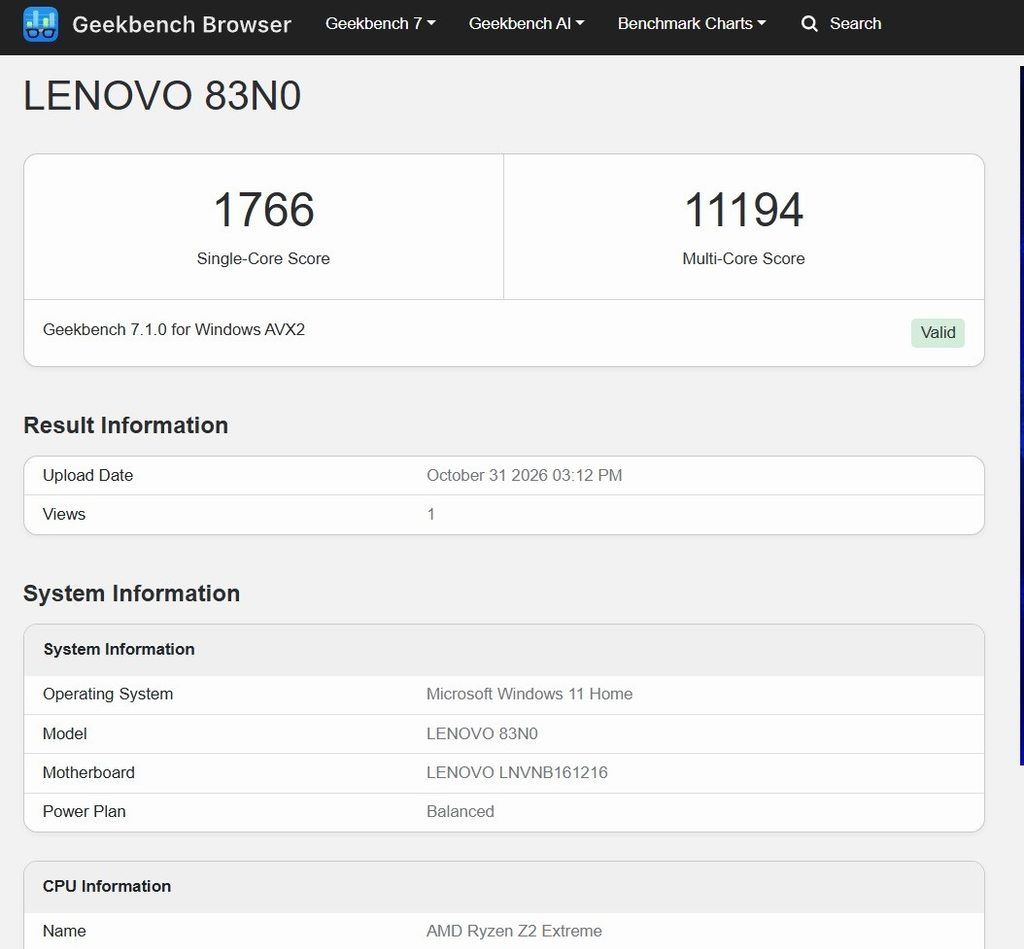
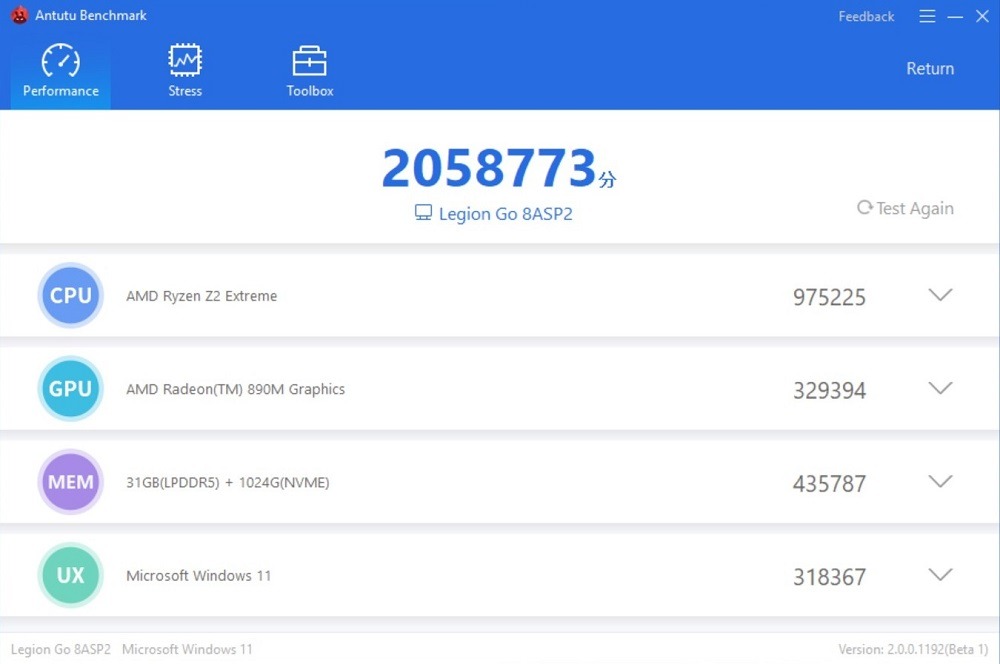
These results indicate sufficient processing capability for demanding applications and general computing tasks, even without a dedicated graphics processor.
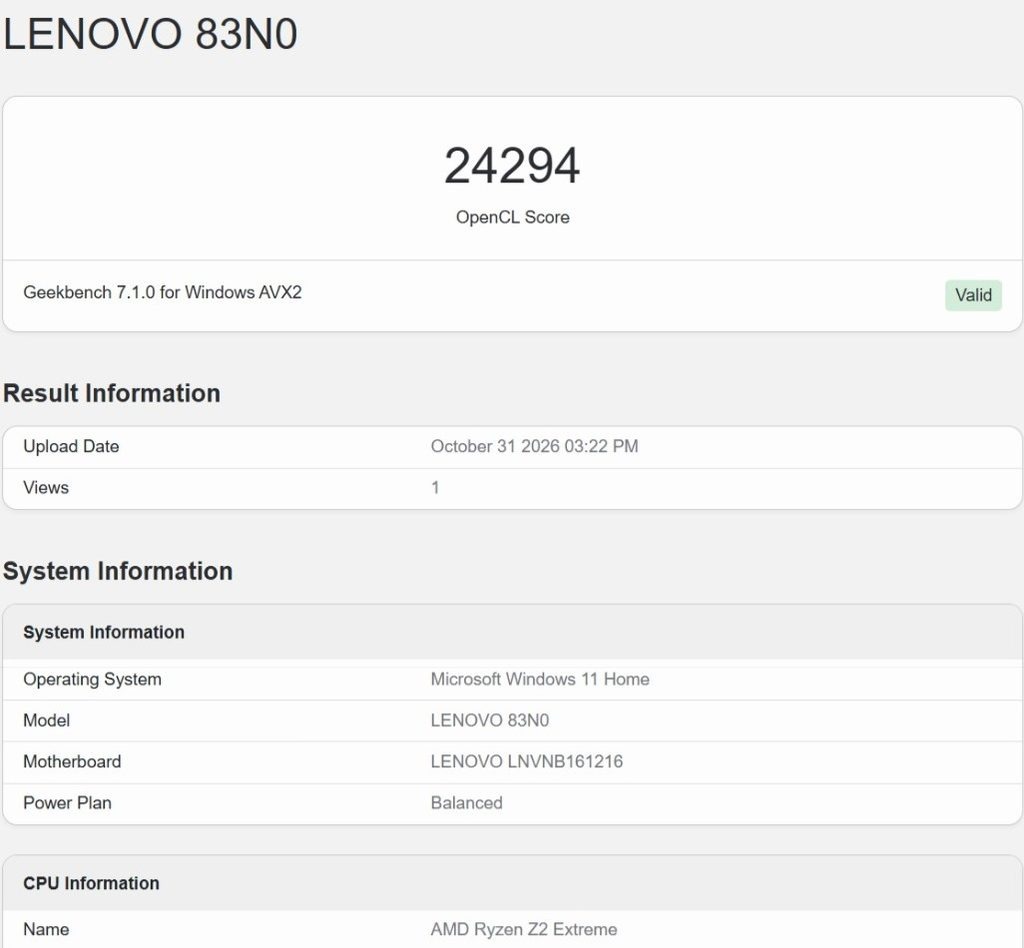
Gaming performance was generally capable, although demanding titles required graphics adjustments. The integrated Radeon 890M scored 24,294 in Geekbench 7 GPU testing, 3,049 in Cinebench GPU, and 329,394 in AnTuTu’s GPU benchmark.
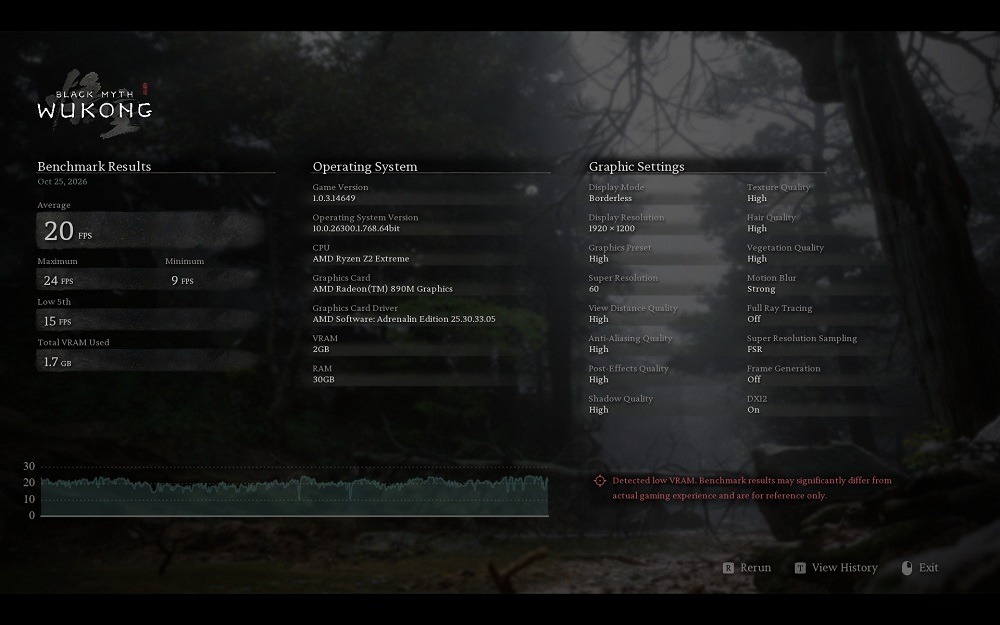
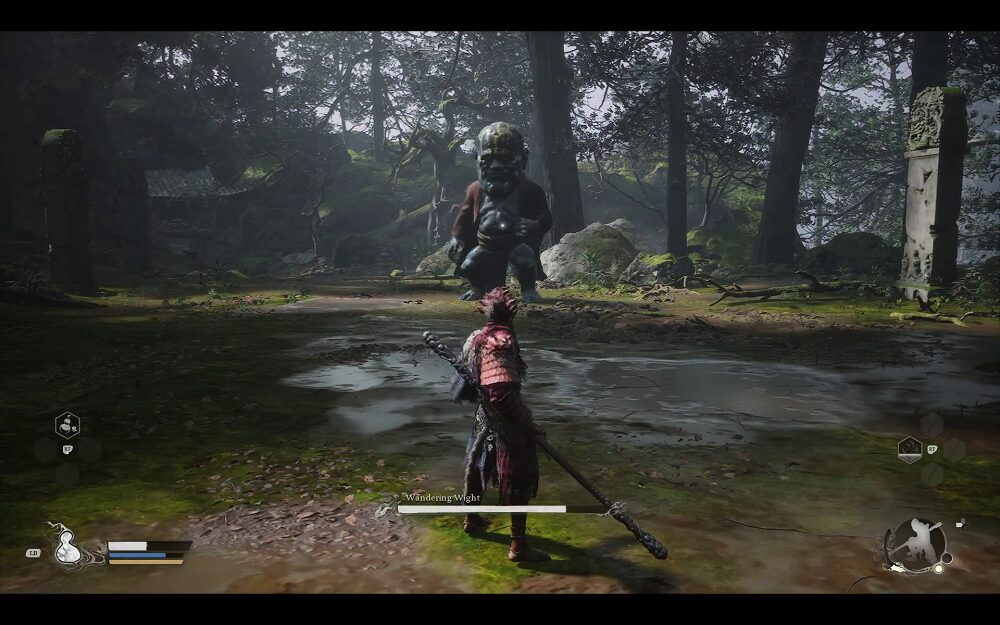
In “Black Myth: Wukong,” the Legion Go 2 achieved an average of 20 FPS at High graphics settings, accompanied by noticeable stuttering and graininess. Switching to Low improved performance to 51 FPS, delivering smoother and more responsive gameplay while maintaining acceptable visual quality.
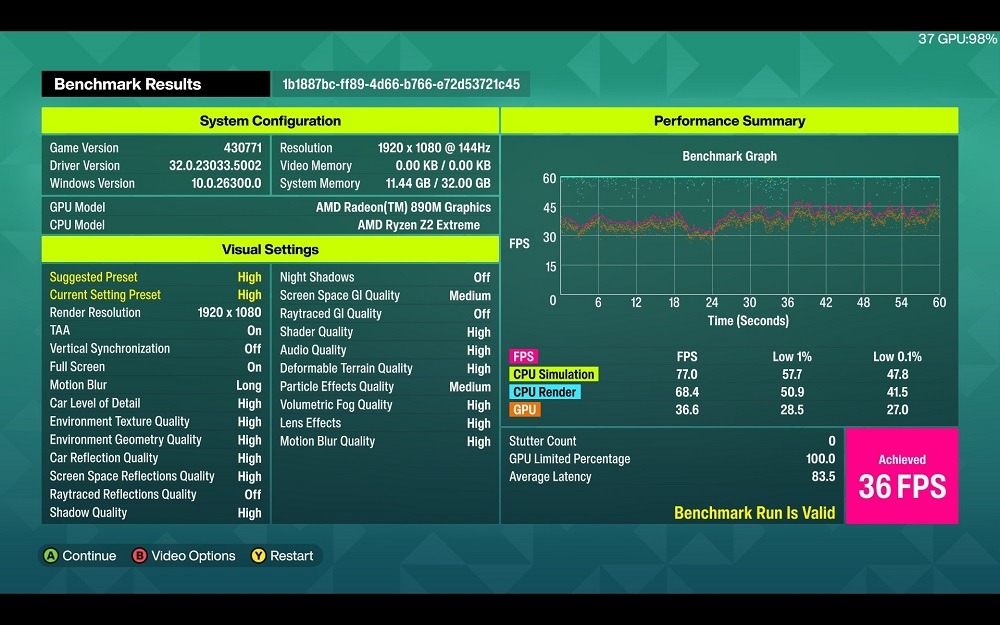
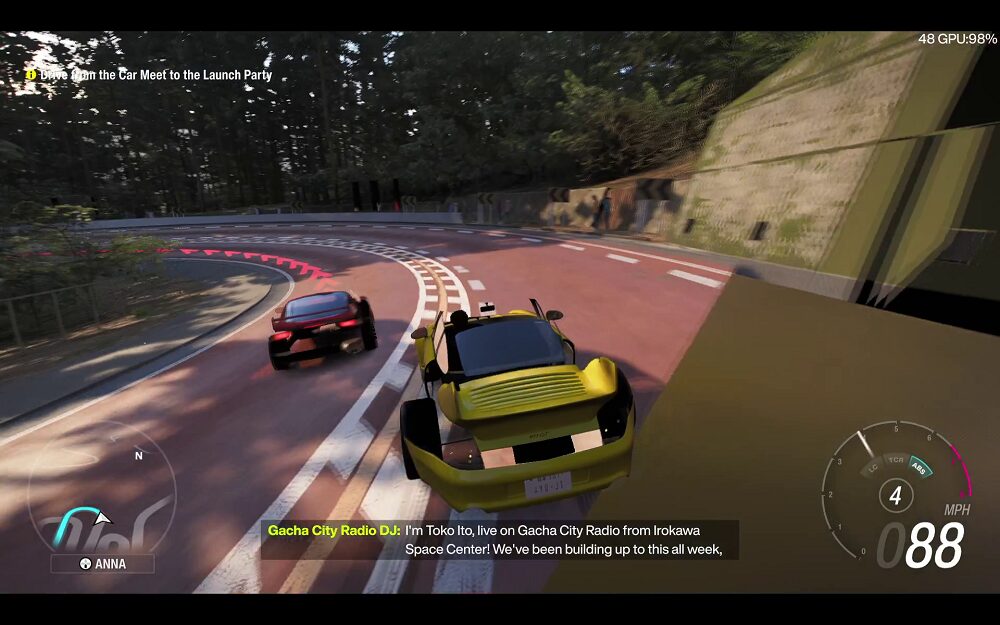
“Forza Horizon 6” registered 36 FPS at High settings and 47 FPS at Low, both at 1080p resolution. Unfortunately, an unresolved graphics-driver issue prevented the game environment and several elements from rendering correctly, making the game effectively unplayable during testing.
The same rendering problem was encountered in “Forza Horizon 5”, suggesting software compatibility issues that still need attention.
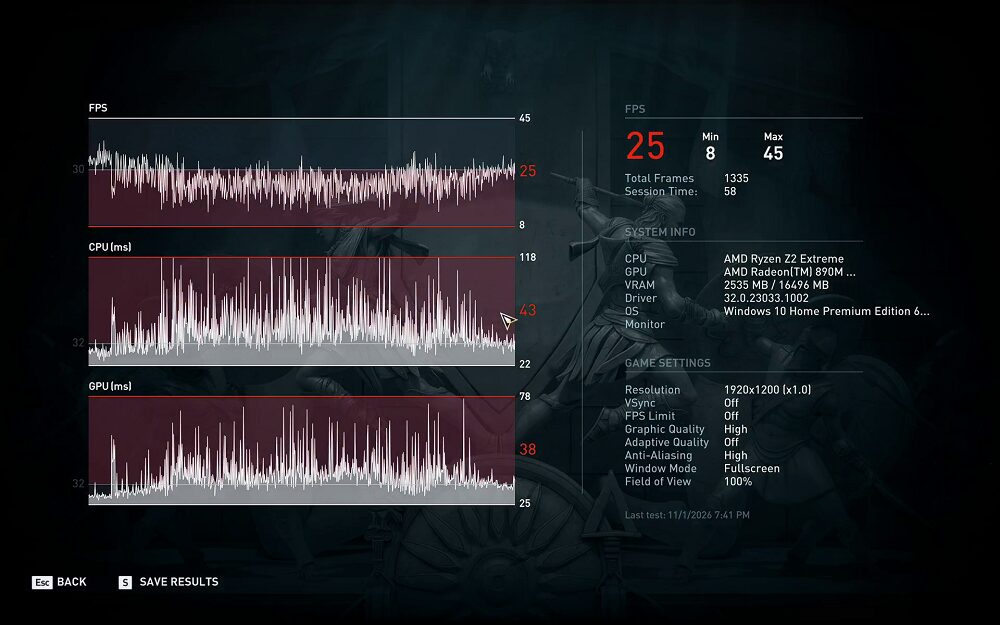
Meanwhile, “Assassin’s Creed Odyssey” performed considerably better, averaging 25 FPS at High settings with smooth animations during its built-in benchmark.

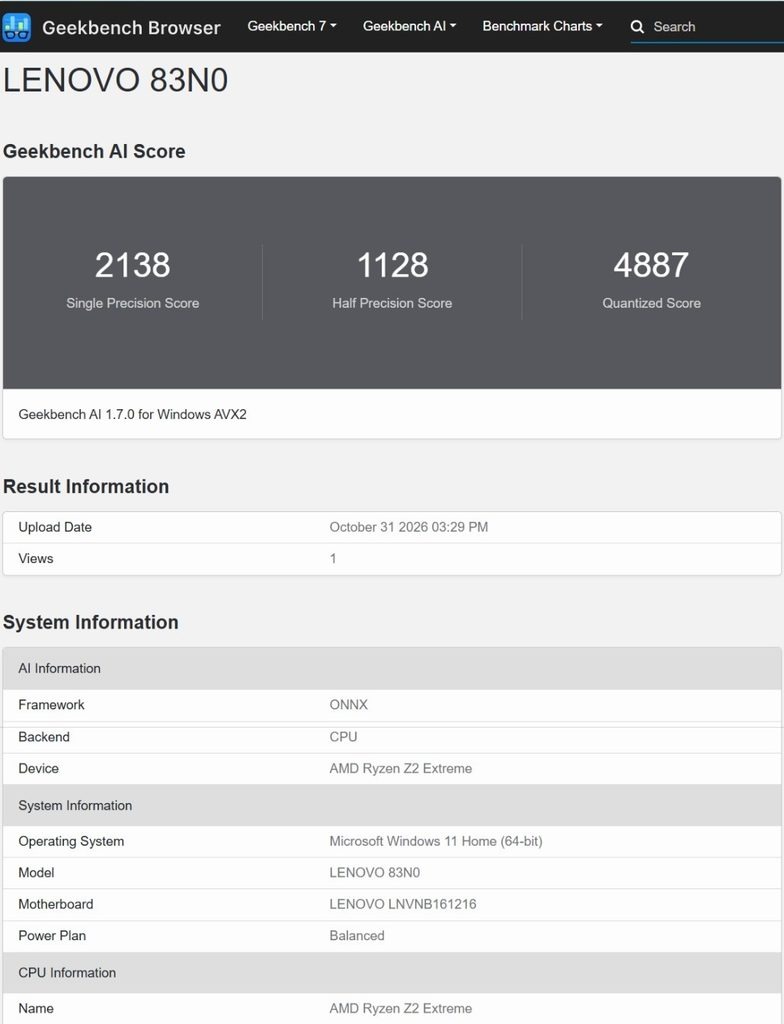
For AI workloads, the Ryzen Z2 Extreme recorded a quantized Geekbench AI score of 4,887. Lenovo’s Legion Space software provides access to installed games, performance configurations, and system monitoring. Users can select Quiet, Balanced, Performance, or Custom thermal modes to prioritize battery life or processing power.
Battery Life and Cooling
The Legion Go 2 houses a 74Wh battery, significantly larger than its predecessor’s, with support for rapid charging. During testing, a complete charge from 0% to 100% took approximately one hour and 30 minutes.
Battery endurance was impressive during regular computing tasks, lasting around eight to ten hours. However, demanding games such as “Black Myth: Wukong” depleted the battery in less than two hours.
This highlights the tradeoff between portable gaming performance and battery endurance, particularly when running resource-intensive titles.
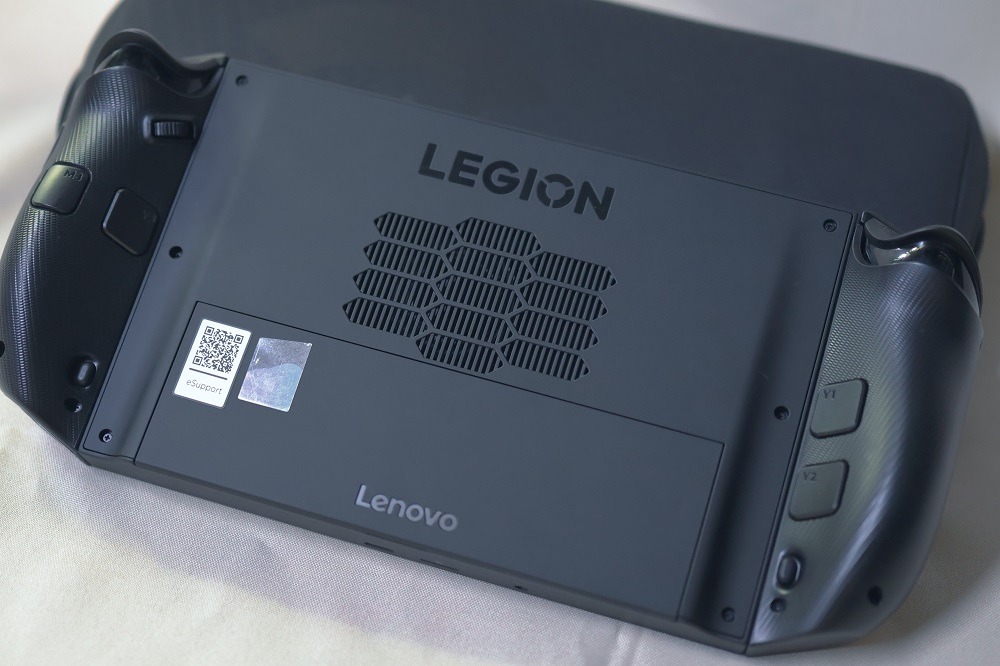
Cooling is handled by an internal fan that draws air through the perforated rear panel and exhausts heat through the upper vents. Although the system expels considerable heat during demanding workloads, the fan remains relatively quiet. The ventilation layout also provides adequate airflow when the device rests on a desk or when the user plays in a reclined position.
Quick Specs
- Processor: AMD Ryzen Z2 Extreme, 8 cores/16 threads
- Graphics: AMD Radeon 890M
- Memory: 32GB LPDDR5X-8000
- Storage: 1TB PCIe 4.0 SSD
- Display: 8.8-inch WUXGA OLED, 144Hz VRR
- OS: Windows 11 Home
- Battery: 74Wh, rapid charging
- Connectivity: Wi-Fi 6E, Bluetooth 5.3
- Ports: 2 USB4 Type-C, microSD, 3.5mm audio
- Controllers: Detachable TrueStrike, Hall effect joysticks
- Weight: Approximately 920g
- Price: P145,995 (1TB)
Verdict and Availability
The Lenovo Legion Go 2 delivers impressive computing performance in a handheld package, complemented by an excellent OLED display, versatile controllers, and flexible gaming configurations. Its ability to function as both a gaming console and a compact Windows workstation adds considerable versatility.
However, inconsistent performance in demanding games, software compatibility issues, and limited connectivity prevent it from fully replacing a gaming laptop. At P145,995, consumers can find gaming laptops with dedicated GPUs capable of delivering higher frame rates and better graphics performance for the money.
The Legion Go 2 is therefore best suited for enthusiasts who prioritize handheld PC gaming and portability over maximum graphics performance. For everyone else, a conventional gaming laptop may offer better overall value.
Pros
- Excellent 8.8-inch OLED display
- Strong CPU and capable integrated graphics
- Versatile detachable controllers
- Good battery endurance for regular computing
- Quiet cooling system
Cons
- Expensive compared with gaming laptops
- Limited battery life during demanding games
- Controller attachment feels less secure
- Limited ports and no USB-A
- Graphics-driver compatibility issues