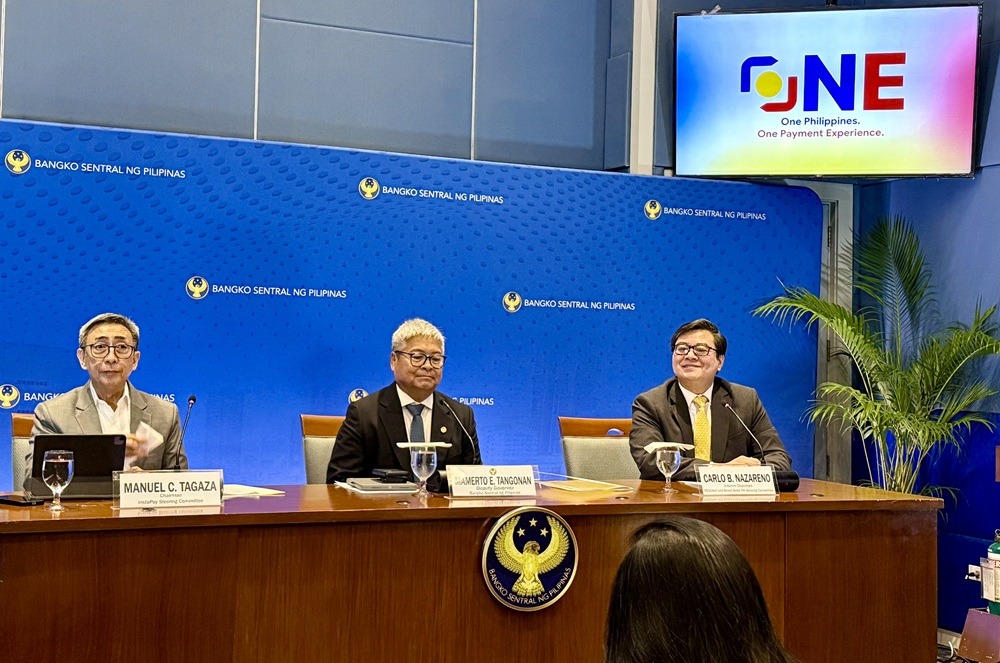
The Bangko Sentral ng Pilipinas (BSP) and Philippine Payments Management Inc. (PPMI) have launched three interoperable payment services covering recurring bills, account funding, and higher-value business transfers.
The first service, Direct Debit PH, allows customers to authorize billers to automatically collect recurring payments from their bank or e-wallet accounts on scheduled dates.
Unlike traditional automatic debit arrangements confined to one bank, the service can process payments between participating financial institutions.
The facility can be used for utility bills, subscriptions, loan payments, and insurance premiums. It has no system-wide transaction ceiling, as the maximum amount is set in the mandate agreed upon by the customer and biller.
BDO, Bank of the Philippine Islands, Rizal Commercial Banking Corp., and Chinabank participated in the pilot ahead of the service’s broader rollout.
The second service, InstaPay Cash-In, allows users to fund an account or e-wallet from another account they own without leaving the receiving institution’s application. Instead of initiating a transfer from the sending bank or e-wallet, the user requests the transfer through the account to be funded.
The service is initially available through AllBank, BPI, Chinabank, GoTyme Bank, GCash, MariBank, ShopeePay, and UnionBank. Sending institutions may charge transaction fees and impose their own limits.
InstaPay for Business, meanwhile, raises the maximum real-time InstaPay transfer for registered businesses from P50,000 to P500,000 per transaction.
It supports business-to-consumer and business-to-business payments, including payroll, insurance claims, loan disbursements, vendor payments, wholesale transactions, and intercompany transfers.
The service is available around the clock, with no system-wide limit on the number or total value of daily transactions. Participating financial institutions may still impose their own limits and fees.
Initial participants are Philippine National Bank, Wise Pilipinas, DCPay Philippines, GoTyme Bank, and RCBC.
“Interoperability and lower fees do more than lift transactions. They bring in more people. This is what financial inclusion looks like. More Filipinos sending and receiving money digitally. More Filipinos making the network stronger for everyone already on it,” BSP governor Eli M. Remolona Jr. said.
“This launch reaffirms the BSP’s commitment to build a payment system for every Filipino, and every Filipino business, no exceptions. This started with the National Retail Payment System Framework, which is the blueprint for a safer, faster, and more reliable and interoperable payment system,” BSP deputy governor Mamerto E. Tangonan said.
The BSP and PPMI also reiterated the distinction between QR Ph and InstaPay QR, a branding change introduced in 2024. QR Ph now refers to person-to-merchant payments, in which merchants shoulder transaction fees, while InstaPay QR applies to person-to-person transfers that may carry fees depending on the account used.
The rebranding did not change the technical standards or interoperability of the QR payment system. It was intended to prevent users from mistakenly using personal transfer QR codes for merchant payments and incurring fees.