Artificial intelligence is changing the nature of automation by taking on tasks that previously required human reasoning and judgment, even as cloud-based tools make the technology increasingly accessible to Filipino businesses and individuals, according to an official of the Analytics and AI Association of the Philippines (AAP).
Lee Abadia, technology consulting principal at SGV & Co. and member of the AAP Board of Trustees, said the significance of AI goes beyond automating repetitive or rules-based processes because the technology can now perform some tasks that involve interpreting information, generating responses, and supporting decisions.
“Unlike in previous technological shifts where you just automate the steps and manual processes, AI automates the human thinking. This is what makes it revolutionary,” Abadia said.
In businesses, earlier automation projects typically involved moving information or transactions through predefined steps. AI, he said, can increasingly be deployed at stages where a person would previously have been required to interpret information or determine the next course of action.
Abadia also drew a distinction between the different layers of infrastructure required for AI adoption. Basic Internet connectivity provides users access to AI services, while data centers and computing infrastructure support the development and operation of AI systems at a larger scale.
The growing availability of cloud and subscription-based AI services, meanwhile, means companies and individuals no longer necessarily need to build their own computing infrastructure to use the technology.
“So, meaning, because it’s commoditized, there’s already ability for the entire Philippines, as long as you have connectivity, to really leverage what it can do for you in terms of thinking,” Abadia said.
But wider availability does not necessarily mean the country is ready to use AI effectively, he cautioned.
Abadia said AI readiness should also include education on ethical use, prompting, and critical evaluation of AI-generated output, particularly because users can become overly dependent on answers generated by the technology.
“Aside from having the technology available, the readiness of a person to actually use it in terms of ethical use is also important,” he said.
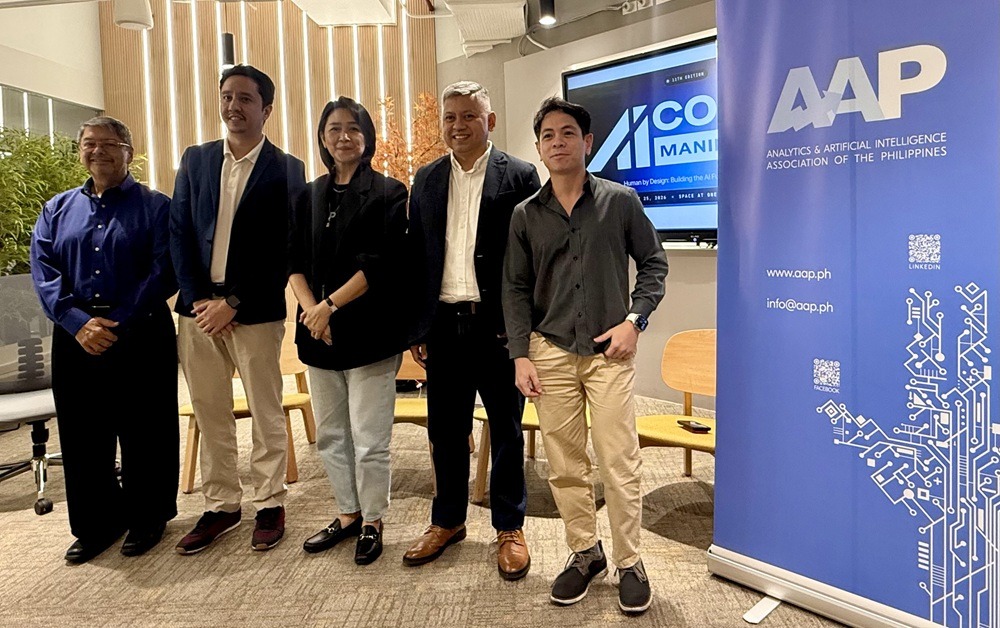
The question of how organizations can adopt AI while keeping people and accountability at the center will be among the topics at AICON Manila 2026, which AAP will hold on Aug. 25 at SPACE at One Ayala Mall in Makati City.
The conference, themed “Human by Design: Building the AI Future We Choose,” is expected to draw about 800 participants. Its sessions will cover AI implementation, education, enterprise adoption, safety, and governance.
Announced speakers include Globe Telecom chief intelligence and trust officer Anton Reynaldo Bonifacio; Commission on Higher Education Technical Panel on AI and Data Analytics chair Sherwin Pelayo; International AI Safety Commission chief standards and certifications officer Derick Ohmar Adil; RCBC chief data scientist Pam Cabudoy; and Globe Telecom vice president for enterprise data and strategic services Jenny Echevarria.