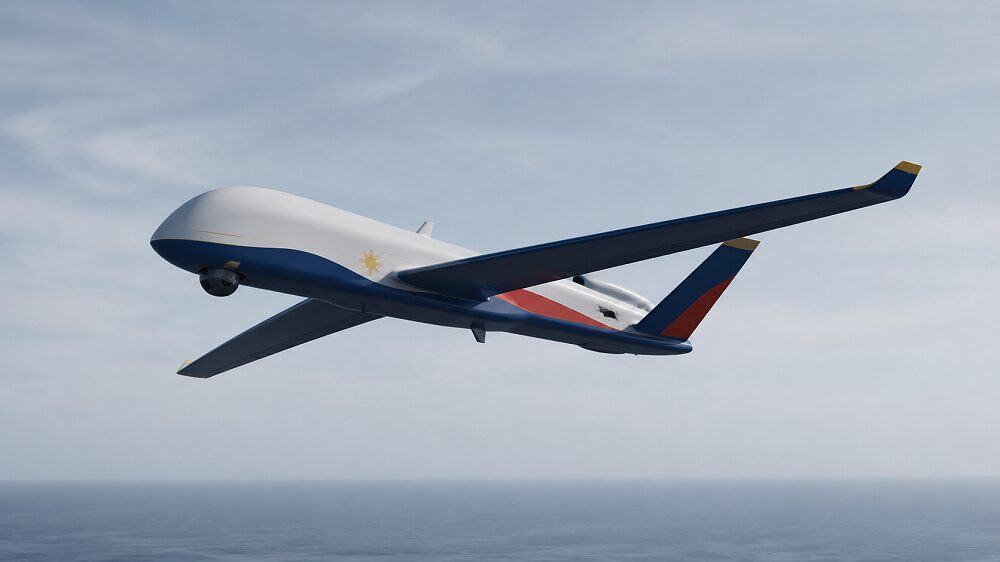
The Armed Forces of the Philippines (AFP) has begun testing drone systems being developed for military operations as it seeks to expand its use of unmanned technology for national defense.
AFP chief of staff Gen. Antonio Nafarrete said the military’s major services are conducting research and development on how drones can be deployed and eventually integrated into the country’s broader defense network.
Nafarrete confirmed the testing during his confirmation hearing before the Commission on Appointments after Sen. Panfilo Lacson asked whether the military had a concrete drone development program.
The AFP did not disclose the types of drones under development, their technical specifications or whether they would be used for surveillance, reconnaissance or combat operations.
The military’s drone initiative may have been influenced by Ukraine’s extensive use of relatively inexpensive unmanned systems in defending itself against Russian aggression.
Ukrainian forces have used drones for surveillance, battlefield targeting, precision strikes and attacks on military and logistics facilities behind Russian lines.
The Philippines has also begun exploring defense cooperation with Ukraine. A Philippine delegation led by Department of Defense undersecretary Salvador Mison met Ukrainian officials in Kyiv in July to discuss technology transfers, joint production and cooperation in unmanned systems, potentially allowing the AFP to draw on Ukraine’s battlefield experience.
Ukraine’s experience has demonstrated how drones can give a smaller military an asymmetric capability against a larger and better-equipped adversary. The AFP, however, has not explicitly said that its drone program was modeled on Ukraine’s strategy.
Lacson said drones could provide the Philippines with a less costly defense capability than warships and long-range missiles, particularly in responding to external threats.
“I just want to find out some details so that when we start budget deliberations, we can support the program if you have a tangible program to develop drones. Drones are the only practical option we have against external aggression, considering our situation,” Lacson said.
“I don’t think we have the wherewithal to build big warships or acquire long-range missiles and the like. Do we have a program to develop drones against external aggression? At least we have a fighting chance even if we don’t have enough funds,” he added.
The growing use of drones in modern conflicts has pushed militaries to invest in unmanned systems that can conduct intelligence, surveillance and reconnaissance missions, as well as strikes, at a lower cost than conventional aircraft and missile platforms.
Lacson asked the AFP to submit its funding requirements and technical specifications for possible inclusion in the proposed 2027 national budget.
“Glad to hear that. If you have budgetary requirements, kindly inform us because the National Expenditure Program has been transmitted to Congress. So give us the requirements with some specifications and we will move to justify them in the budget. Also, the House members of the CA are here and we will support your program on drone development,” he said.
He added that any additional funding should be made through institutional amendments based on programs that have undergone agency planning and technical evaluation.