A team of University of the Philippines (UP) researchers has developed an artificial intelligence-powered system that can identify hundreds of fish species and estimate their size, population density, distribution, and biomass, providing marine scientists and local governments with a new tool for monitoring marine protected areas.
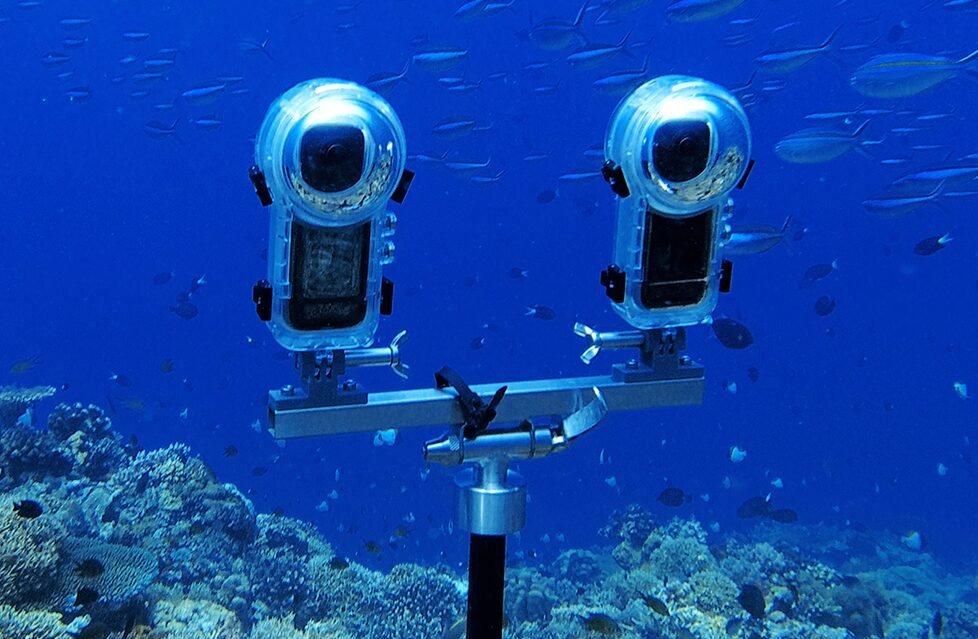
Called Fish-i, the semi-automated fish census system combines an underwater camera rig with computer vision to analyze fish populations without requiring highly trained divers to manually identify and count fish underwater.
The technology was developed by marine scientist Dr. Laura T. David and Dr. Prospero C. Naval Jr., chair of the UP Diliman Artificial Intelligence Program, after the two researchers met at a university forum that brought together faculty from the College of Science and College of Engineering.
David, who has nearly four decades of experience in marine science and physical oceanography, had been looking for a way to address the difficulties of conventional underwater fish surveys.
Such surveys traditionally require trained divers to identify and manually count fish and estimate their sizes while dealing with changing light, visibility, water conditions, and moving subjects.
The work also requires specialized expertise in identifying fish species. In the early 2000s, David recalled, “there were only five scientists I would stake my life on to identify fish underwater.”
At the university forum, Naval was presenting work involving computer vision, a branch of AI that enables machines to interpret images and other visual information.
David approached Naval with the idea of capturing underwater images and using computers to identify the fish appearing in them.
Naval initially estimated that the project could be completed in four months. It eventually took four years.
To better understand the conditions in which the system would operate, Naval learned to dive himself as the researchers worked on improving the algorithms.
The team eventually discovered that the technology could do more than recognize fish species. It could also estimate fish biomass and other measurements useful for marine resource management.
“We were just playing around with the idea at first,” Naval said. “I couldn’t believe it myself.”
Fish-i can now estimate the size, population density, and biomass of as many as 780 marine fish species. The system was designed so that divers with minimal training could gather data that would later be processed using its AI-powered image analysis.
The researchers said Fish-i is intended primarily for scientific and conservation work rather than helping commercial fishing operations locate fish.
The technology is already being used in Estancia, Iloilo, which became the first local government unit to formally adopt Fish-i for coastal resource management.
David and Naval are also exploring a partnership with the Department of Science and Technology to deploy the system in more marine protected areas around the Philippines.
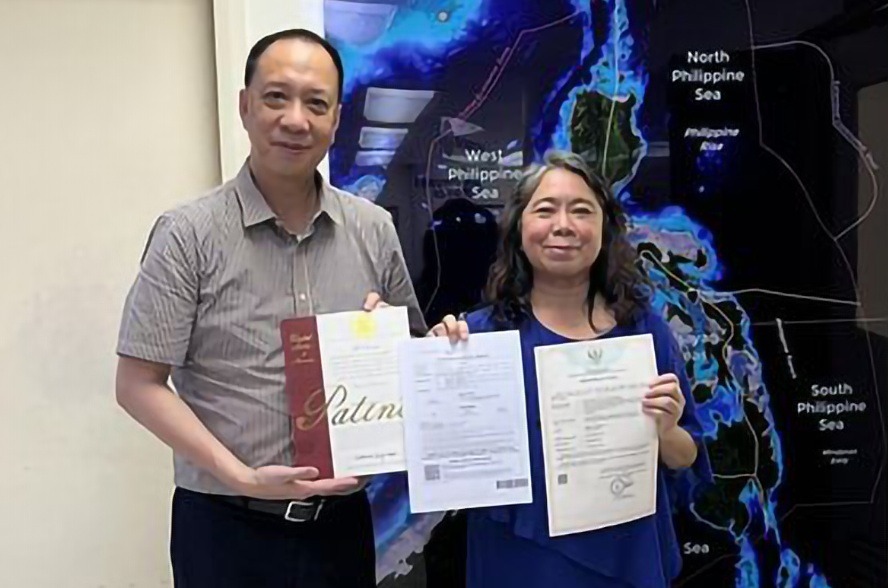
Fish-i has also moved beyond the research stage into intellectual property protection. The technology has secured patent protection in several territories, including the United States, Mexico, and Indonesia, following assistance from the UP Diliman Technology Transfer and Business Development Office (TTBDO).
The researchers, however, encountered an early problem after presenting a paper on Fish-i at an international conference before securing patent protection.
Public disclosure can affect an invention’s eligibility for patents in jurisdictions with strict novelty requirements. Some countries provide a grace period after disclosure, giving the researchers time to pursue protection.
“Don’t publish until you’re protected,” Naval said. “You only talk about it when it’s ready for commercialization.”
The experience underscored the tension researchers can face between publishing academic work and protecting inventions with commercial potential.
UP Diliman’s TTBDO has since received Palladium status under the Innovation and Technology Support Office (ITSO) program of the Intellectual Property Office of the Philippines. ITSOs assist researchers and inventors with intellectual property protection and commercialization.
Naval said technologies developed to address difficult Philippine conditions could also have applications overseas.
“Think global,” he said. “The Philippines is an excellent testbed; the problems we have here are already very challenging. So if we’re able to solve the challenging problems here, these solutions are likely to work for less challenging problems elsewhere.”
David said Fish-i also demonstrated the potential of combining expertise from different fields.
“Go beyond your own discipline,” she said. “Each discipline has already progressed so much that what you need to do is to combine them. The intersection is what’s going to give rise to a lot of innovations.”