The growing fear of online scams is discouraging Filipinos from using digital services, potentially slowing the country’s digital economy despite its strong growth, according to the GSM Association (GSMA).
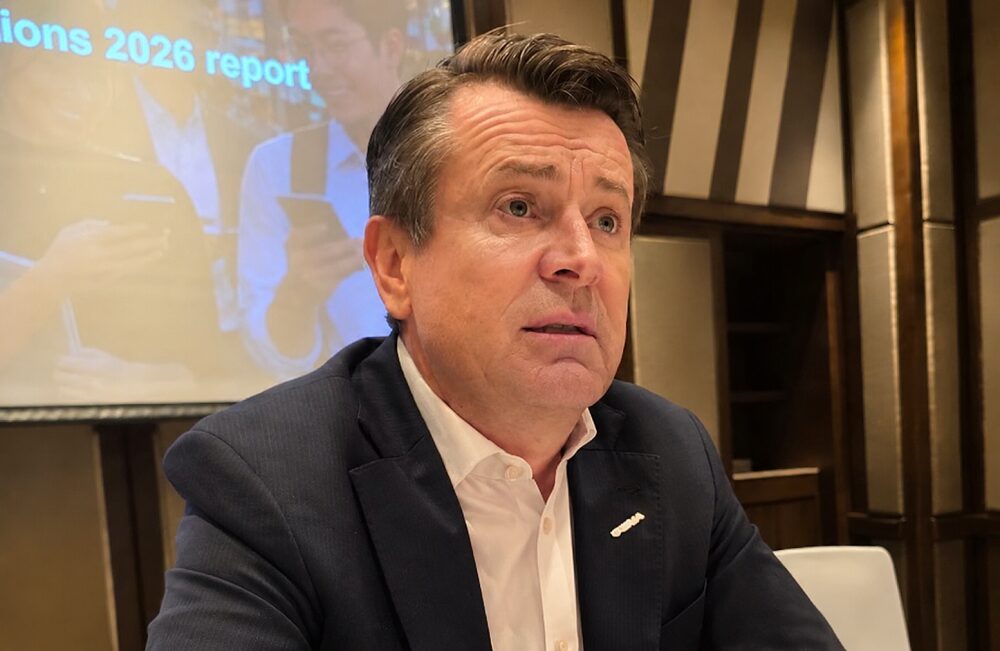
Julian Gorman, head of Asia Pacific at GSMA, said digital trust is emerging as a major barrier to wider adoption of online services, with consumers becoming increasingly cautious about answering calls, responding to messages, and conducting transactions online.
The GSMA ASEAN Consumer Scam Report 2026 found that 76% of Filipino consumers surveyed said they “absolutely worry” about being scammed, while 62% said they were avoiding contact or transactions because of scam concerns.
Gorman warned that this growing apprehension could undermine the benefits of digital transformation, particularly as businesses, government services, and consumers become more dependent on online platforms.
“What that means is people are cautious about answering phones, or won’t answer the phone, or won’t answer messages, be cautious about transacting online,” he said in an interview on the sidelines of the GSMA Digital Nation Summit Manila on Nov. 4.
He noted that Filipinos are relatively open about discussing their financial losses from digital fraud, including on social media. He considers this a positive development because it encourages public discussion, raises awareness, and puts pressure on institutions to improve online security.
“As we head for 5G, and even beyond, where we’re transforming economies, transforming industry, that cautiousness will translate into slower adoption, or maybe even withdrawal,” Gorman said.
The Philippines ranked third equal among 11 Asean markets in the GSMA Digital Nations Index 2026, reflecting its progress in digital development.
However, Gorman said sustaining that momentum would require addressing concerns beyond connectivity, particularly online safety and consumer confidence.
Mobile operators strengthen anti-scam measures
Against this backdrop, Globe Telecom, PLDT/Smart, and DITO Telecommunity are advancing measures to strengthen consumer protection, including network safeguards and technologies that can help make digital transactions safer.
At the Manila summit, the three mobile operators highlighted their support for GSMA Open Gateway capabilities, which allow telecommunications networks to make certain functions available through application programming interfaces (APIs).
These capabilities can help businesses verify users’ identities and authenticate transactions, reducing opportunities for fraud.
Gorman said Philippine mobile operators had signed a joint declaration committing to make these trust-related APIs available to services operating at scale, including payment providers and government platforms.
The initiative is intended to strengthen confidence that digital transactions and interactions are being conducted by legitimate users.
The GSMA is also working with operators across Asean to explore how network data and signals can help identify potential scam activity before consumers become victims.
In the Philippines, this effort is being advanced through a GSMA Foundry proof of concept with Globe.
Gorman said the Philippines was the first among the Asian markets involved in the initiative to begin an actual data exchange for this purpose.
He attributed the progress to the willingness of local industry players to test new approaches to fraud prevention.
“No single organization or entity has the full scam picture,” he said.
For instance, a telecommunications operator may detect unusual calling patterns or recent SIM card changes, while a financial institution may identify suspicious transactions.
Individually, these signals may not establish fraudulent activity. When analyzed collectively, however, they could help identify potential scammers and allow digital platforms to take preventive action.
Other indicators include expired mobile numbers, unusual volumes of outgoing calls, and frequent SIM replacements.
Gorman stressed that the information must be shared under privacy-protective arrangements, particularly given the importance of complying with data privacy requirements.
The GSMA said the initiative remains at an early stage, with the objective of developing mechanisms that could identify suspicious activities before fraudulent transactions occur.
Three layers of digital protection
The GSMA is pursuing a three-layer approach to strengthening digital trust.
The first involves protecting telecommunications networks through the GSMA United Against Scams Playbook, which provides operators with practical measures for scam prevention, detection, and response.
Gorman said mobile operators serving more than 85% of the world’s mobile users have committed to the program’s network safeguards.
The second layer focuses on protecting digital transactions through Open Gateway APIs that can help businesses strengthen identity verification and authentication.
The third involves collective intelligence, or the sharing of relevant network signals among telecommunications operators and other digital industry players to identify potential scams earlier.
Gorman said these efforts are necessary because criminals increasingly operate across different communications channels, financial institutions, and digital platforms.
He also cited the continuing threat posed by fake cellular base stations, which criminals can use to intercept communications or distribute fraudulent messages.
He said such equipment has become more sophisticated, with newer versions capable of targeting 4G and 5G networks in addition to older technologies.
Gorman cited cooperation between Globe and the Department of Information and Communications Technology in developing capabilities to identify and respond to unauthorized base stations.
He said the GSMA’s United Against Scams initiative was developed in Asia Pacific in response to the region’s growing association with organized scam operations.
Connectivity gap remains significant
Beyond digital fraud, Gorman said the Philippines still faces considerable challenges in providing reliable mobile broadband access.
He cited GSMA data indicating that approximately 40 million Filipinos still lack reliable mobile broadband connectivity.
He said measuring digital progress solely through economic growth and network coverage could obscure persistent problems involving service quality, reliability, and actual usage.
The shift toward remote work and increasingly digital lifestyles also means that connectivity must be available beyond traditional urban centers.
Gorman said mobile data consumption in markets such as the Philippines could increase twofold to threefold over the next five years as consumers adopt more data-intensive applications and connected devices.
This would require sustained investment in telecommunications infrastructure.
He also emphasized the importance of network resilience, particularly in a country frequently affected by typhoons and other natural disasters.
Reliable connectivity is essential not only for emergency warnings and disaster response but also for businesses that depend on digital payments and online transactions.
Gorman said digital trust must therefore cover more than protection against scams. It should also include reliable networks, secure communications, and safeguards against harmful online content.
Policy stability needed to attract investment
Gorman also urged the Philippine government to maintain consistent policies supporting digital innovation and telecommunications investment.
He acknowledged the country’s progress in encouraging startups and digital entrepreneurship but said long-term policy stability remains important in attracting international investors.
He cited Singapore’s sustained investment in digital development and Vietnam’s initiatives to improve spectrum availability and encourage faster network deployment.
According to Gorman, investors are more likely to commit resources when governments demonstrate a clear and consistent direction for digital transformation.
He also called for stronger coordination among government agencies responsible for telecommunications, cybersecurity, data privacy, economic development, and national security.
Gorman said the Philippines had demonstrated that collaboration between government and industry could produce results, particularly through initiatives to combat scams and strengthen digital trust.
However, he acknowledged that coordination across government and industry remains difficult.
He said the challenge now is to ensure that the country’s digital growth translates into meaningful benefits for more Filipinos, rather than simply higher economic indicators.