The Philippines could attract technology projects as global spending on artificial intelligence (AI) infrastructure expands, but competition for capital, high borrowing costs, and uncertain project timelines could limit its gains, according to Citi.
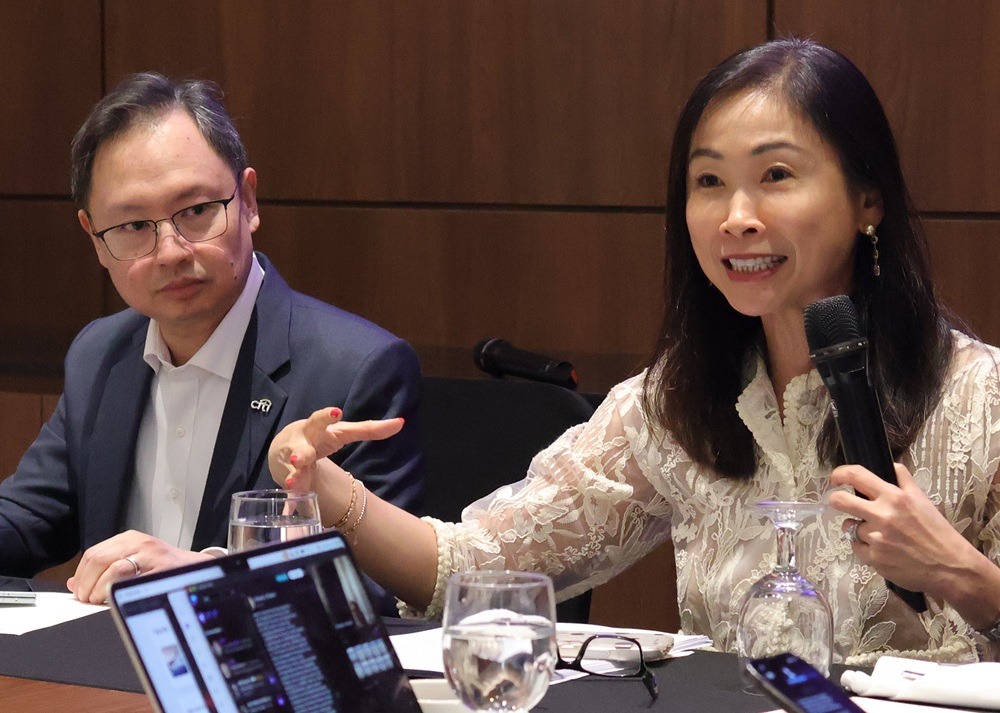
Photo shows Paul Pavila, CEO of Citi Philippines (left) and Joana Chia, global head of emerging market economics at Citigroup, during the recent media briefiing
At a recent economic briefing, Citi executives said investment in data centers, computing infrastructure, and related technologies remained strong despite concerns over technology valuations and market volatility.
The bank identified the Luzon Economic Corridor and the US-led Pax Silica initiative as possible channels for drawing investments into semiconductor-related industries, manufacturing, logistics, and other technology activities.
However, Citi said the Luzon Economic Corridor still lacked clearer implementation timelines and concrete project milestones despite interest from local and international companies.
Globally, AI-related capital spending could reach trillions of dollars through 2032, according to industry projections cited by the bank.
Citi’s updated global capital expenditure model, released in early November, showed rising spending projections among US hyperscalers, emerging cloud providers, and other technology companies. The bank expects construction of AI infrastructure to continue as demand for computing capacity exceeds available supply.
Regulatory restrictions, power requirements, and political developments could influence the location of future facilities. Citi said some investments could move outside the United States, creating openings for emerging markets that can support data centers and related infrastructure.
The spending surge, however, is also intensifying competition for capital. Citi warned that this could keep international bond yields elevated, affecting financing conditions in countries such as the Philippines, where businesses already face higher interest rates and slower economic growth.
Citi also flagged changes ahead for the country’s business process outsourcing (BPO) industry as AI automates routine tasks and raises productivity.
While AI adoption has not led to widespread BPO layoffs, the bank said the industry’s longer-term prospects would depend partly on whether productivity gains lead to higher wages and new jobs.
Citi said the Philippines needs to expand beyond traditional outsourcing services and take a greater role in AI hardware, infrastructure, and technology supply chains.
The bank has meanwhile shifted its technology equity positioning from overweight to neutral amid valuation concerns, while reallocating investments within the sector.
Despite those concerns, Citi expects AI infrastructure to remain a major driver of global capital spending. For the Philippines, securing a share of that investment will depend on its ability to support technology facilities and carry industrial projects through to implementation.