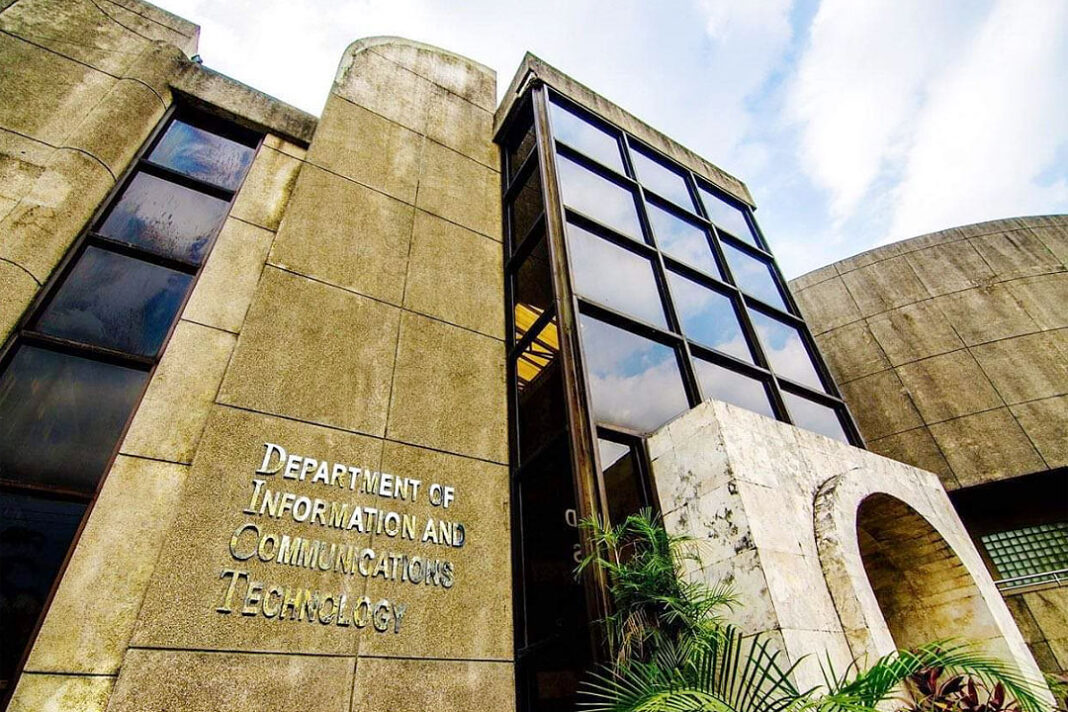
As the Department of Information and Communications Technology (DICT) intensifies its push for the passage of the “Konektadong Pinoy” bill, former DICT secretary Gregorio “Gringo” Honasan has voiced strong opposition, citing serious national security concerns.
In a detailed statement released last week, the DICT addressed key concerns raised by telecommunications firms over the bill, which seeks to expand open access to broadband infrastructure.
The agency outlined five major clarifications, particularly in response to criticisms over regulation, cybersecurity, and foreign ownership.
- On Regulatory Oversight: The DICT asserted that the bill does not diminish the powers of the National Telecommunications Commission (NTC). Rather, it aims to modernize and strengthen the agency’s regulatory functions in the digital era — especially in cybersecurity, service quality, and competition. The department is also finalizing implementing rules and regulations (IRR) that reinforce NTC’s mandate as an active and empowered regulator.
- On Foreign Ownership and Security: The agency underscored that national security remains paramount. While the bill promotes open access to the middle-mile and last-mile segments of broadband networks, it maintains strict controls over backbone and core infrastructure, which remain subject to existing laws like the Public Service Act and Cybercrime Prevention Act.
- On Franchising Requirements: To speed up broadband deployment in underserved areas, the bill proposes removing the congressional franchise requirement for certain segments of data transmission — but not for telcos. All operators, the DICT clarified, will still undergo permitting and security evaluations under its oversight.
- On Cybersecurity Compliance: The DICT emphasized that new industry entrants must comply with baseline cybersecurity requirements before launching operations. The three-year clause cited in the bill applies only to the upgrade of older systems — not to active threat management.
- On Stakeholder Participation: The department is engaging legal, civil society, and cybersecurity stakeholders in drafting the final IRR. It encouraged groups to submit position papers, recommend safeguards, and participate in technical working groups to shape the law’s implementation.
Despite DICT’s reassurances, Honasan, speaking through PLDT — a member of the Philippine Communications and Telecommunications Operators (PCTO), which opposes the bill — expressed deep reservations.
He warned that the bill’s provision easing restrictions for foreign-controlled firms to build or operate critical infrastructure such as international cable landing stations and satellite gateways could expose the country to external threats.
“Without a legally mandated vetting process, relying solely on IRR cannot guarantee the level of scrutiny and accountability needed for national security,” Honasan said.
He argued that the absence of clear legal safeguards could lead to unauthorized access to sensitive information, potential disruptions to digital infrastructure, and wider threats to public safety, economic stability, and national sovereignty.
To address these issues, Honasan proposed the following:
- Legal accountability provisions for service failures or breaches at any operational level.
- Enforceable penalties to serve as a deterrent against negligence or non-compliance.
- Clear limitations on foreign-owned Data Transmission Industry Participants (DTIPs), particularly those operating infrastructure outside Philippine jurisdiction.
“The Constitution allows the State to assume control of critical infrastructure during national emergencies. But under the current draft of the bill, foreign-owned DTIPs with offshore infrastructure might not be covered — leaving the government without legal or physical control during crises,” he stated.