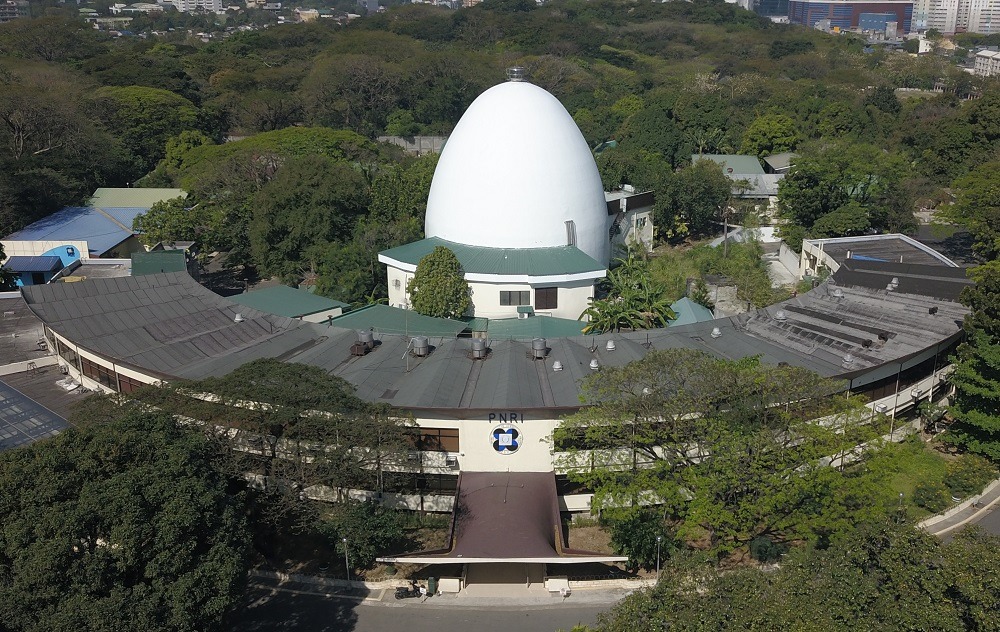
Pres. Ferdinand R. Marcos Jr. has signed into law the Philippine National Nuclear Energy Safety Act or the PhilATOM bill, establishing the Philippine Atomic Energy Regulatory Authority (PhilATOM) as the country’s independent nuclear regulator.
The signing took place on Sept. 18, 2025, months after Congress ratified the measure that had been pending for nearly two decades.
PhilATOM will oversee all sources of ionizing radiation in the Philippines — ranging from power generation to medical, agricultural, and industrial applications — ensuring safety, security, and compliance with international safeguards.
“The approval of the PhilATOM bill is yet another landmark measure that we at the Department of Science and Technology (DOST) have been pushing to address pressing issues in our S&T landscape,” said DOST secretary Renato Solidum Jr.
DOST-Philippine Nuclear Research Institute (PNRI) director Carlo Arcilla emphasized that the law fulfills a key requirement for potential nuclear power operators to have an independent regulatory body.
“The passing of the PhilATOM bill will help usher in the integration of nuclear power in the Philippine energy mix, helping provide dependable baseload and reliable electricity to consumers and the industry,” he said.
The law separates regulatory functions from the DOST-PNRI’s promotion, research, and development roles, and incorporates the former mandate of the Food and Drug Administration’s Center for Device Regulation, Radiation Health and Research (FDA-CDRRHR), which supervised devices generating ionizing radiation such as x-ray machines and linear accelerators.
Officials said unifying all ionizing radiation sources under one authority would improve efficiency, ensure consistent safety standards, and strengthen protection for workers, patients, the public, and the environment.
The legislation also updates provisions on nuclear safety, security, safeguards, and emergency preparedness in line with the country’s commitments to the International Atomic Energy Agency (IAEA) and global treaties.
In Congress, House Bill 9293 secured 200 votes on third reading in November 2023, led by principal sponsor Rep. Mark Cojuangco, chair of the House Special Committee on Nuclear Energy.
Its counterpart, Senate Bill 2899, won approval in 2025 with 22 senators voting in favor, with Sen. Alan Peter Cayetano sponsoring the measure as chair of the Senate Committee on Science and Technology.
Both chambers ratified the bicameral conference report in June 2025 before transmitting the bill to Malacañang in August.
“We thank the great efforts of DOST, DOST-PNRI, FDA, DOE, and Congressional staff of both houses who spent many hours crafting the bill, which has been pending for almost 20 years,” Arcilla said.