The Supreme Court (SC) has officially institutionalized electronic and regionalized bar examinations as the standard mode of admission to the practice of law in the Philippines, following the approval of the 2025 Proposed Amendments to Rule 138 of the Rules of Court.
In a resolution dated August 12, 2025 (A.M. No. 24-10-05-SC), the SC en banc adopted the amendments, which are the product of extensive consultations led by the Subcommittee on Admission to the Bar chaired by SC associate justice Ramon Paul L. Hernando.
The subcommittee includes associate justices Rodil V. Zalameda and Maria Filomena D. Singh as co-vice chairpersons, alongside members from the appellate courts, the Legal Education Board, the Philippine Judicial Academy, law schools, and professional associations.
The amended rules seek to promote inclusiveness, fairness, and non-discrimination while ensuring integrity and efficiency in the bar exam process through technology-driven administration.
The move makes permanent the electronic and regionalized bar exams first introduced in 2022 in response to the Covid-19 pandemic. It also reflects the judiciary’s commitment to modernization under the Strategic Plan for Judicial Innovations 2022–2027, which emphasizes technology-driven efficiency and accessibility.
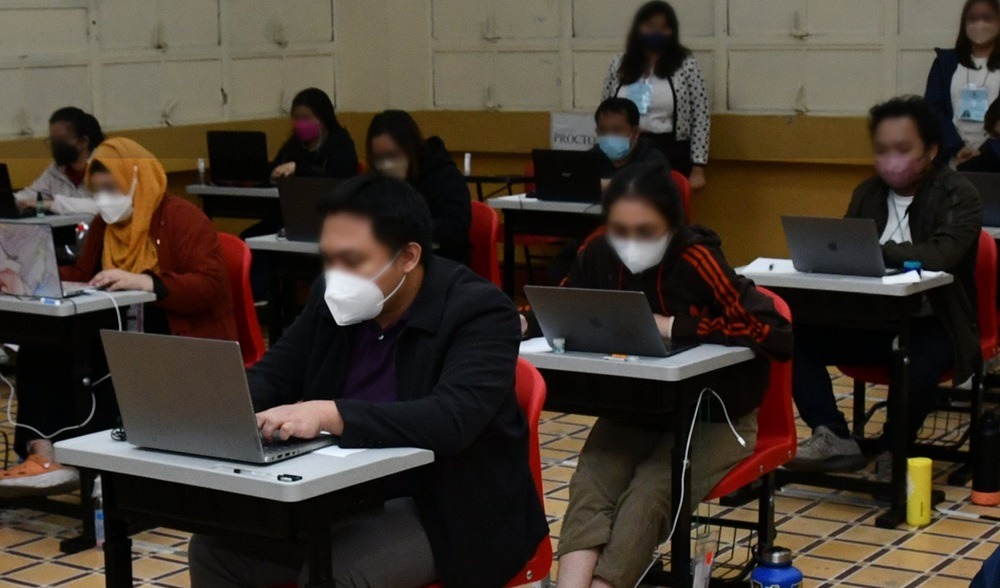
Under the new framework, bar examinations will now be conducted electronically through a secure assessment platform and held simultaneously in regional testing centers nationwide. The exams will be administered in English and will remain uniform across all locations.
Examinees will take the test personally, with accommodations to be provided for persons with special needs in accordance with separate guidelines issued by the Bar chairperson.
The new rules set a three-day examination schedule in September, divided by subject area as follows:
First Day:
- Morning: Political and Public International Law
- Afternoon: Commercial and Taxation Laws
Second Day:
- Morning: Civil Law and Land Titles and Deeds
- Afternoon: Labor Law and Social Legislation
Third Day:
- Morning: Criminal Law
- Afternoon: Remedial Law, Legal and Judicial Ethics, with Practical Exercises
The subjects carry the following weights:
- Political and Public International Law – 15%
- Commercial and Taxation Laws – 20%
- Civil Law and Land Titles and Deeds – 20%
- Labor Law and Social Legislation – 10%
- Criminal Law – 10%
- Remedial Law, Legal and Judicial Ethics, with Practical Exercises – 25%
To pass, examinees must obtain a general average of 75%, unless the SC sets a different passing rate.
The amendments also integrate the Clinical Legal Education Program under Rule 138-A as a prerequisite for admission to the bar. Applicants must also demonstrate good moral character and have no final conviction involving moral turpitude.
Applicants who face such charges before the release of results — or after passing but before taking the oath — must promptly inform the SC. Failure to disclose, or the submission of false information, can result in disqualification, delisting, or disciplinary sanctions.
The Amended Rules will take effect on November 3, 2025, following full publication in the Official Gazette or in two newspapers of general circulation.