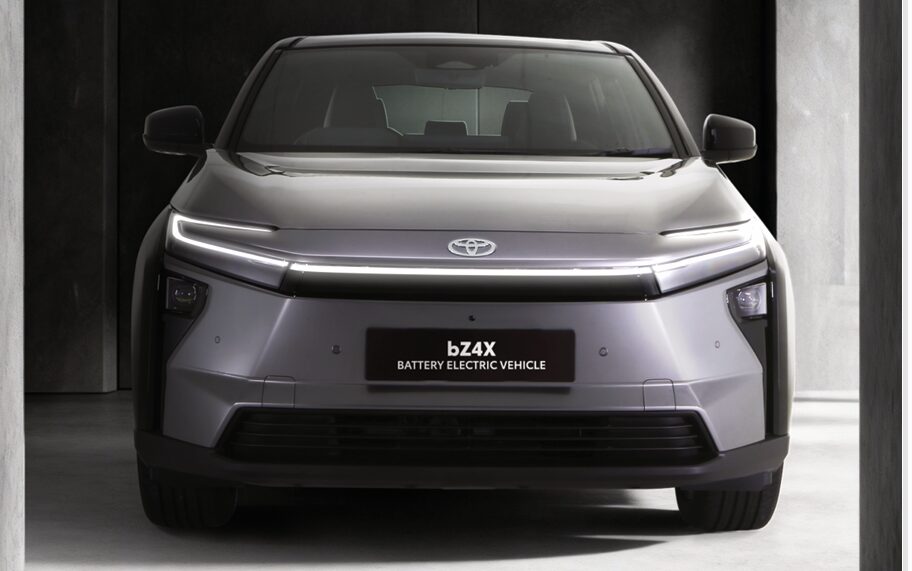
In a major shift from its earlier focus on hybrid and hydrogen-powered mobility, Toyota Motor Philippines (TMP) is introducing its first-ever all-electric vehicle — the all-new Toyota bZ4X, signaling the company’s stronger entry into the fast-evolving electric vehicle (EV) market.
The bZ4X, part of Toyota’s global “beyond Zero (bZ)” lineup, marks a significant milestone in the brand’s multi-pathway approach toward achieving carbon neutrality. Filipino customers can begin placing reservations starting Nov. 7, ahead of the model’s official debut this December.
“Our multi-pathway approach is all about giving customers multiple options,” said TMP president Masando Hashimoto. “I hope more Filipinos can join us in our movement toward carbon neutrality with the all-new bZ4X.”
The all-new bZ4X combines Toyota’s renowned reliability with cutting-edge electric technology, featuring a radical aerodynamic design, advanced driver-assist systems, and long-range performance developed in partnership with Subaru.
This move also comes after years of speculation that Toyota — a global leader in hybrid technology — was reluctant to go fully electric, instead prioritizing the development of hydrogen fuel cell vehicles (FCVs) such as the Toyota Mirai.
The company has long argued that hydrogen offers a cleaner and more scalable energy pathway, particularly for markets with limited charging infrastructure.
With the launch of the bZ4X, however, Toyota signals its readiness to compete head-on in the EV segment, while still maintaining its strategy of offering multiple sustainable options — from hybrids and plug-in hybrids to hydrogen fuel cells and full battery EVs.
The all-new bZ4X will be available in Emotional Red, Precious Metal, Platinum White Pearl Mica, and Dark Blue Mica, with prices starting at ₱2,699,000.
The arrival of the bZ4X in the Philippines comes at a time when government agencies and private companies are expanding EV infrastructure and incentives — aligning with the Electric Vehicle Industry Development Act (EVIDA) and the country’s broader net-zero targets.