The Supreme Court (SC) has upheld the legality of a congressional inquiry into online misinformation, ruling that inviting vloggers to a congressional hearing did not infringe on their constitutional right to free speech.
In a decision penned by SC associate justice Amy C. Lazaro-Javier, the SC en banc dismissed the petition filed by Ernesto S. Abines Jr. and several others, who sought to stop the House of Representatives from compelling them to appear in legislative inquiries regarding their social media posts.
The inquiry stemmed from two privilege speeches delivered by Surigao del Norte representative Robert Ace Barbers, who accused an online group of spreading false information and orchestrating coordinated attacks against public officials. Barbers referred to the group as “paid trolls” and “malicious vloggers” and urged Congress to take action.
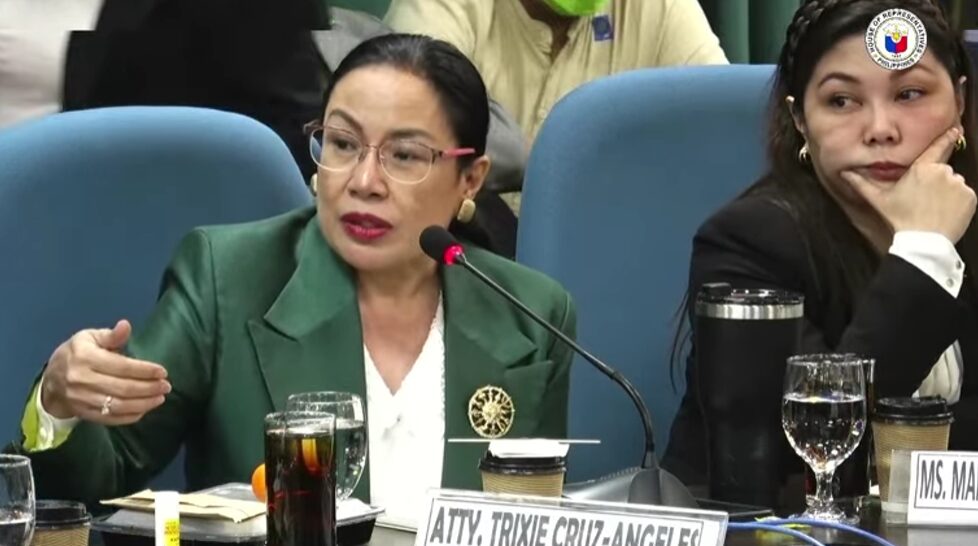
His statements prompted three House panels — Public Order and Safety, Information and Communications Technology, and Public Information — to convene a joint inquiry into online misinformation.
The vloggers invited to the hearings argued before the SC that the proceedings humiliated them, violated their right to speak freely, and created a chilling effect intended to silence their online content.
But the SC rejected these claims, saying the mere act of inviting resource persons does not restrict their speech or dictate what they can or cannot say.
Citing Article III, Section 4 of the Constitution, the High Court stressed that freedom of speech covers protection from prior restraint and from subsequent punishment. While the state may regulate certain forms of speech, it must do so in pursuit of legitimate objectives.
The SC found no indication that Congress sought to regulate or suppress the vloggers’ content. Instead, lawmakers were gathering information to craft legislation addressing the societal impact of false or misleading online content.
The High Tribunal further ruled that congressional invitations cannot be barred simply because the subject involves speech, noting Congress’ authority to pass laws penalizing unprotected forms of expression, such as speech that incites disorder or threatens public safety.
Barbers’ privilege speeches were also found to be lawful, delivered in his official capacity and focused on a public issue — the spread of misinformation and its harms to both government officials and ordinary citizens.
The SC recognized Congress’ broad power to conduct inquiries in aid of legislation, provided they follow published rules and honor the rights of witnesses.
In this case, the House Tri-Committee adopted guidelines ensuring that proposed measures would protect free expression while addressing harmful online behavior. It also sought to identify gaps in current laws, improve platform accountability, and recommend steps to combat cybercrimes linked to false and malicious content.
The SC noted, however, that certain lawmakers posed harsh or demeaning questions during the hearings. It reminded Congress that resource persons are entitled to constitutional protections and must be treated with respect.
In a separate opinion, SC senior associate justice Marvic Leonen agreed that the petitioners’ claims lacked merit but pointed out that the case had become moot since the congressional inquiry had already concluded.
Still, he affirmed that the hearings served a valid purpose: addressing the growing problem of disinformation amplified by social media.
With the ruling, the SC affirmed that congressional investigations into misinformation — when properly conducted — do not amount to censorship or a violation of free speech rights.