
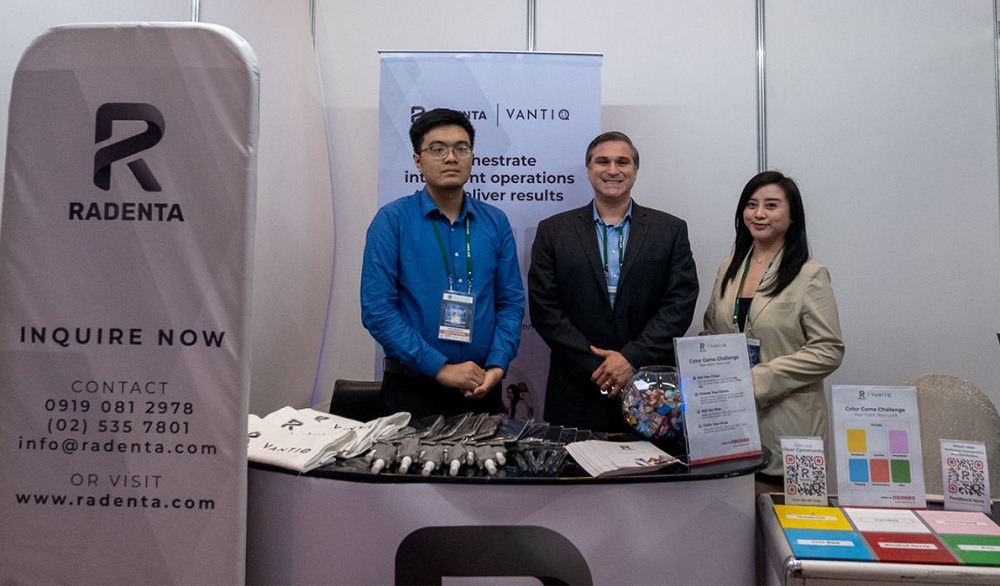
Radenta Technologies and global real-time AI orchestration company Vantiq brought advanced healthcare technology solutions to the Philippines during the 46th National Convention and Exhibition of the Private Hospitals Association of the Philippines (PHAPi), held at the Manila Hotel.
In a session titled “Hospital Philippine Operations in the Age of AI: Real-Time, Patient-Centered Care,” Vantiq chief health officer Dr. Ryan Vega demonstrated how real-time, context-aware AI can help hospitals improve operational efficiency, streamline clinical workflows, and support faster, data-driven patient care decisions.
Vega emphasized that reducing time spent on administrative systems allows healthcare professionals to devote more time to patients.
Vantiq’s platform combines artificial intelligence, Internet of Things (IoT), and real-time data processing to enable hospitals to adopt more integrated and responsive models of care without replacing existing infrastructure.
Vega highlighted how real-time AI orchestration can significantly improve electronic health record (EHR) updates, clinical coordination, and operational visibility.
Among the solutions presented was Vantiq Bio Surveillance Philippines, a privacy-preserving, real-time disease intelligence network designed to support coordinated public health response.
The system allows participating hospitals to operate independently while sharing anonymized, coded signals — such as ICD-10 classifications — to a centralized dashboard.
This enables health leaders to monitor live disease trends and geographic clusters, such as dengue cases, alongside hospital readiness indicators including bed availability, ICU capacity, medications, and equipment.
The platform also features automated alerting based on predefined thresholds and an AI assistant called Emma (Epidemic Monitoring & Mitigation Assistant), which responds to natural-language queries to help decision-makers quickly assess case volumes and facility capacity during potential surges.
Vega also outlined how AI orchestration can streamline hospital discharge processes. Upon admission, the system automatically generates a tailored discharge plan based on the patient’s condition.
AI then continuously monitors required tasks — from laboratory results and medication reconciliation to billing clearance and PhilHealth documentation.
If delays occur, the system triggers intelligent escalation, notifying responsible units and adjusting downstream workflows. Once all requirements are met, discharge approval and notifications are automatically completed.
According to Vantiq, this approach leads to faster discharges, improved bed turnover, reduced administrative backlogs, better revenue capture, and higher patient and staff satisfaction.
Vantiq has published a Virtual Hospital Whitepaper detailing how health systems globally are using real-time data, AI, and automation to build scalable care models while improving outcomes and efficiency.
Dr. Vega previously served as chief innovation officer of the US Veterans Health Administration, where he led enterprise-wide innovation initiatives across the country’s largest integrated health system.
He currently holds academic and advisory roles in digital medicine and healthcare innovation and has published extensively on healthcare transformation.
Radenta Technologies said it is working with partners like Vantiq to help Philippine hospitals adopt future-ready digital health solutions that enhance patient care while strengthening operational resilience.
Ask Radenta how you can equip your organization to deliver exceptional care and stay future-ready in an evolving digital health landscape. Call 0961-596-7198, email [email protected] or log on to www.radenta.com.


