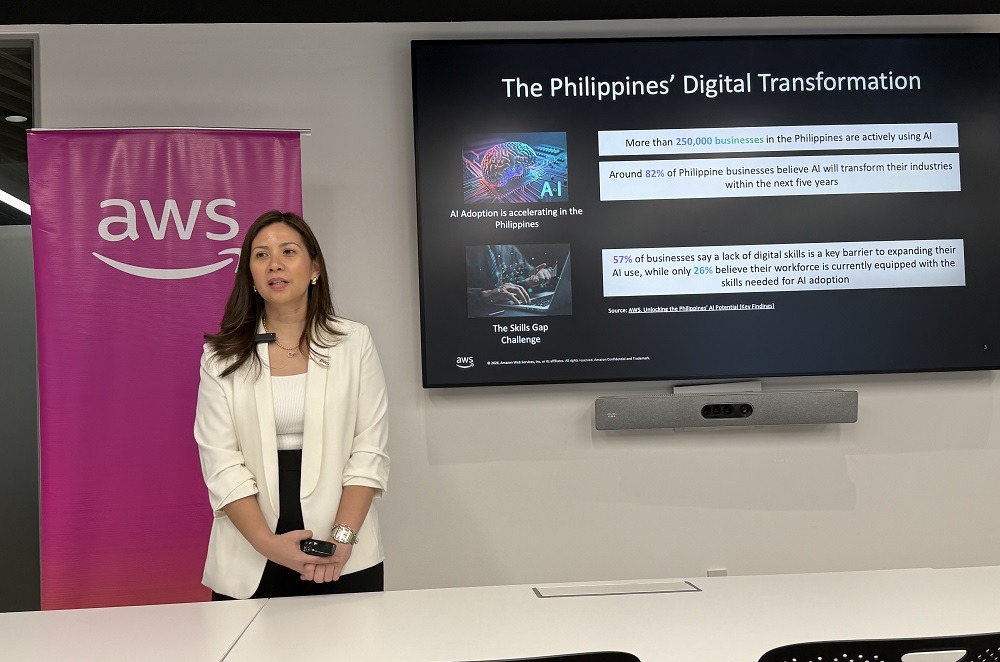
Artificial intelligence (AI) adoption in the Philippines is accelerating, with around 250,000 organizations now using the technology, but a shortage of digital skills continues to pose a major challenge, according to speakers at a recent media briefing organized by AWS Philippines.
Precious Lim, country manager of AWS Philippines, said the country is at a “critical inflection point” in its digital transformation, driven by rapid developments in AI, cloud computing, and other emerging technologies.
“The Philippines is really at an inflection point when it comes to digital transformation,” Lim said, noting that both public and private sector organizations are ramping up investments in digital capabilities.
Citing an AWS report, Lim said AI adoption among Philippine organizations has grown between 21% and 24% year on year, up from 14% previously, while 82% of businesses believe the technology will transform how they operate and serve customers.
However, the report also highlighted a widening skills gap. About 57% of businesses cited a lack of digital skills as a key barrier to expanding AI use, while only 26% believe their workforce currently has the necessary capabilities.
“The importance of getting people skilled on AI, cloud, and new technology is becoming very clear to organizations,” Lim said.
Amid this gap, community-driven initiatives have emerged as a key pipeline for talent development.
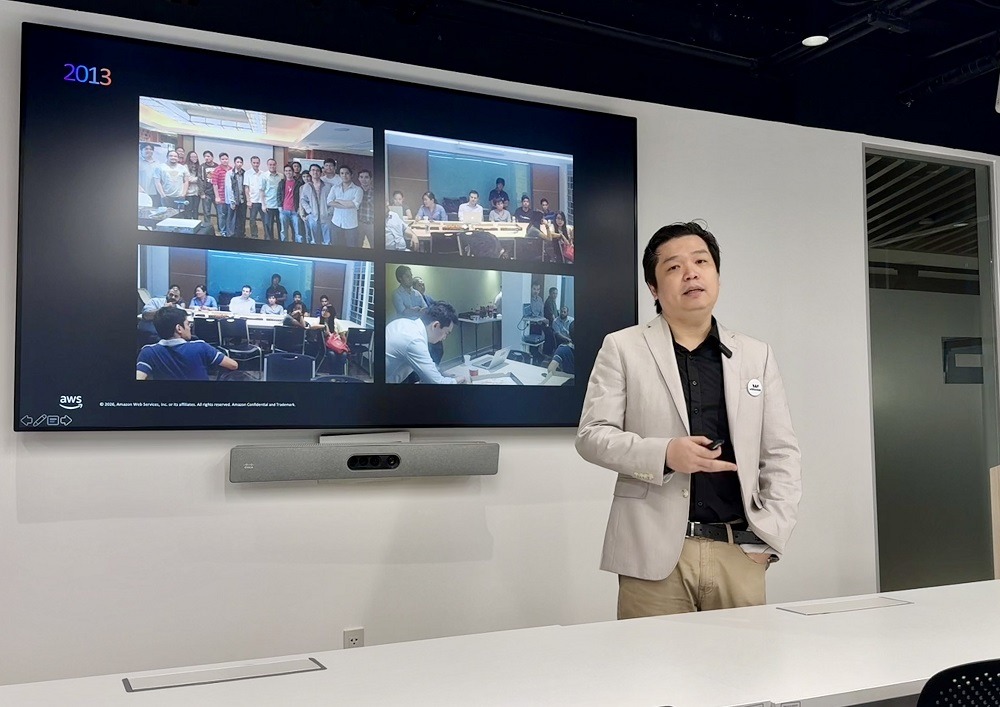
Raphael Quisumbing, head of Cloud, Data, AI Innovation at White Cloak Technologies Inc., said the local cloud ecosystem grew from a small group of volunteers more than a decade ago into a nationwide network with over 30,000 members.
“At the time, scaling e-commerce systems meant scheduling downtime and upgrading physical servers,” Quisumbing said, recalling the early days of cloud adoption when local support was scarce and practitioners relied on self-learning and overseas contacts.
From informal meetups, the initiative has expanded into a broad ecosystem that includes specialized groups for students, women, and machine learning practitioners, as well as more than 50 campus-based “Cloud Clubs” nationwide.
Quisumbing said the community’s growth has been largely organic and adaptive.
“It’s not static. The community adapts based on what people need — whether it’s new skills, new technologies, or new ways to collaborate,” said Quisumbing, who was recognized as an AWS Hero for his contributions to
the cloud community.
With over a decade of experience in cloud technologies, he has been a key figure in building and nurturing the AWS community in the Philippines, serving as a co-leader of the AWS User Group Philippines since its early days in 2013.
Beyond training, the community has helped produce startups, enabled career shifts into tech, and even encouraged overseas Filipino workers to return home after gaining cloud-related skills.
For some practitioners, these grassroots programs have been career-defining.
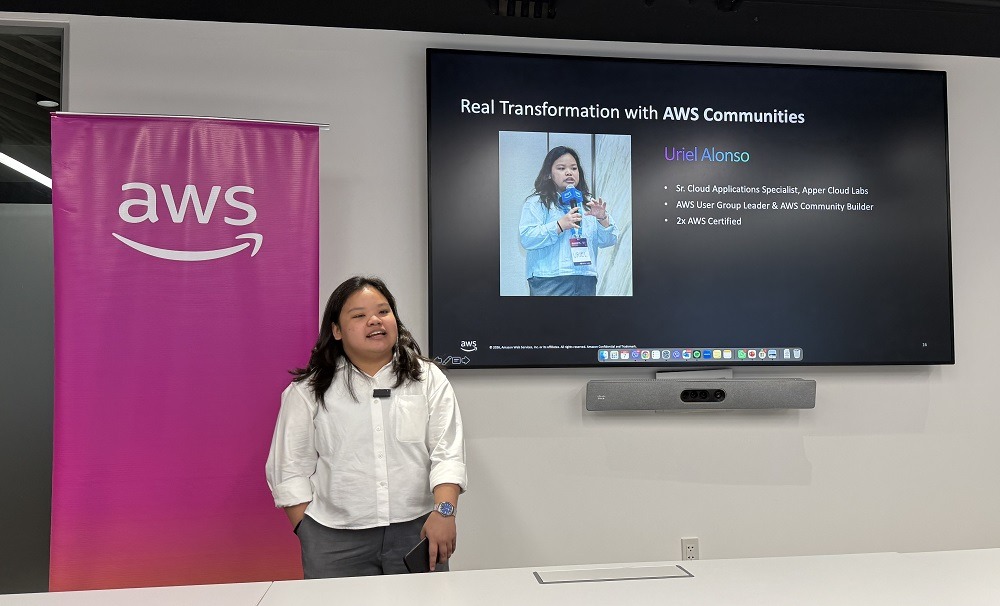
Uriel Alonso, a senior cloud specialist at Apper Cloud Labs and AWS User Group leader, said she entered the field with no background in cloud computing and initially doubted her place in the industry.
“I’m someone who thought I didn’t belong here before,” Alonso said, recalling her early struggles in college.
Her turning point came after attending an AWS Community Day event in 2023.
“That was really the start. I just got a free ticket and decided to go,” she said.
Alonso later joined AWS-supported programs such as re/Start and She Builds, gaining technical and professional skills that helped her transition into a cloud career and take on leadership roles in local user groups.
“I said yes even though I didn’t feel ready or qualified at all,” she said. “But that became the turning point of my career.”
She now helps organize community initiatives and speaks at regional events, emphasizing the role of mentorship and peer networks in lowering barriers to entry.
“Most of it was through the community and the opportunities that came with the network,” Alonso said.
As AI adoption continues to expand, the speakers said sustaining the country’s digital momentum will depend on closing the skills gap — an effort increasingly being supported by community-led training alongside industry and government initiatives.