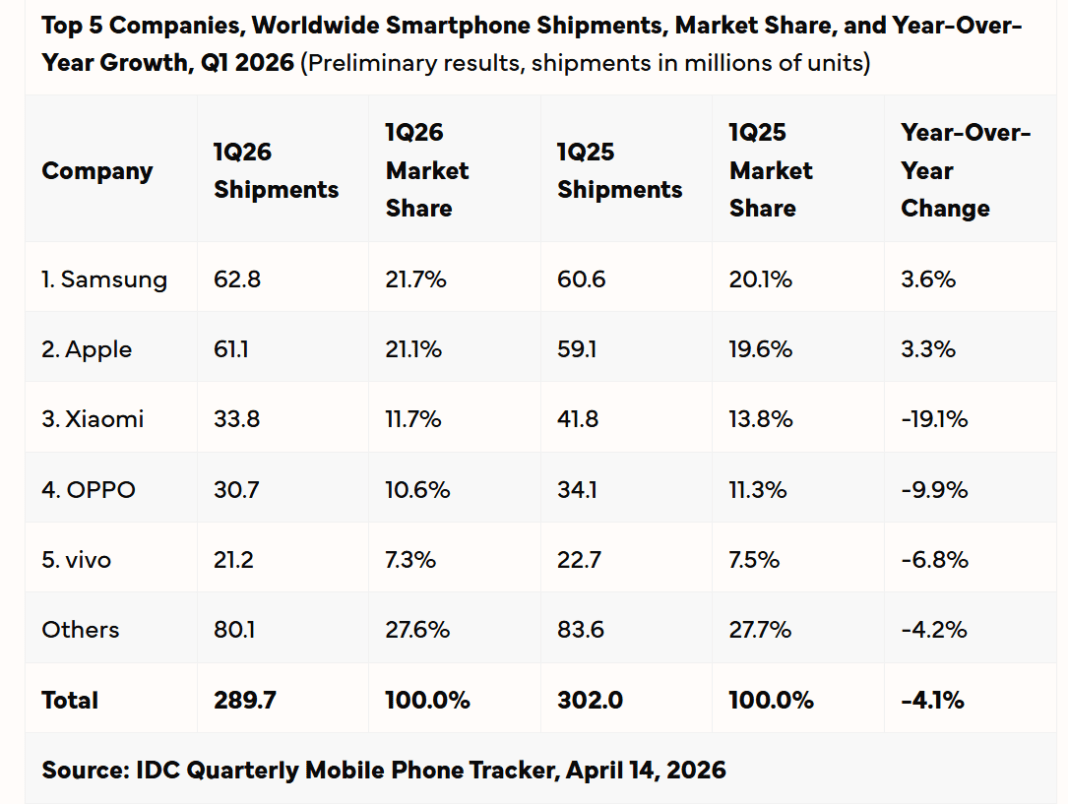
Global smartphone shipments declined in the first quarter of 2026, ending a streak of growth as supply constraints and rising component costs weighed on the market, according to data from IDC.
IDC said shipments dropped 4.1% year-on-year to 289.7 million units in the January-to-March period, marking a reversal after 10 consecutive quarters of expansion since mid-2023.
The slowdown was largely attributed to tight memory supply and surging prices, which forced manufacturers to cut shipments and raise device prices, dampening demand — particularly in price-sensitive markets.
“The smartphone market has entered one of its most challenging periods, driven by acute memory supply constraints that are directly impacting both shipments and demand,” said Nabila Popal, senior research director for Worldwide Consumer Devices at IDC.
Popal said limited memory availability and rising costs are pushing brands to increase prices, with some emerging markets seeing price hikes of up to 40% to 50%.
This, she added, is weighing heavily on demand and forcing vendors to adopt cost-cutting measures such as scaling back marketing and adjusting product specifications.
Despite the overall decline, Samsung and Apple were the only top five vendors to post year-on-year growth during the quarter, benefiting from their strong position in the premium segment and better leverage with component suppliers.
Samsung reclaimed the top spot, driven by demand for its flagship Galaxy S26 Ultra and supported by earlier releases in its midrange A-series lineup.
Apple followed in second place, buoyed by strong performance of the iPhone 17 series, including double-digit growth in China.
Chinese brands Xiaomi, OPPO, and vivo retained their rankings but posted weaker performance, reflecting pressure on lower-end devices and intensifying competition in both domestic and overseas markets.
IDC said vendors are increasingly shifting toward higher-priced models to offset rising production costs, accelerating the industry’s “premiumization” trend. However, this strategy is expected to further strain demand in developing markets that rely heavily on budget smartphones.
“The 4% decline in the market is just a sample of what’s to come as the memory situation intensifies on all fronts,” said Anthony Scarsella, research director for Mobile Phones at IDC.
IDC expects the pressure on supply chains and pricing to persist through 2026, with emerging markets facing the biggest impact due to limited availability of affordable devices.