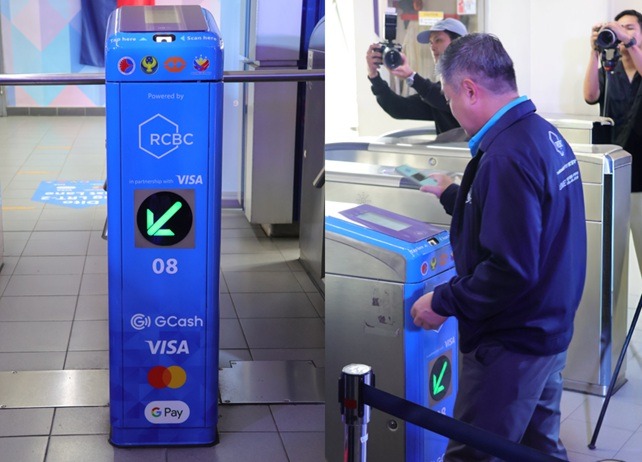
Commuters can now use bank cards, NFC-enabled mobile wallets and GCash QR codes to pay fares on the Light Rail Transit Line 2 (LRT-2), under a cashless collection system launched by the government and private-sector partners.
The system accepts Visa and Mastercard debit, credit and prepaid cards, as well as mobile wallets that support Near Field Communication, such as Google Pay. It also allows passengers to pay using GCash QR codes.
Developed through a partnership involving Rizal Commercial Banking Corporation (RCBC), Visa, GCash, the Light Rail Transit Authority (LRTA) and the Department of Transportation (DOTr), the platform integrates open-loop EMV card, mobile NFC and QR payments.
The bank-agnostic system is designed to accept payment instruments issued by participating banks, electronic money issuers and financial technology providers. It gives passengers an alternative to using dedicated transit cards.
“We are grateful for the trust and partnership of the DOTr and LRTA as we continue building accessible and future-ready digital ecosystems for Filipinos. Beyond banking, we see digital finance as an enabler of more connected, seamless, and efficient daily experiences,” RCBC president and CEO Reggie Cariaso said.
RCBC is also offering its PISO Fare Cashback Promo from July 13 to 31 for eligible RCBC debit and credit cardholders, including holders of the MySSS RCBC DiskarTech debit card.
Transportation authorities expect the system to improve fare collection for LRT-2, which serves more than 58.7 million passengers annually.
“The LRT-2 automated fare collection system is Visa’s fifth transit project in the Philippines, following MRT-3, and bus systems in Cebu, Mandaue, and Bacolod. Through our partnership with RCBC and the Philippine government, we are helping expand access to secure and interoperable digital payments that enhance commuter convenience and urban mobility,” Visa country manager for the Philippines Jeffrey Navarro said.