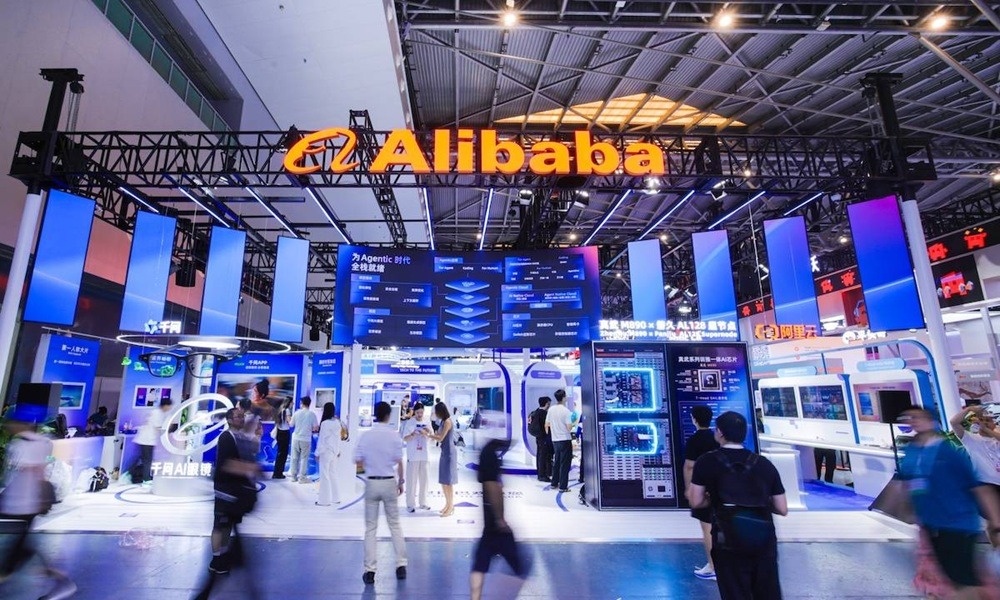
Alibaba Cloud has introduced new technologies for building, monitoring, and coordinating enterprise AI agents as it shifts its cloud infrastructure from an “AI-native” to an “agent-native” architecture.
Unveiled at the World Artificial Intelligence Conference 2026, the Agent-Native Cloud suite includes AgentLoop and AgentTeams, which expand the company’s existing AgentRun platform.
AgentLoop provides real-time tracing, evaluation, and optimization of AI agent performance, while AgentTeams allows organizations to coordinate and govern multiple agents handling complex workflows. AgentRun covers the development, deployment, and operation of agents.
The company also introduced TokenWorks, an inference service offered through its Platform for AI. The system combines request routing, inference execution, compute reuse, and scheduling to improve the reliability and cost efficiency of running large AI models.
Alibaba said the technologies form part of a broader AI stack covering chips, cloud infrastructure, development platforms, and consumer applications.
Its chip unit, T-Head, also made its T-Head SAIL AI software stack open source, giving developers access to a computing framework optimized for the company’s Zhenwu AI chips.
SAIL covers operating systems, software development kits, and hardware interfaces and is compatible with major AI development ecosystems. T-Head also launched a developer platform containing documentation, drivers, debugging tools, and performance resources.
Alibaba said cumulative shipments of Zhenwu chips reached 560,000 units as of April 2026, serving more than 400 customers across over 20 industries.
The company also introduced a team version of Meoo, an AI development tool that lets users create websites, applications, and WeChat mini-programs using natural-language instructions.
The enterprise version adds centralized billing, credit allocation, team administration, and shared digital assets. Meoo automatically handles frontend, backend, and database components through Alibaba Cloud services.
Alibaba also previewed Qwen 3.8-Max, a 2.4-trillion-parameter AI model available through its Token Plan, Qoder, and QoderWork platforms. The company said it plans to release the model under an open-weight arrangement.
Beyond cloud infrastructure, Alibaba launched Qwen Clip, its first earbuds integrated with the Qwen AI assistant. The open-ear device supports real-time translation, meeting transcription, and health tracking and was co-engineered with audio company Bose.
Alibaba also announced updates to its AI glasses platform that will allow the devices to access third-party services and AI agents. Planned features include simultaneous two-way voice interaction, eye tracking, and biometric sensing.