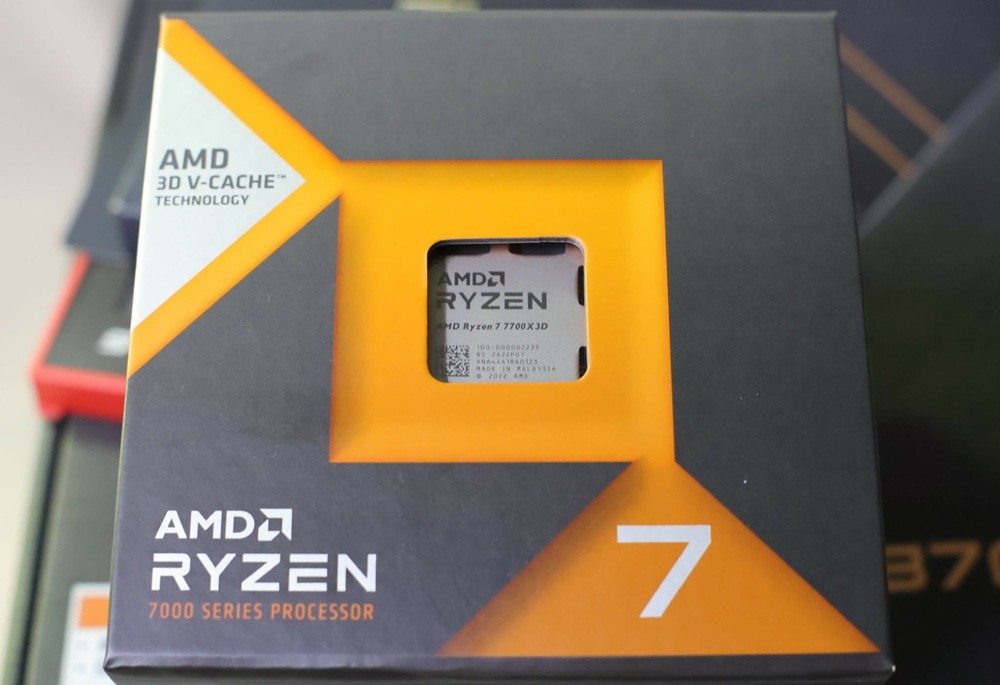
With the launch of the AMD Ryzen 7 7700X3D processor, AMD has significantly enhanced the choices available on the AM5 platform, making it a more attractive option for both seasoned gamers and first-time builders.
This new processor offers features that cater specifically to the demands of modern gaming without putting too much strain on your wallet.
Architecture
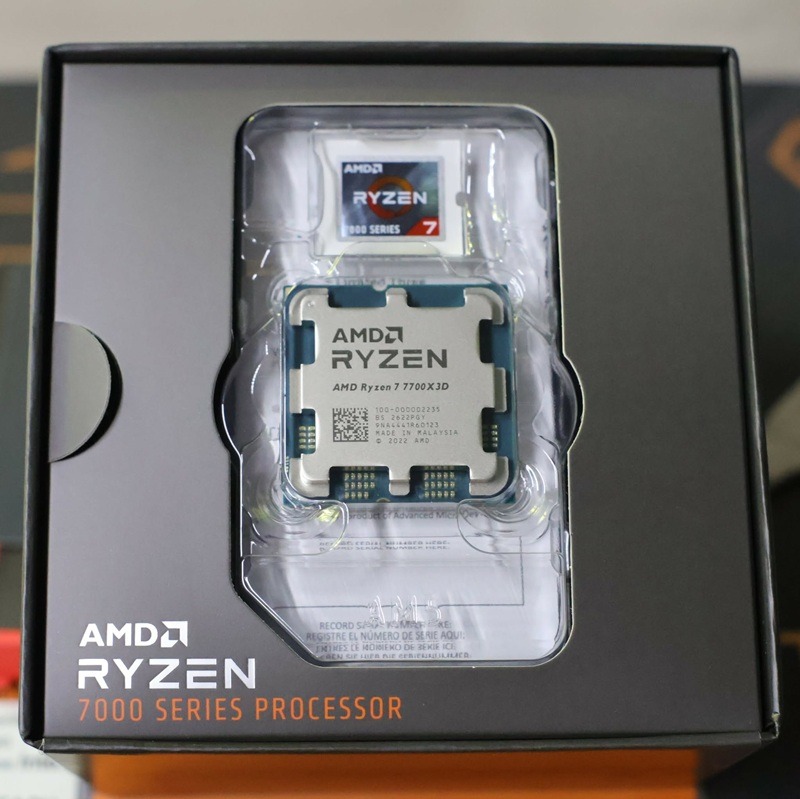
The Ryzen 7 7700X3D integrates AMD’s first-generation 3D V-Cache technology alongside the latest “Zen 4” architecture.
By stacking 3D vertical cache above the processor cores, AMD ensures improved data access latency and increased on-chip cache capacity. This innovative design is vital for enhancing performance in gaming and other latency-sensitive applications.
The AM5 platform’s 800-series motherboards, particularly the X870 and X870E motherboards, come equipped with USB4 support and the flexibility of PCIe Gen5 for graphics and NVMe storage. The only differentiating factor between these two boards is their total I/O offerings, including PCIe lanes and USB ports.
The introduction of EXPO memory speeds allows for enhanced overclocking potential, giving users the ability to push their systems to achieve even higher memory speeds if supported by the motherboard and RAM configuration.
Performance Overview
While the Ryzen 7 7700X3D may not surpass the performance benchmarks set by the AMD Ryzen 9000 series, it does deliver impressive results for an entry-level gaming processor.
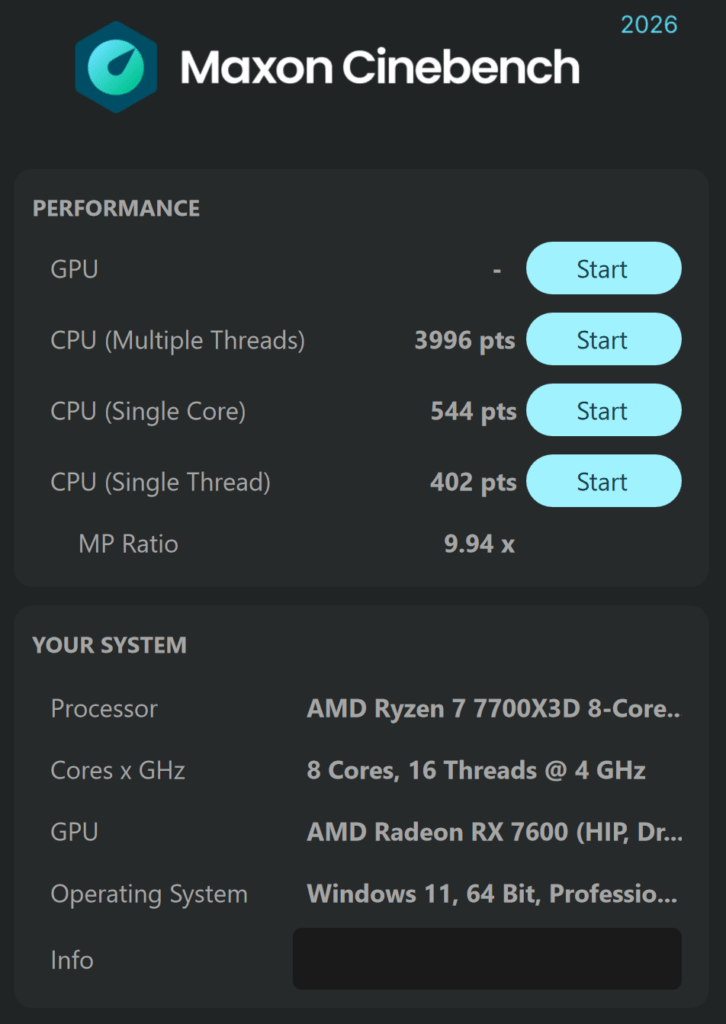
With a score of 3,996 Multi-Thread points and 402 Single-Thread points in Cinebench 2026, it proves to be a worthy contender in various CPU tasks. In Geekbench 6, it secured a Multi-Core Score of 13,657 and a Single-Core Score of 2,530.
Additionally, it achieved an Antutu Benchmark score of 1,183,827. In AI processing, it achieved a quantized score of 9,260, which is not high but is more than enough for basic AI tasks.
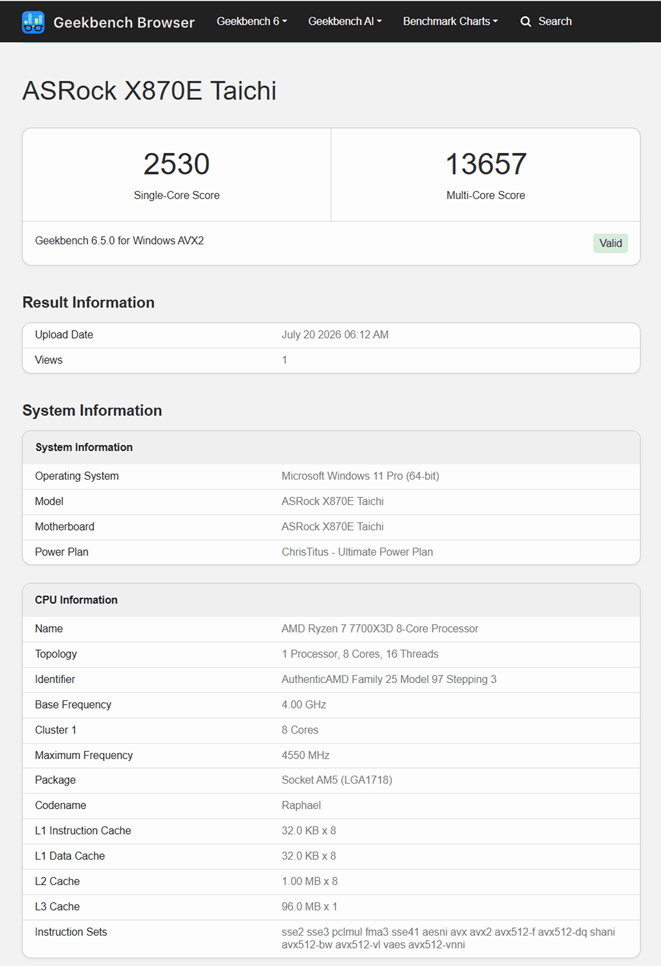
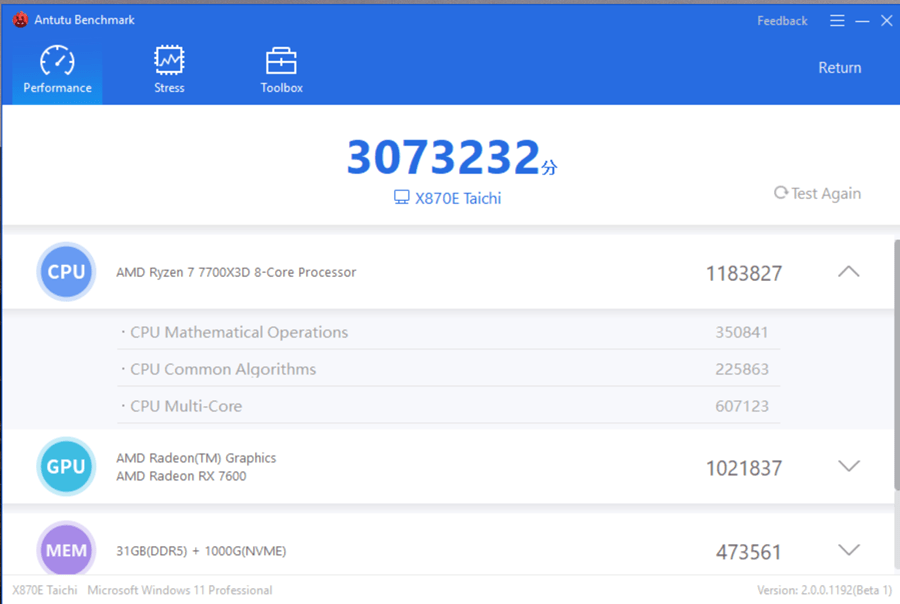
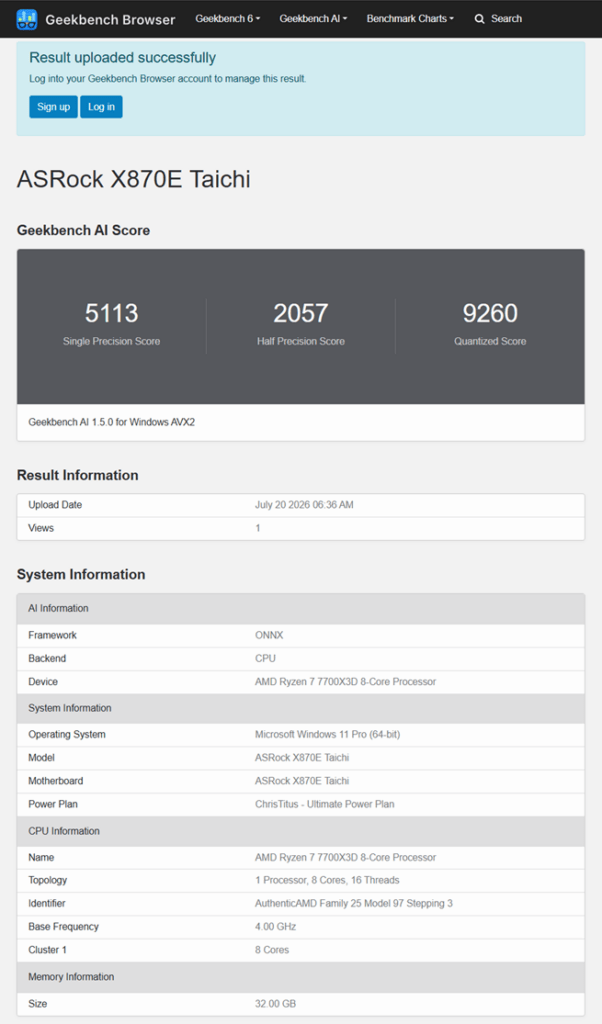
What’s interesting is that the 7700X3D’s gaming performance is remarkably close to that of the Ryzen 7 7800X3D, falling within a 5% performance range without requiring a BIOS update for compatibility.
Gaming Performance
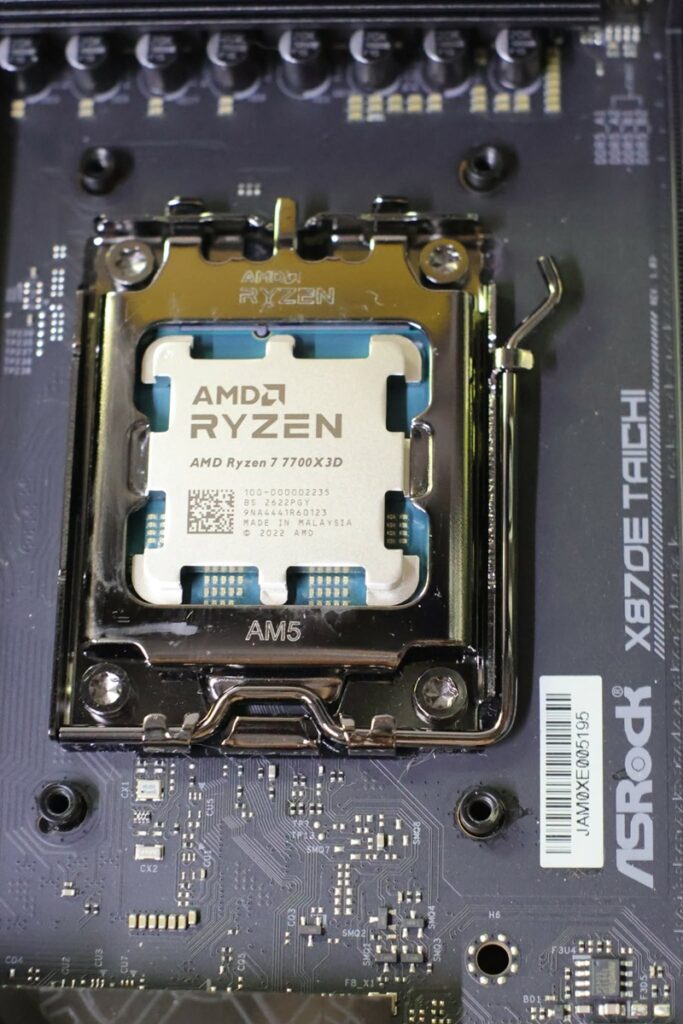
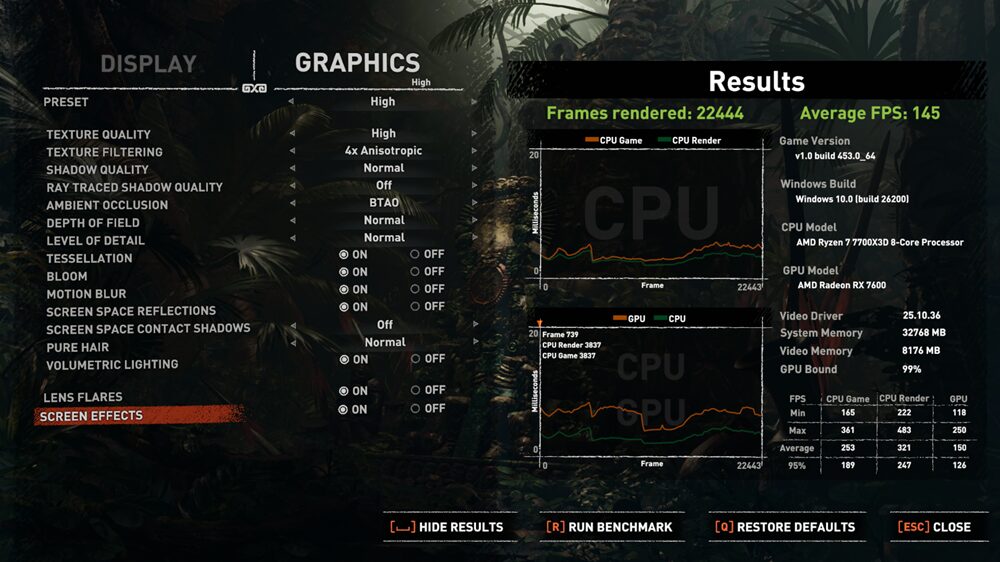
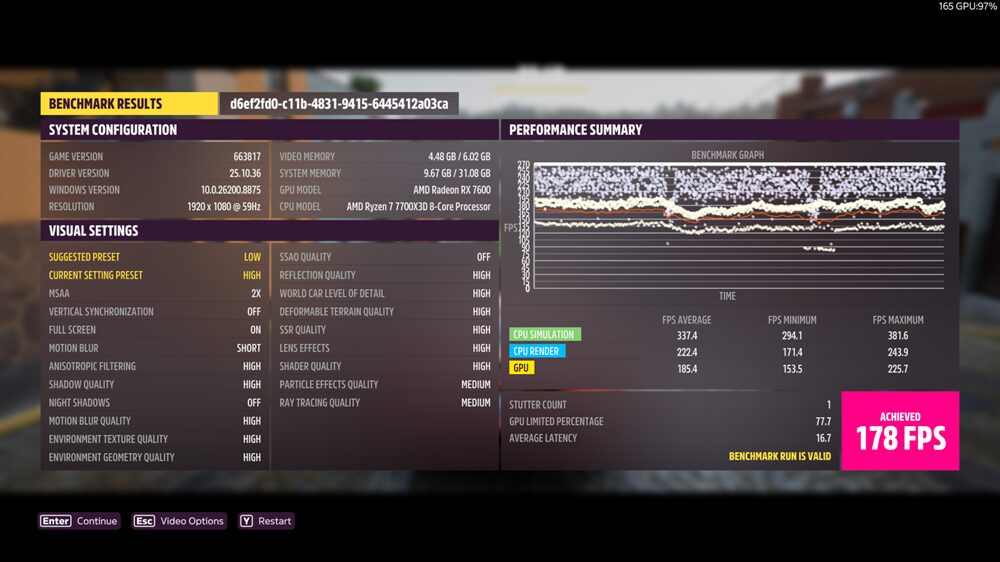
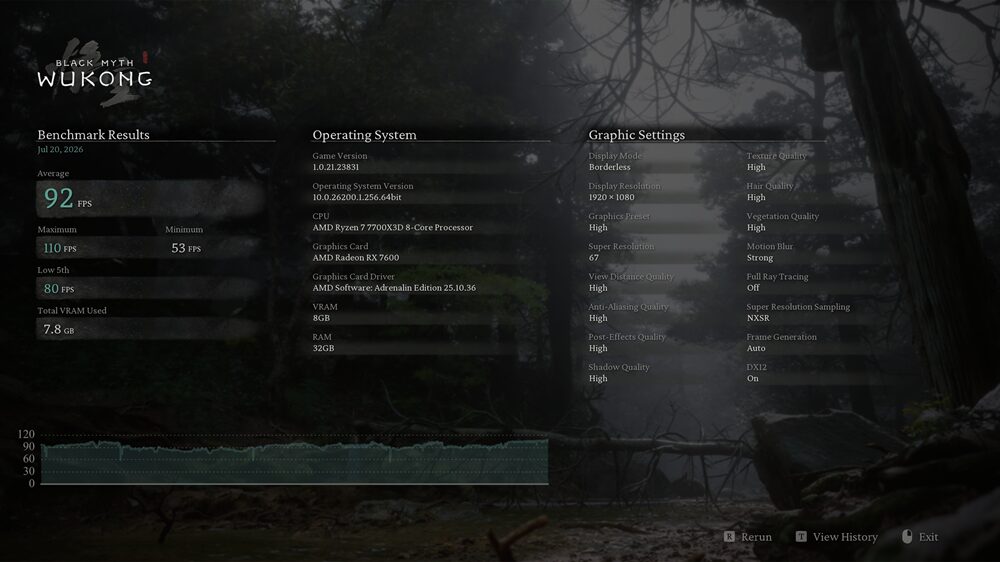
To assess this gaming processor, the Ryzen 7 7700X3D was tested on an ASRock X870E Taichi motherboard, paired with 32GB of DDR5 RAM and an ASUS AMD Radeon RX7600 8GB GPU.
The benchmarks were conducted at “High” graphics settings and a 1080p resolution, a standard that reflects the expectations of many gamers today.
AMD also produced its own benchmark scores using an ASUS ROG Crosshair X870E Hero with a Gigabyte RTX 5090 32GB GPU. Comparable tests were also conducted using the AMD Ryzen 7 7800X3D.
In the 2018 game “Shadow of the Tomb Raider,” the 7700X3D demonstrated an impressive average of 145 FPS. AMD’s internal benchmarks revealed a higher average of 332.46 FPS. For comparison, the Ryzen 7 7800X3D reached an average of 359.56 FPS, 7% higher than the 7700X3D.

In more resource-intensive titles like “Forza Horizon 5,” the 7700X3D achieved an average CPU simulation frame rate of 337.4 FPS. When considering overall performance, including the GPU’s capabilities, the processor reached an average of 178 FPS.
AMD’s benchmark on the same setup indicated 322 FPS, which is slightly lower than the 7800X3D’s 352 FPS — still showcasing solid performance for the price point.

Lastly, testing the 2024 game “Black Myth: Wukong” resulted in an average of 92 FPS despite the game’s demanding graphics settings. Although some areas appeared grainy, the gameplay remained smooth and playable, demonstrating the 7700X3D’s ability to handle next-generation titles.
In AMD’s tests, the 7700X3D achieved an average of 164 FPS, while the 7800X3D hovered at 161 FPS, a marginal difference that emphasizes its capabilities in high-stress scenarios.

Key Specifications
• Cores: 8
• Threads: 16
• Socket Platform: AM5
• Architecture: Zen 5
• Max Boost: 4.5GHz
• Base Clock: 4.0GHz
• L2 Cache: 8x1MB
• L3 Cache: 96MB
• Thermal Design Power (TDP): 120W
• Default Package Power Tracking (PPT): 162W
• Max Electrical Design Current (EDC): 180A
• Max Thermal Design Current (TDC): 120A
• Maximum Junction Temperature (TJMax): 89°C
• Max Memory Speed (Non-OC): DDR5-5600 (2x16GB)
Verdict
Launched on July 16, 2026, at a price point of USD329, the AMD Ryzen 7 7700X3D presents an enticing option for gamers looking to enter the AM5 platform without breaking the bank.
Even though the 7800X3D, now available at similar price points, remains a compelling choice, the value offered by the 7700X3D shouldn’t be overlooked.
When considering its performance, features, and future-proofing capability, this processor stands out as an excellent option for new gamers seeking to build a capable gaming rig.
The Ryzen 7 7700X3D is a good entry option for those looking to develop a gaming setup that meets modern demands without excessive costs, proving that you don’t always have to compromise on performance for a budget-friendly solution.
Pros:
• Offers eight Zen 4 cores and a generous 104MB of L2 and L3 cache at a competitive price.
• AM5 platform compatibility ensures future upgrades and enhancements.
• Delivers exceptional gaming performance, especially for entry-level systems.
Cons:
• If offered the opportunity to purchase the 7800X3D at a reduced price, or if a superior gaming processor is available for the same price, it may be the better choice.
• While solid, its performance is primarily entry-level in nature for gaming enthusiasts.
• Its AI performance is limited.