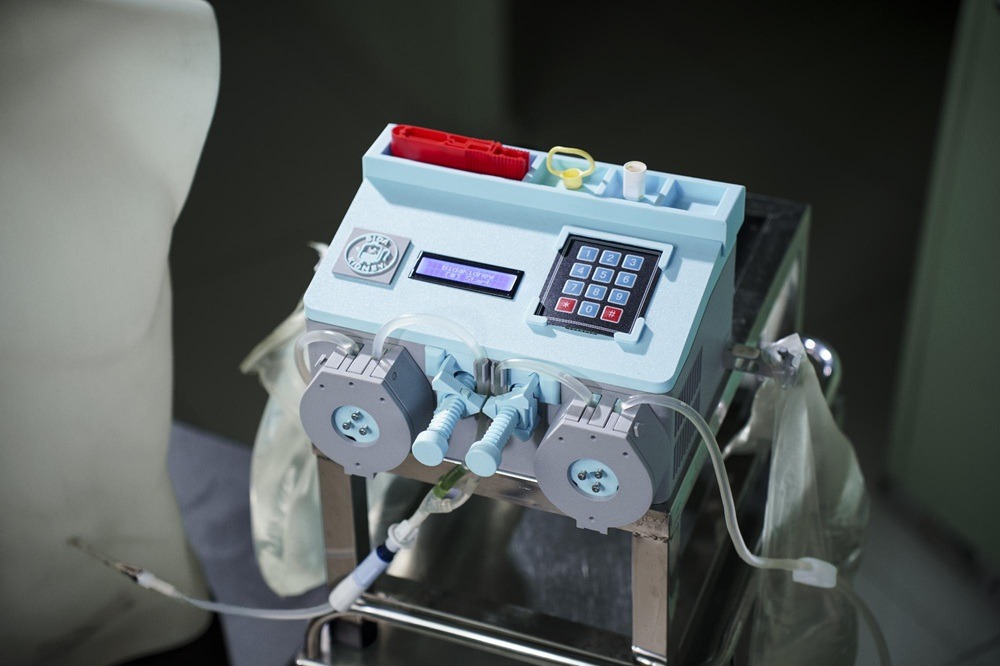
Two Philippine inventions designed to improve home dialysis and detect structural damage in buildings have advanced to the Global Top 20 of the James Dyson Award 2026, marking the first time the country has placed two entries in the international shortlist.
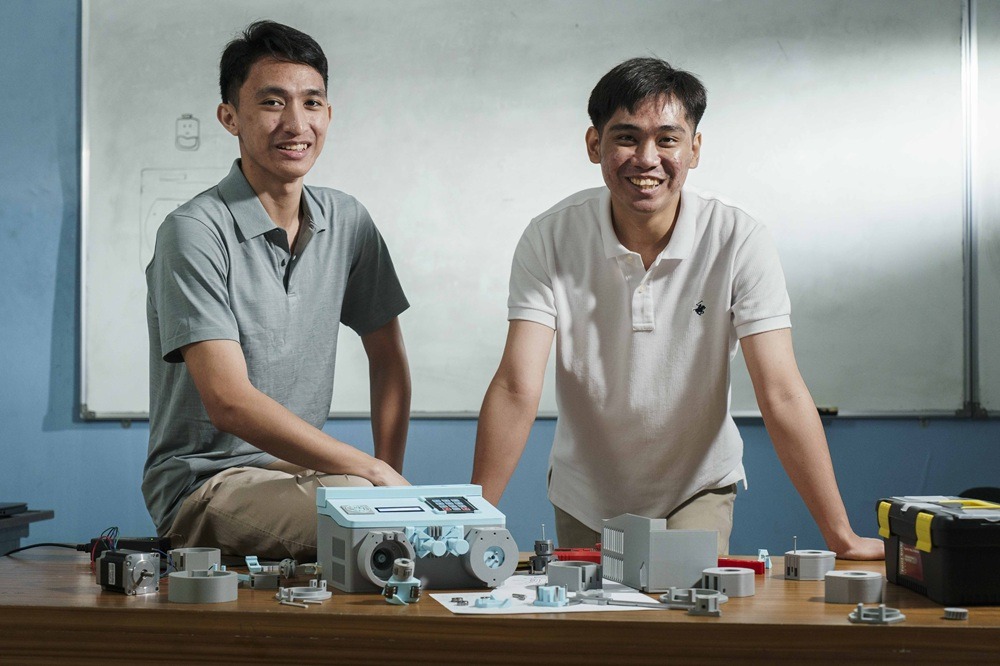
The inventions are BiDaKidney, a semi-automated peritoneal dialysis machine developed by University of the Philippines Diliman graduates Andrew Jacob Buensalido and Allyson Cabrestante, and Sentinel, a concrete sensor developed by De La Salle University graduate Aldrei Ong.
Both will advance to the final stage of judging, where Sir James Dyson will select the global winners. The winners will be announced on Nov. 4 and receive ₱2,390,230 to support further development and commercialization.
BiDaKidney is designed to simplify peritoneal dialysis, a treatment that patients can undergo at home but which requires repeated fluid exchanges, monitoring, and manual record-keeping.
The device uses a controlled pump to move dialysis fluid through standard tubing, weight sensors to track fluid transfers, and a dual-tube clamp intended to prevent leaks and backflow.
The project began after Buensalido’s older sister, a healthcare provider at a government hospital, shared the difficulties faced by dialysis patients.
Over two semesters, Buensalido and Cabrestante developed a working prototype from initial drawings and 3D models, refining its pump, sensors, clamp and control system through testing.
“Seeing BiDaKidney reach the Global Top 20 is something we once only imagined – it feels incredible that this has become reality!” the developers said.
“Beyond the award itself, we are grateful for what this recognition brings: the opportunity to spotlight the difficult realities patients and families face in managing dialysis, and to build connections with the people who can help us make those realities less difficult.”
The number of Filipinos receiving dialysis rose to 64,845 in 2024 from 53,296 in 2023, an increase of 22%, according to figures cited in the award announcement.
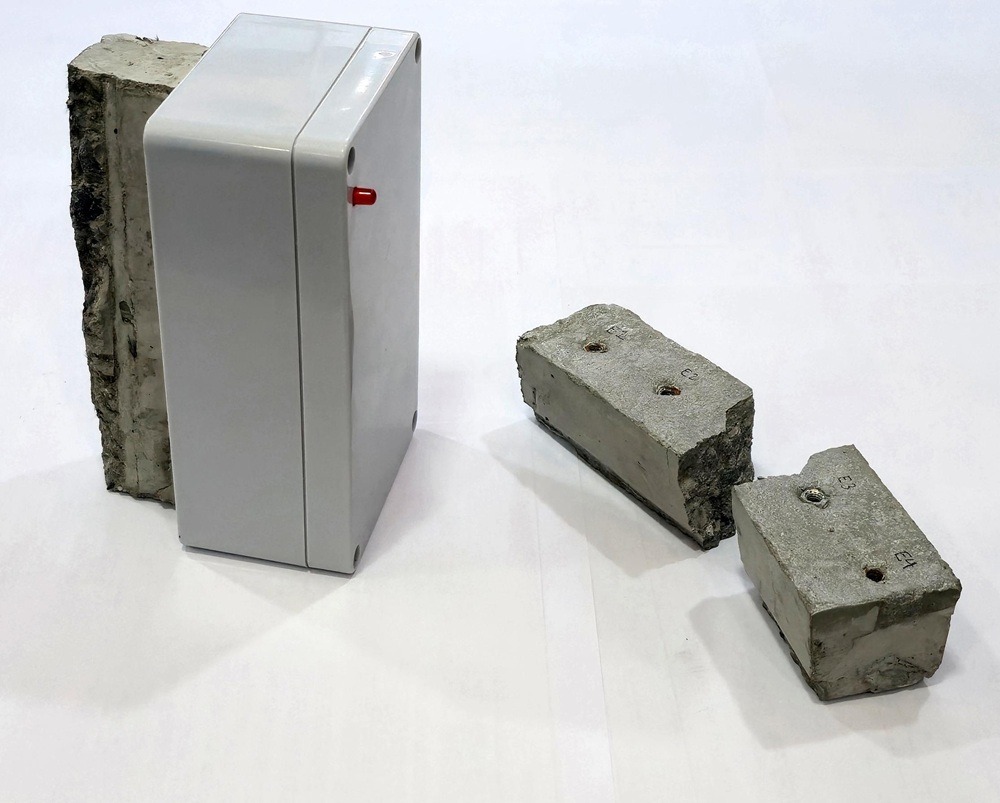
Sentinel uses a concrete spacer block made from self-sensing concrete to detect changes that may indicate structural damage.
Conductive materials inside the block create electrical pathways. When the concrete is damaged, the electrical signal changes. Embedded electrodes relay readings to a compact device, which compares measurements and sends significant changes to an online dashboard for remote monitoring.
The system is intended to help engineers identify areas that may require closer inspection, potentially reducing the time needed to assess buildings after earthquakes or other damaging events.
Ong designed Sentinel as a spacer block so it could be incorporated into existing construction practices. The estimated manufacturing cost is ₱10 per block.
The technology is being tested outside the laboratory, with self-sensing spacer blocks installed in the St. Margaret Mary Alacoque building of the National Shrine of the Sacred Heart for field monitoring.
“Living in an earthquake-prone country means structural safety cannot be something we think about only after disaster strikes,” Ong said.
“Reaching the Global Top 20 is exciting because it gives Sentinel a platform to show that earlier and more accessible monitoring is possible. If it can help local governments, schools, hospitals, businesses, and families act sooner, reduce the cost of disruptions, and recover with greater confidence after an earthquake, then Sentinel can help build safer and more resilient Filipino communities.”

The 20 finalists were selected by 12 Dyson engineers based in the United Kingdom, the United States, Singapore, Malaysia and the Philippines. Entries were evaluated on functionality, design process, originality and commercial viability.
Michael Recinto, senior engineering manager at Dyson and one of the Global Top 20 judges, said the two Philippine entries reflect the ability of young Filipino inventors to address practical problems through engineering.
“The inclusion of BiDaKidney and Sentinel in the Global Top 20 represents a landmark achievement for the Philippines. It reflects the growing maturity of our innovation ecosystem and the ability of young Filipino inventors to combine technical excellence with a deep understanding of societal needs.
“These inventions address real challenges with ingenuity and purpose, demonstrating that world-class innovation can emerge from the Philippines and compete on the global stage.”
The James Dyson Award is an international design competition run by the James Dyson Foundation. It recognizes inventions intended to solve practical problems and gives participants the opportunity to develop and commercialize their designs.