The Department of Science and Technology (DOST) plans to install 300 additional seismic stations across the Philippines over the next five years, expanding a nationwide network that currently has 130 stations.
The expansion will begin in 2027 under the modernization program of the Philippine Institute of Volcanology and Seismology (Phivolcs), DOST officials said during the Regional Science, Technology, and Innovation Week in Davao Region on Oct. 15–17.
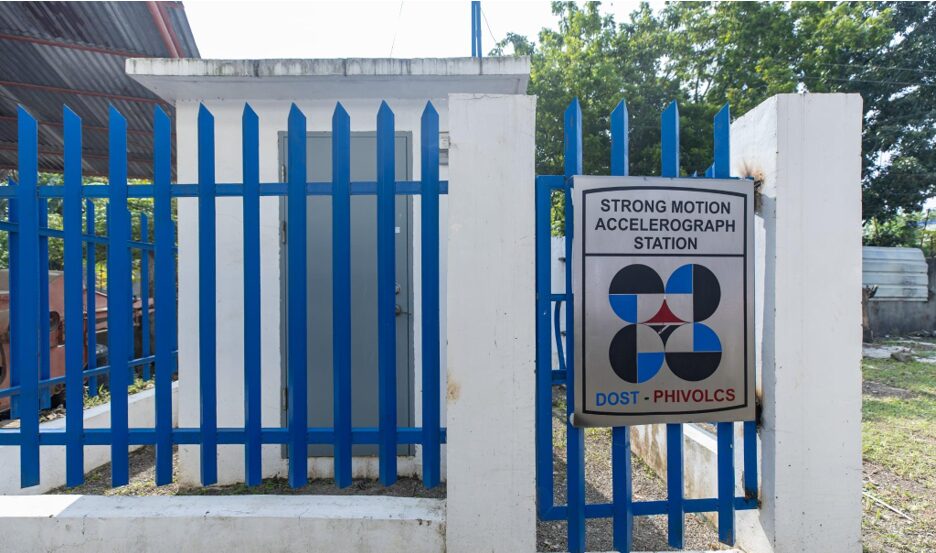
One of the facilities highlighted during the event was a strong-motion monitoring station at Davao del Sur State College (DSSC) in Digos City. The station measures ground acceleration during earthquakes, generating data that engineers can use to design buildings and other structures based on expected ground movement.
DOST secretary Renato Solidum Jr. said the sensors record earthquake waveforms in areas such as Digos, providing information for structural design.
Unlike conventional seismic stations used to locate earthquake epicenters, strong-motion sensors measure how strongly the ground moves during an earthquake.
Phivolcs director Teresito Bacolcol said the data helps engineers determine the ground acceleration that buildings must withstand, allowing them to account for local earthquake conditions in their designs.
The sensors also support the rapid detection and location of strong earthquake events for tsunami monitoring and warning. Their placement depends on the monitoring purpose, with some installations requiring quiet locations, including highland areas.
The Digos station operates through a partnership between DOST-Phivolcs and DSSC. The college provided a 4-by-4-meter site, electricity, payment of monthly power costs, and a project monitoring team. Phivolcs supplied the monitoring equipment and technical support.
Solidum said DOST works with local government units, academic institutions, and other partners to establish monitoring facilities in suitable locations.
DSSC Research Development and Innovation director Cherry Ann Roxas said the station is intended to strengthen earthquake monitoring and generate data for research, education, and disaster risk reduction in the region.
The station was among the science and technology projects visited by DOST officials during the Regional Science, Technology, and Innovation Week and the Handa Pilipinas Mindanao Leg activities in Davao Region.
The annual regional event showcases research, technologies, and development initiatives supported by DOST offices across the country.