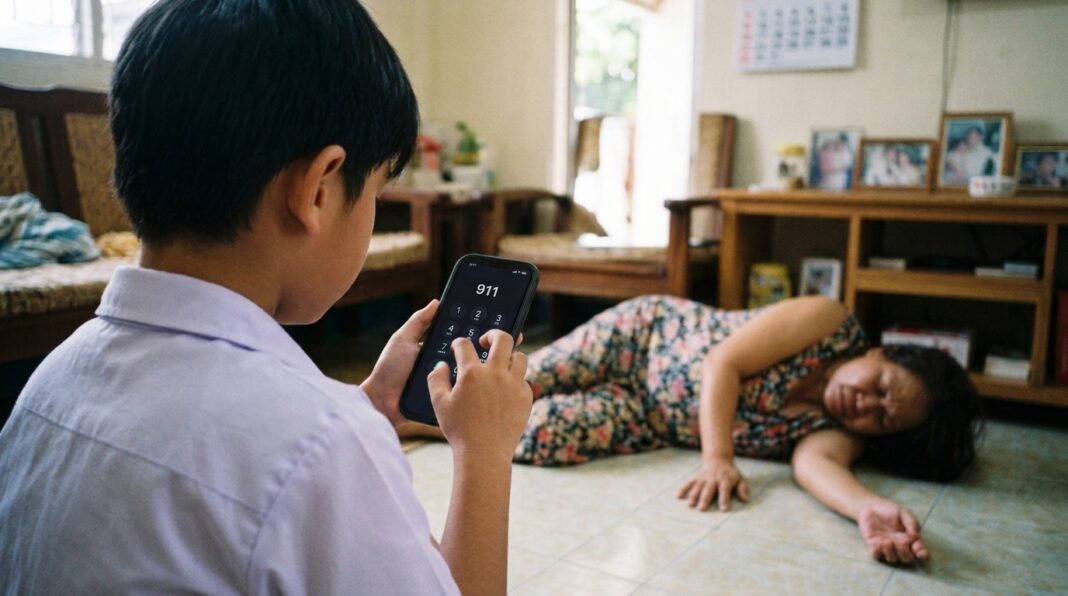
If a parent loses consciousness at home, a child may be the only person able to call for help. Knowing the three digits is a start. The child also needs to be able to tell the person on the line what happened and where to send responders.
Robert Llaguno, country head of Next Generation Advanced 911 Philippines (NGA 911), the company that provides the technology behind the country’s Unified 911 hotline, said parents and teachers can practice those steps with children before an emergency happens.
“Now that it’s Children’s Month, NGA 911 is encouraging parents and teachers to teach children how to dial 911 and how to report an emergency so help can come fast,” Llaguno said.
He suggested using a toy phone to show younger children which buttons to press. Even the way adults say the number can make a difference.
“Say nine-one-one, not nine-eleven, when you teach kids what numbers to call,” he said.
Adults can take the role of the call taker and ask two questions a child can expect to hear: What happened? Where are you? At home, children can practice giving their full address, including the floor and unit number if they live in an apartment or condominium. A nearby landmark can also help them describe where they are.
Llaguno said children should practice speaking clearly, listening to the call taker’s instructions, and staying on the line until they are told to hang up.
He also urged adults to talk through situations that warrant an emergency call, such as a fire, a serious crash, or someone who is unconscious. If a child witnesses an emergency, he said, the priority is getting help before recording or posting about it on social media.
The advice comes amid concern over violent incidents in schools. The Department of the Interior and Local Government (DILG) and the Council for the Welfare of Children (CWC) have been working together on child safety, according to Llaguno.
“No child should ever fear for their safety inside a school. The recent tragedies demand not only our sympathy but our collective action. The protection of children is a shared responsibility, and we must act decisively to ensure that every school remains a place of learning, security, dignity, and hope,” the CWC said in a policy statement.