
An immersive virtual reality (VR) escape room developed by researchers at Ateneo de Manila University is being used to teach younger Filipinos about the Martial Law period, using interactive gameplay instead of traditional lectures.
The project, titled “Heritage Hero: Secrets of the “Golden Era,”’ was created by Ateneo’s Virtual, Augmented, and Mixed Reality (VAMR) Laboratory in collaboration with the Ateneo Martial Law Museum and Library.
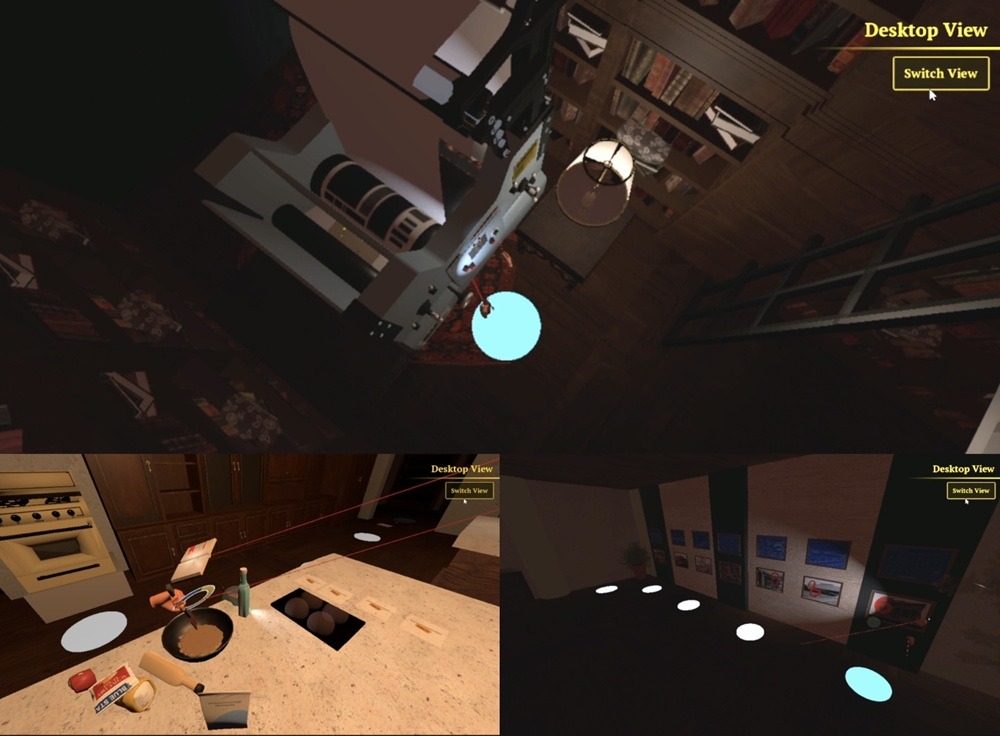
It places players inside a fictional abandoned mansion tied to the Marcos regime, where they solve puzzles and interact with objects reflecting life during the period.
The initiative targets young adults aged 15 to 25, many of whom did not experience Martial Law firsthand. Developers said the goal is to move beyond passive learning and encourage deeper engagement with the era’s complexities.
Rather than presenting a linear historical narrative, the game allows players to take on roles such as members of the underground resistance, assembling propaganda materials and operating a printing press.
Other scenarios include preparing Nutribun in a kitchen setting and reviewing construction blueprints linked to government projects, highlighting the social and political realities of the time.
The game runs for about 30 to 60 minutes and is divided into three rooms, each focusing on different aspects of life under Martial Law.
“We believe that human learning benefits greatly from embodied cognition, as some forms of thinking are deeply rooted in bodily interactions such as writing and playing, as opposed to just reading or listening,” said VAMR technical head Eric Cesar E. Vidal Jr.
Initial testing among Ateneo students showed positive feedback, with participants reporting higher engagement and interest in learning more about the historical issues presented in the game.
“Immersive technologies can provide the scaffolding that helps a student begin learning complex historical topics, with interactions that add an element of fun and engagement while gently assuaging students’ fears, distress, or skepticism,” Vidal added.
The project builds on a study titled “Design and Testing of a VR Escape Room Game for Philippine Martial Law History”, which was presented in December 2025 at the 33rd International Conference on Computers in Education.
Researchers said the effort aims not only to showcase new technologies but also to encourage critical reflection on Philippine history among younger generations.