
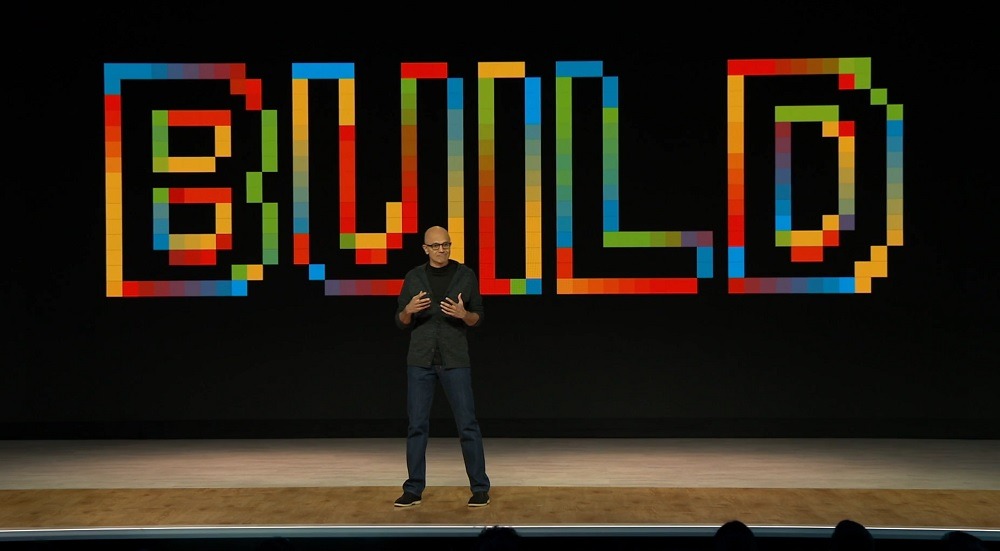
Software titan Microsoft used its annual Build developer conference to outline new tools, AI models, hardware, and research initiatives aimed at helping developers build and manage AI-powered applications and autonomous agents.
The announcements centered on Microsoft’s effort to address what it described as a fragmented AI ecosystem by providing developers with tools to build, deploy, and govern AI systems across different environments.
Among the updates were new developer-focused capabilities for Windows 11, including expanded Windows AI application programming interfaces (APIs), built-in agent runtimes such as OpenClaw on Windows, and new AI-focused hardware.
Microsoft also introduced the Surface RTX Spark Dev Box, designed to enable developers to run AI and agent workloads locally rather than relying entirely on cloud infrastructure.
The company also disclosed progress in its proprietary AI model portfolio. Microsoft introduced MAI-Thinking-1, a reasoning model with 35 billion active parameters designed for complex problem-solving and code generation. The model is currently available in private preview through Microsoft Foundry.
In addition, Microsoft announced a broader family of multimodal MAI models covering image generation, voice, transcription, and coding applications.
On the software development side, Microsoft unveiled a new GitHub Copilot application that it described as an agent-based development environment.
The application is designed to integrate with GitHub’s collaboration platform and support developers building AI-assisted software projects.
Microsoft also released two open-source projects focused on AI safety and governance. The first, Adaptive Spec-driven Scoring for Evaluation and Regression Testing (ASSERT), is intended to help organizations evaluate AI systems against defined policies and safety requirements.
The second, Agent Control Specification (ACS), seeks to establish a common framework for applying controls and governance mechanisms within AI agent workflows.
The company highlighted advances in quantum computing with the introduction of Majorana 2, its latest quantum chip.
Microsoft said the chip delivers a 1,000-fold improvement in reliability compared with its predecessor, Majorana 1, and could accelerate its roadmap toward building a scalable quantum computer by 2029.
Microsoft also announced the general availability of Microsoft Discovery, a platform designed to support scientific research using AI agents.
The system allows researchers to conduct iterative, evidence-based investigations with AI assistance across scientific and industrial applications. A local version of the Microsoft Discovery application is available in preview.


