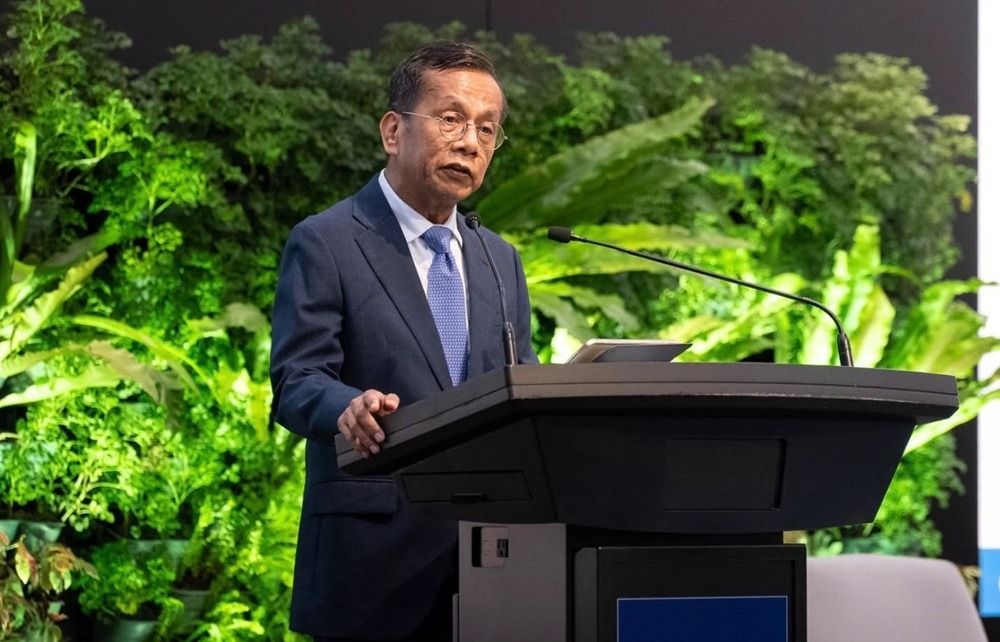
The Philippines needs to move toward higher-value services, upgrade infrastructure and prepare workers for artificial intelligence as it seeks to translate growth in the services sector into broader productivity gains and better jobs, Department of Economy, Planning, and Development (DEPDev) secretary Arsenio Balisacan said.
Speaking at the Regional Conference on Trade in Services for Development (TS4D) in Asia and the Pacific, Balisacan said the challenge is ensuring that the expansion of services trade benefits a wider segment of the economy.
“The central question is whether expanding services trade can generate productivity growth across the economy and good jobs for a much wider group of workers and firms,” Balisacan said.
Services accounted for nearly two-thirds of Philippine gross domestic product in 2025 and the first half of 2026.
The information technology and business process management (IT-BPM) industry remains one of the country’s major services exports, generating more than $40 billion in revenue and employing 1.9 million workers in 2025.
But Balisacan said the industry’s growth alone would not be enough to improve productivity across the broader services sector.
Citing the World Bank’s 2025 Philippines Country Growth and Jobs Report, he said three out of four jobs created since 2010 were concentrated in non-tradable activities. Services productivity increased by 26% between 2006 and 2019, compared with 53% in manufacturing.
“IT-BPM is a notable export success, but it cannot, by itself, raise productivity throughout the much larger services economy,” Balisacan said.
He said improvements in digital connectivity, transport and logistics, financial services, and business-support systems would be needed to help Philippine companies participate more deeply in regional and global value chains.
Balisacan also said businesses and workers would have to adjust as AI changes how services are delivered and how jobs are performed.
“Exposure to AI is not the same as inevitable job loss,” he said.
Balisacan said AI’s impact on employment would depend partly on how companies adopt the technology, whether workers acquire new skills and whether businesses move toward higher-value services as routine tasks become increasingly automated.
The TS4D initiative was launched by the World Trade Organization and the World Bank in September 2024 to examine how trade in services can support development.
“Let us use the evidence and experiences shared to build more competitive firms, more capable workers, and economies in which the gains reach well beyond a few successful exporters,” Balisacan said.