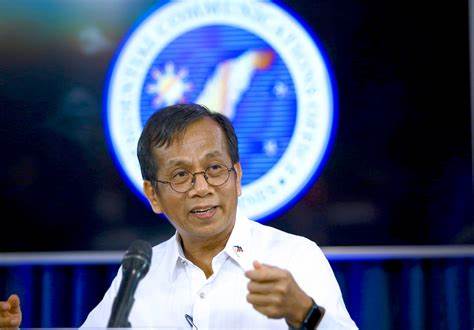
NEDA secretary Arsenio Balisacan has underscored the need for proactive policies to help workers adapt to the changing demands of the labor market driven by artificial intelligence (AI) and automation.
These technological advancements, while creating new opportunities, also require careful planning to mitigate potential negative effects on employment and income inequality, according to Balisacan.
During his address at the 2025 Annual Scientific Conference and the 92nd General Membership Assembly of the National Research Council of the Philippines (NRCP), Balisacan highlighted the importance of policies that focus on human capital development, technological adaptation, innovation, and high-quality job creation as essential elements for sustained, long-term economic growth and a future-ready Philippines.
“Without forward-thinking policy changes, the Philippines risks facing increased distress, economic setbacks, and widening inequality,” said Balisacan. “AI and robotics, while advancing industries, also bring the risk of displacing low-skilled workers as automation becomes more widespread.”
He added that the country’s future ability to harness and scale emerging technologies will depend on how well it can navigate these changes to build a sustainable economy.
Balisacan also emphasized the crucial role of education and skills development in securing long-term economic growth. He supported greater collaboration between the private sector and government to ensure that human capital aligns with labor market needs, addressing persistent challenges such as low learning outcomes and skills mismatches.
The NEDA chief identified two key opportunities that position the Philippines for continued growth. First, the country’s growing working-age population presents a significant opportunity for economic dividends — provided investments are made in education, skills development, and innovation to enhance productivity and create better employment opportunities.
Second, Balisacan pointed out that the Philippines’ vast network of overseas Filipinos can serve as a strategic asset in developing the workforce and boosting the economy. The government aims to leverage the expertise of migrant workers to drive national development, fostering greater collaboration and reintegration of skilled overseas Filipinos.
However, Balisacan stressed that investments in human capital must be paired with initiatives that create an investment-friendly environment conducive to the generation of high-quality jobs.
He pointed to the government’s efforts to open the economy to more investments and trade, streamline the ease of doing business, and improve transparency and regulatory predictability. With proper implementation, these initiatives are expected to encourage the creation of better jobs, spur technological adoption, and promote research and innovation.
In conclusion, Balisacan’s remarks emphasized that while AI and automation present significant opportunities, they also require a carefully crafted policy framework to ensure the Philippines is well-equipped to embrace technological advances and continue on its path toward long-term prosperity.