

It’s 8:30 a.m. You’re easing into your morning chocolate or coffee when the first message arrives on Microsoft Teams:
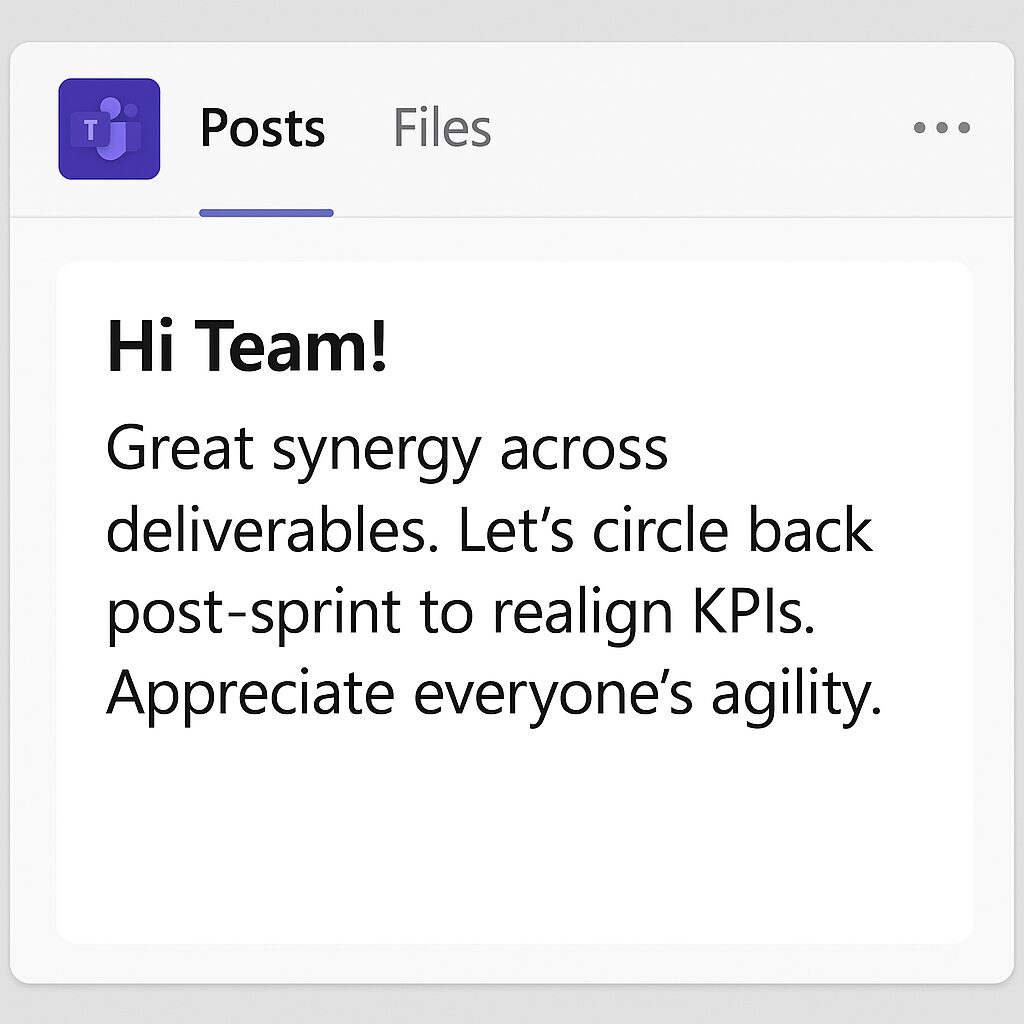
Your eyes widen. Either someone had a double espresso or that message came straight from AI.
Minutes later, your Viber group chat chimes in:
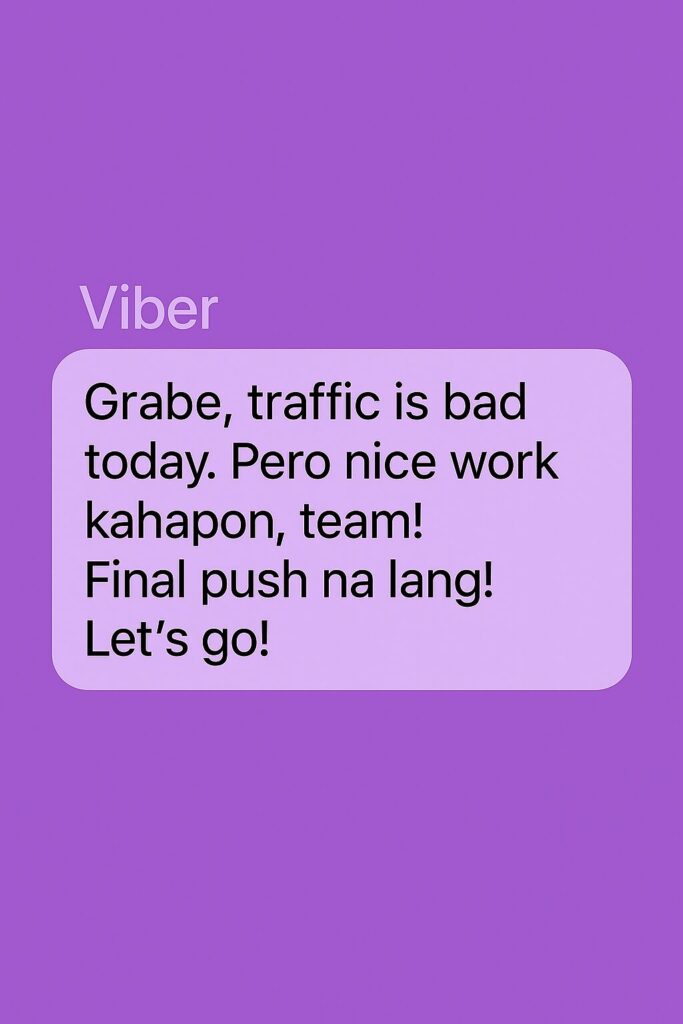
Same message. Completely different energy.
Welcome to the new normal of corporate communication in the Philippines, where AI is now part of the conversation, and sometimes, the one doing the actual talking.
Globally, companies are embracing the rise of AI co-pilots for everything from internal memos to customer emails. In fact, a 2024 McKinsey report found that 72 % of organizations now use AI in at least one business function, with 65 % regularly using generative AI, marking a dramatic uptick in corporate AI adoption.
Locally, we’ve started to feel this too. Microsoft Copilot is being integrated into our Office 365 stack. HR is exploring AI-drafted employee updates. Communication teams are using tools that auto-polish executive statements in seconds.
Productivity is up. Consistency is excellent. But here’s the catch, authenticity is quietly taking a hit.
And in a workplace culture like ours, where tone, context, and personal connection matter as much as content, this shift doesn’t go unnoticed.
According to global workplace surveys, many employees say they can easily spot messages that feel over-polished or “robotic” and tend to prefer communication that feels spontaneous, even with minor errors.
Filipino teams are no exception. We notice when messages sound off, too formal or too polished. Missing the kilig, the kulitan, the human intent. We know when the message was drafted by a manager, and when it was probably “suggested” by software.
It just shows that even in this day and age, people still know when it’s not you.
And while Teams may be the official corporate platform, we all know the real story happens on Viber. From last-minute deadlines to “Gutom ako, may food ka ba?” this is where trust and team culture live. Strip that away, and you lose more than just a message, you lose the human thread that holds teams together.
Don’t get me wrong. AI isn’t the enemy and it’s not about shunning it. I personally think, it’s a very helpful assistant and necessary modern-day tool. It drafts faster, reduces errors, and helps us when we’re running on two hours of sleep and no brain cells. Used right, it frees up time for us to work on things that matter most.
But here’s the golden rule: AI should support your voice, not replace it.
Some quick wins:
- Let AI do the rough draft, but you do the final say.
- Add human touches like “Ingats,” “Merienda muna tayo,” or that one team emoji that always lands.
- Be transparent. “AI helped shape this, but this message is mine” goes a long way.
- Trust your gut. If a message doesn’t feel like you, it probably isn’t.
In the end, the strongest messages are the ones that feel real. The best leaders are remembered not for perfect syntax, but for words that resonate. And in this era of instant replies and algorithmic drafts, authenticity is fast becoming a rarity.
So the next time AI suggests you “circle back post-sprint to align strategic priorities,” feel free to hit edit. Maybe even delete. And say something simple and real, like “Thanks, team. Let’s finish strong. Let’s eat out and celebrate next week.”
Because while AI can learn our language, I think only we can speak from the heart.
The author is an advocate for social and sustainable development and is currently the vice president and head of corporate communications for SM Investment Corporation, Inc. (SMIC)


