
Artificial intelligence (AI) has quickened the rate of digital transformation, but behind the scenes, massive compute resources are needed to fuel this ever-climbing demand for digital services. In fact, as technology adoption has picked up among both consumers and businesses, so has global demand for data centers.
In this scramble for data center capacity, the Philippines has emerged as a sought-after data center location in the Southeast Asian (SEA) region. Local ICT and telco companies have already ramped up data center construction in the past few years, with many announcing the building of new facilities or even inaugurating them this year.
Local players, however, are not the only ones acting on the country’s potential. International digital infrastructure provider Equinix completed its acquisition of three local, carrier-neutral data centers in Makati and Cavite from Total Information Management in June 2025.
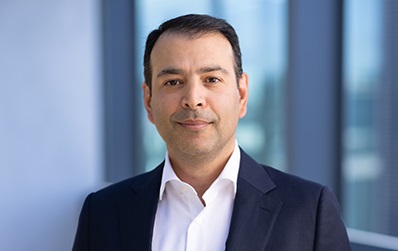
In an exclusive interview with the Equinix Asia Pacific president Cyrus Adaggra, the company explained why the Philippines is seen as a strategic data center hub in Southeast Asia, how the country will benefit from the burgeoning industry, and how Equinix plans to support the growth of the nation’s digital infrastructure.
Enabling digital economies via digital infra
First, Adaggra dove into how the digital economies of the SEA region as a whole and the Philippines in particular have driven demand for data centers.
Adaggra revealed that SEA is undergoing ‘the digital evolution of the region’s entire economic system”. The rapid adoption of e-commerce, digital payments, and other disruptive tools have generated new business models and demand for digital services in the region.
Moreover, SEA’s digital economy is predicted to continue growing exponentially due to the area’s abundant natural resources, expanding middle class, and other demographic trends.
Adaggra stressed, though, that “among these digitalizing markets, the Philippines stands out as its digital economy is expected to sustain robust growth in 2025.”
He added “customers with firms outside the Philippines regularly ask us to expand our reach within the country. Equinix’s entry into the Philippines responds to strong demand from global network, content, cloud, and enterprise customers looking to expand in this rapidly growing market.”
From a tech-savvy population to supportive government initiatives, Adaggra laid out the factors fostering the Philippines’ digital growth.
“The country is experiencing a surge in demand for digital infrastructure services, driven by a highly engaged digital population, booming e-commerce adoption, and various government initiatives promoting digitization, such as the National Broadband Plan and the Digital Philippines campaign,” he said.
He also noted that the recent increasing use of certain technologies were boosting the demand for data centers in the country. These technologies include 5G connectivity, which is upping internet penetration, and AI usage.
Adaggra highlighted recent studies from PWC and Cisco that found 75% of Philippine CEOs trust AI integration in their core processes.
The country’s digital growth is promising, but during the interview, Adaggra raised a considerable obstacle that could hinder this growth: Underdeveloped digital infrastructure.
The Philippine internet services rank among the slowest and most expensive in the region and rural areas only have access to low quality or worse, no internet connection.
Adaggra additionally pointed out “only 22% of Filipino businesses report having the necessary technology to meet current and future AI demands, citing infrastructure as the main challenge. This highlights a critical infrastructure gap that must be addressed to unlock the full potential of AI.”
Due to these hurdles, Equinix is adamant that increasing data center capacity in the country is critical to leveraging the opportunities created its flourishing digital economy.
More specifically, by expanding the country’s data center capacity, Equinix holds that multinationals can more easily enter and establish themselves in the country and local firm’s digital transformations can be accelerated.
Adaggra asserted that Equinix’s advantages — particularly its scale, reach, and large ecosystem of network, cloud, and system integrator companies, and enterprise customers — makes the company well-positioned to advance businesses’ digital journeys in the Philippines.
“Equinix’s entry into the Philippines provides multinational companies with a dense environment, on-ramps to major cloud service providers, access to key internet exchanges, and proximity to subsea cables,” he commented.
“At the same time, it enables local companies to accelerate their digital transformation journeys by deploying infrastructure, applications, and services closer to the edge, leveraging Equinix’s over 270 globally interconnected International Business Exchange (IBX) data centers across 76 metros.”
“Our acquisition enables the Philippine market, including technology, financial services, and enterprises, to rapidly and broadly interconnect with people, locations, cloud services, and data in the country and worldwide, transforming their businesses digitally,” Adaggra added.
Significantly, Equinix also claims that by helping international organizations and local enterprises, benefits will trickle down to ordinary Filipinos.
Adaggra stated “[Equinix’s] Philippines users will have access to a diverse ecosystem of internet and cloud service providers, while digital service providers can effectively reach customers in remote and underserved locations to meet their digital needs and shorten the path to boundless connectivity.”
“The increased interconnection will help forge a more inclusive digital future where every Filipino, regardless of location, can partake in the benefits and opportunities brought about by digital transformation.” He affirmed.
The future is expansion
Throughout the interview, Adaggra made clear that Equinix means to help the country maximize the potential of its digital economy for years to come.
He disclosed that their data center acquisition is only the beginning of the company’s presence in the Philippines.
“This is our first step, and we plan to utilize this acquisition to expand our national reach into other [Philippine] metropolitan areas as we continue to develop our interconnection services and ecosystem,” he said.
Adaggra hinted during the interview that Equinix’s future in the country could progress similarly to the company’s recent expansion in India.
“We entered India by acquiring two data centers in Mumbai in September 2021. Meeting our customers’ growing demands, we expanded our presence in India by building a third site in Mumbai less than two years after the acquisition. We then announced the construction of a fourth site in Mumbai and our first facility in Chennai, both of which are expected to come online soon,” he elaborated.
“We continually explore avenues for expansion in line with customer needs and market opportunities. The three carrier-neutral and high-performance data centers acquired [in the Philippines] provide more than 1,000 cabinets of capacity and land for further expansion.” Adaggra said.
“We will inform the market as soon as more details about our expansion are available.”
When asked how they plan to stand out in a market where both local and foreign companies are moving to increase data center capacity, Adaggra banked on Equinix’s reach and network as well as their facilities’ AI-readiness.
“Scale and reach for our customers are key, and as a result, our unmatched global footprint is significant. We currently operate 273 data centers across 76 metropolitan areas and 36 countries. Along with established ecosystems and a reliable interconnection solutions portfolio, the expanded portfolio will provide significant opportunities for organizations to continue their digital transformation in the Philippines,” he said.
In terms of AI, Adaggra also spotlighted that Equinix would be the first data center provider to offer Nvidia Instant AI Factory.
This managed service will cut out weeks of pre-deployment AI infrastructure planning for organizations, thereby empowering them to fast track AI launches.
Adaggra wrapped up the interview by concluding: “As the world’s digital infrastructure company, Equinix is committed to supporting the digital ambitions of Southeast Asia, with the Philippines playing a crucial role in this growth. We aim to support the digital transformation of the Philippines, allowing enterprises to harness the potential of emerging technologies and thrive in an increasingly interconnected world.”


