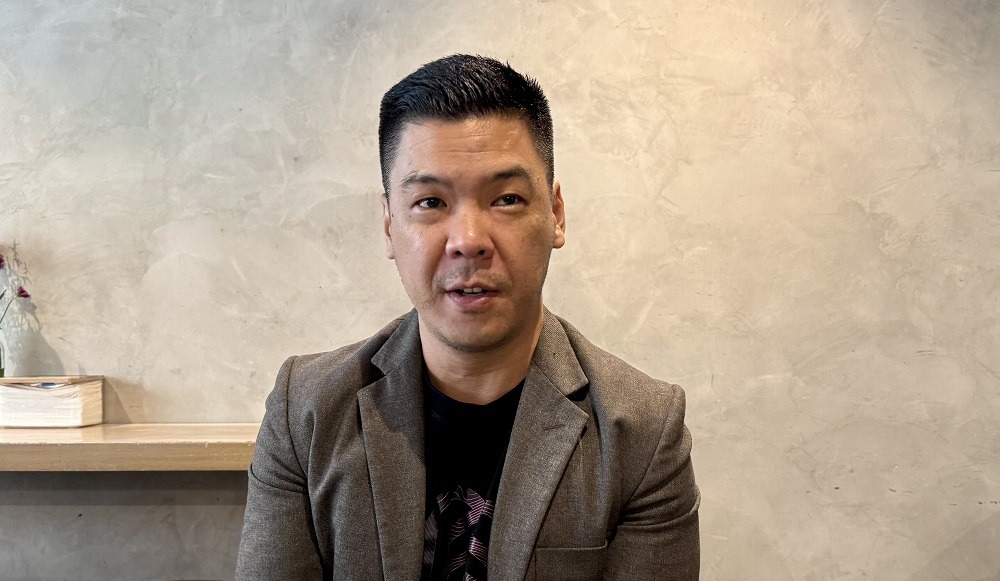
When Carlo Almendral moved back to the Philippines from Silicon Valley seven years ago, the decision puzzled many of his peers. Born in the Philippines but raised in the world’s tech capital, Almendral had the background, network, and opportunities to thrive in the United States. But for him, the real challenge — the one that mattered — was here at home.
“I grew up in a family of journalists and educators,” Almendral recalls. His uncle, Francisco “Dodong” Nemenzo, served as president of the University of the Philippines, while his mother once worked at ABS-CBN during its first shutdown, and his sister now writes for The New York Times and NBC in London.
“So, when I first showed them GPT-2, before ChatGPT even existed, they said, ‘It’s never going to be as good as a journalist.’ And I thought, well — it’s not about replacing people. It’s about showing what’s possible.”
That tension — between skepticism and possibility — sparked Almendral’s vision: to make artificial intelligence a tool not just for a privileged few, but for ordinary Filipinos who wanted to learn, work, and thrive in the digital future.
When Almendral first returned, he began small. He taught women data science for free under the Foundation for the Women’s Foundation, then hired the best graduates to train as AI engineers.
By 2019, he had launched a structured bootcamp on generative AI — the kind of AI that doesn’t just analyze data but creates new solutions, images, and applications.
The results were transformative. One student went from being unemployed to landing a US tech job that paid more than ₱200,000 a month.
“That’s when it clicked,” Almendral says. “If we can do this for one person, we can do it for thousands. And if they can work globally while staying in the Philippines, we solve two problems: brain drain and underemployment. That’s when AIFirst was born.”
The Launch of AIFirst Institute
This year, Almendral’s vision formally took shape with the launch of AIFirst Institute, the Philippines’ first comprehensive AI training provider with a groundbreaking dual mission: “Build AI careers. Fund a cause. Do both.”
At its core, AIFirst offers world-class AI education while committing to share 50% of its net revenue with local nonprofits and social impact partners. The idea is simple but radical — turn professional development into a sustainable engine for social good.
“We are thrilled to introduce a model that not only equips Filipinos with essential AI skills but also directly benefits the communities that need it most,” Almendral says. “This is more than just training — it’s a movement to build an AI-powered Philippines, one career and one cause at a time.”
The institute’s launch was made possible with the support of OpenAI, underscoring the global importance of AI education and responsible adoption.
The AIFirst curriculum, developed by a Filipino-led team of AI experts, is the most comprehensive in the country. It features 16 specialized programs for diverse fields:
- AI engineering bootcamp (10-week, portfolio-driven, now on its third cohort)
- AI for executives
- AI for business owners
- AI for HR professionals
- AI for marketing and creatives
- AI for college students and teachers
What makes AIFirst unique is its commitment to both technical and non-technical professionals.
“Not everyone needs to code,” Almendral stresses. “If you’re in marketing, design, or HR, AI can already make you a one-person wrecking crew. That’s value employers recognize anywhere in the world.”
A cornerstone of the institute’s offerings is the Mastery Assessment Intelligence Assistant (MAIA), Asia’s first conversational AI certifier. Instead of traditional exams, MAIA engages learners in dialogue — asking multiple-choice questions and requiring them to justify their answers.
This creates a five-level mastery framework, from Novice to Expert, with detailed competency breakdowns.
“The days of writing essays are over,” Almendral says. “Assessment has to be adaptive, interactive, and reflective of how people actually work with AI tools.”
Why the Philippines
Almendral believes the Philippines is uniquely positioned to lead in AI adoption. A 2023 global study showed Filipinos as the most interested in AI, more than twice as interested as Americans.
A Microsoft–LinkedIn survey also revealed that 86% of Filipino workers already use AI at work — even if only 27% of employers officially allow it.
Yet the challenges are real. The World Bank estimates that 36% of jobs in the Philippines will be affected by AI automation, with the BPO industry especially vulnerable.
“The competition isn’t Nigeria or India anymore,” Almendral warns. “It’s companies building their own AI to replace outsourced workers. That’s why reskilling is urgent.”
For decades, the Philippines’ economic model relied on exporting its people — nurses, engineers, call center agents. Almendral envisions a new model: exporting talent without leaving home.
“If we train Filipinos in AI, they can work for global companies while staying here,” he says. “That keeps families together, strengthens GDP, and reduces brain drain.”
It’s an ambitious dream, but one Almendral is betting on. “If we wait for a PhD in AI to come back to the Philippines, it could take 20 years,” he says. “We don’t have 20 years. The future is now.”