An archaeology project at Ateneo de Manila University is using robotics and machine learning to improve how excavations are conducted, shedding new light on early human activity in the Philippine archipelago.
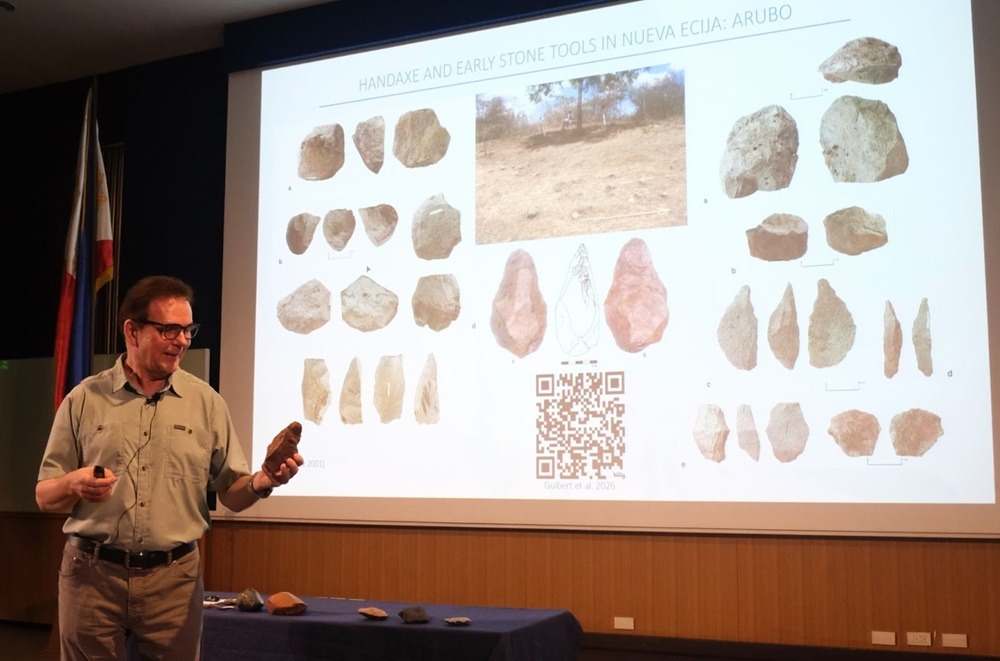
During a recent Ateneo Breakthroughs lecture, archaeologist Dr. Alfred Pawlik introduced “ArchaeoBot,” a system developed in collaboration with the Ateneo Laboratory for Intelligent Visual Environments (ALIVE).
The platform is designed to assist in archaeological digs by increasing precision, reducing human error, and identifying details that may otherwise be missed in manual excavation.
ArchaeoBot combines robotics, sensors, and machine learning to detect artifacts, burial sites, and other archaeological features. It is intended not only to excavate but also to help clean, record, and store finds, functioning as a multipurpose tool that supports — rather than replaces — human researchers.
Pawlik said the concept addresses long-standing challenges in fieldwork, particularly fatigue and inconsistencies across excavation teams. The system is also designed to adapt to varying site conditions and improve over time through learning.
Findings presented during the lecture point to early human presence in the Philippines dating back hundreds of thousands of years, with evidence of deliberate sea crossings across island chains such as Palawan and Mindoro around 40,000 years ago. These movements suggest advanced seafaring capabilities, as much of the archipelago was never connected to mainland Asia.
Archaeological evidence, including remains of large marine species and specialized tools, indicates that early inhabitants developed sophisticated fishing techniques and marine technologies. Researchers also noted the role of plant use and environmental adaptation in sustaining early communities.
The project highlights how modern technology is being used to reconstruct aspects of early human life that are not always preserved in the archaeological record.
“We owe the anthropologists and their scholarship that we get a better picture of generations and civilizations to which we would otherwise have no access,” said Dr. Maria Luz Vilches, vice president for higher education, during the event.