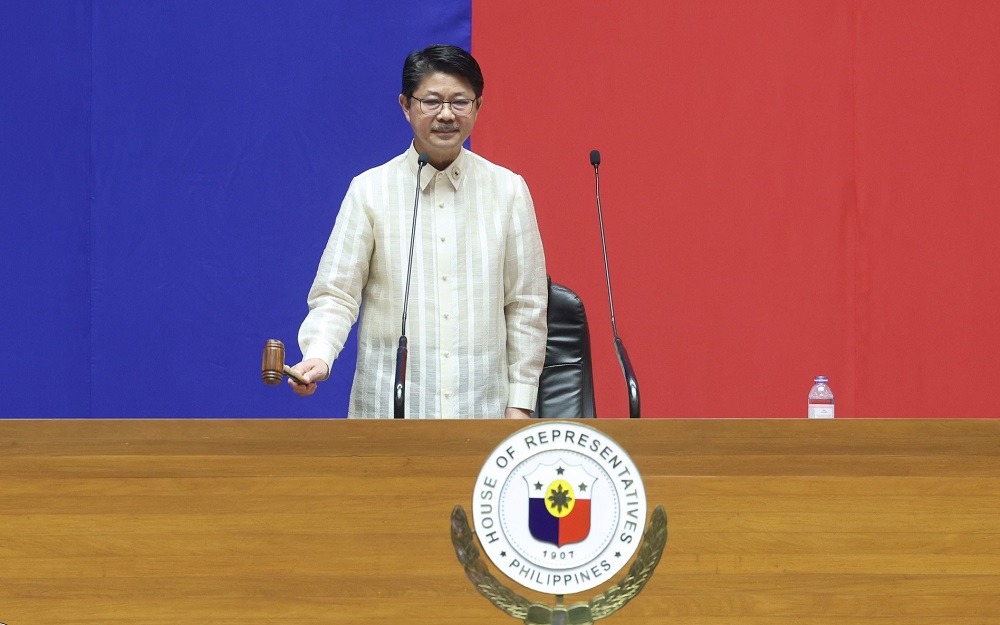
The House of Representatives approved on third and final reading on Wednesday, June 3, a measure seeking to penalize organized online disinformation campaigns, troll farm operations, and other forms of malicious false information while providing exemptions for protected speech and legitimate expression.
Voting 286-3 with seven abstentions, lawmakers passed House Bill No. 9465, or the proposed Digital Media Anti-False Information Act, a priority measure under the Legislative-Executive Development Advisory Council (LEDAC).
The bill was sponsored by Cagayan de Oro Rep. Lordan Suan, chair of the House Committee on Public Information.
According to the measure, individuals found guilty of knowingly and willfully spreading false information with the intent to cause verifiable public harm or threaten national security could face imprisonment ranging from six to 12 years and fines of P500,000 to P2 million.
The proposed law targets coordinated troll farms, bot networks, fake account syndicates, and foreign-backed influence operations that seek to manipulate public discourse. It also covers artificial intelligence-generated or manipulated images, videos, and audio released without disclosure and intended to mislead the public.
House Speaker Faustino “Bojie” Dy III said the bill was crafted in response to the growing prevalence of online disinformation.
“Disinformation has evolved into a powerful weapon capable of misleading communities, destroying reputations, disrupting democratic processes and threatening national security. Government cannot simply stand by while malicious actors exploit digital platforms to spread deliberate falsehoods and cause real harm,” Dy said.
Dy emphasized that the proposal does not criminalize criticism, political opposition, journalism, or unintentional errors.
“It does not punish criticism, dissent, political opposition, journalism or honest mistakes. What it targets are deliberate and coordinated efforts to deceive the public and inflict harm,” he said.
The bill expressly exempts political opinions, criticism of government and public officials, satire, journalism, whistleblowing, academic discourse, artistic expression, and religious expression from liability.
It also provides that merely liking, sharing, forwarding, or reposting content would not be punishable unless prosecutors can prove beyond reasonable doubt that a person knowingly and materially participated in prohibited disinformation activities.
In addition, the measure would require digital platforms operating in the Philippines to establish a legal presence in the country and comply with transparency, disclosure, and user protection requirements.
The bill also directs the Department of Education and the Commission on Higher Education to strengthen media and digital literacy programs, while requiring government agencies to improve access to public information and promptly correct inaccurate official statements.
The proposal, however, has drawn criticism from free expression advocates.
Human Rights Watch earlier warned that the bill’s provisions could be used to restrict legitimate speech because of what it described as vague and overly broad language. The group said the measure could give authorities sweeping powers to regulate online expression and called for its withdrawal.