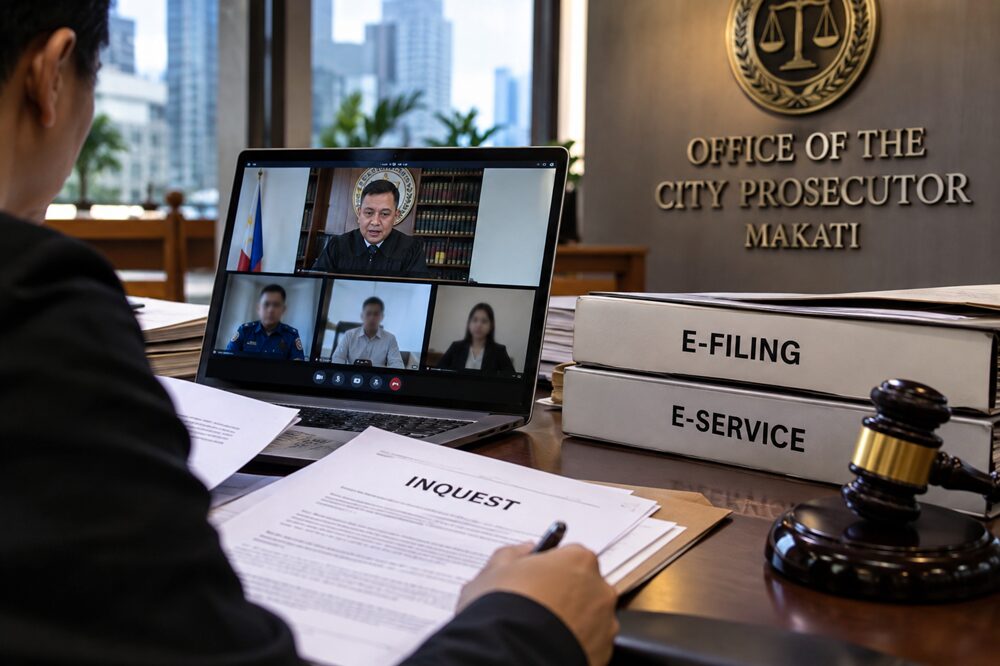
The Office of the City Prosecutor (OCP) of Makati is pushing further digitalization of prosecution services and a proposed diversion program for adult offenders as part of efforts to reduce case delays, detention, and congestion in the justice system.
Among the reforms already implemented by OCP Makati is electronic inquest, which allows proceedings involving arrested suspects to be conducted virtually.
The office, headed by chief city prosecutor Dindo G. Venturanza, proposed during the Justice Sector Coordinating Council National Decongestion Summit in 2023 that electronic inquest become a permanent option across prosecution offices.
The Department of Justice (DOJ) has since institutionalized procedures allowing the virtual conduct of inquest proceedings and preliminary investigations.
OCP Makati has also formed a Digital Transformation Team and piloted email registration, electronic filing, and electronic service of subpoenas and resolutions.
The measures are intended to reduce the need for physical transactions at prosecution offices, shorten waiting times, and cut transportation and administrative costs for complainants, respondents, lawyers, and law-enforcement agencies.
Another reform is the establishment of a Heinous Crimes Division and the adoption of “vertical prosecution,” under which the prosecutor involved during case build-up continues handling the case when it reaches court.
The system is intended to avoid treating investigation, preliminary investigation, and trial as separate stages handled by different prosecutors. Keeping the same prosecutor involved allows greater familiarity with the evidence and legal issues throughout the case.
OCP Makati has also proposed a pre-indictment diversion system for adult offenders that would allow prosecutors, under specified criteria and safeguards, to divert appropriate cases away from conventional prosecution and incarceration.
Under the proposal, eligible offenders could instead undergo institutional or community-based interventions. The framework could initially be established through a DOJ circular before eventually being provided for through legislation.
The proposal is intended for cases in which accountability and public safety can be addressed without requiring a full criminal trial and imprisonment.
By intervening before indictment, OCP Makati said the system could reduce unnecessary criminal cases and detention, ease congestion in courts and detention facilities, and allow prosecutors and judges to devote more resources to serious and complex cases.
The DOJ Office of Cybercrime (DOJ-OOC), meanwhile, is focusing on access to justice involving cybercrime and digital evidence as more criminal activity moves online.
Its work includes cybercrime awareness and prevention programs, training prosecutors and investigators, providing prosecutorial guidance during case build-up, coordinating with other government agencies, and supporting cases involving cybercrime and electronic evidence.
The two offices said technology and changes in prosecution procedures could address barriers encountered by people dealing with the justice system.
“Ultimately, these efforts contribute to a prosecution and justice system that is more accessible, timely, coordinated, responsive, and capable of adapting to emerging realities, while advancing the broader goal of ensuring that people can obtain meaningful and effective justice,” they said.