
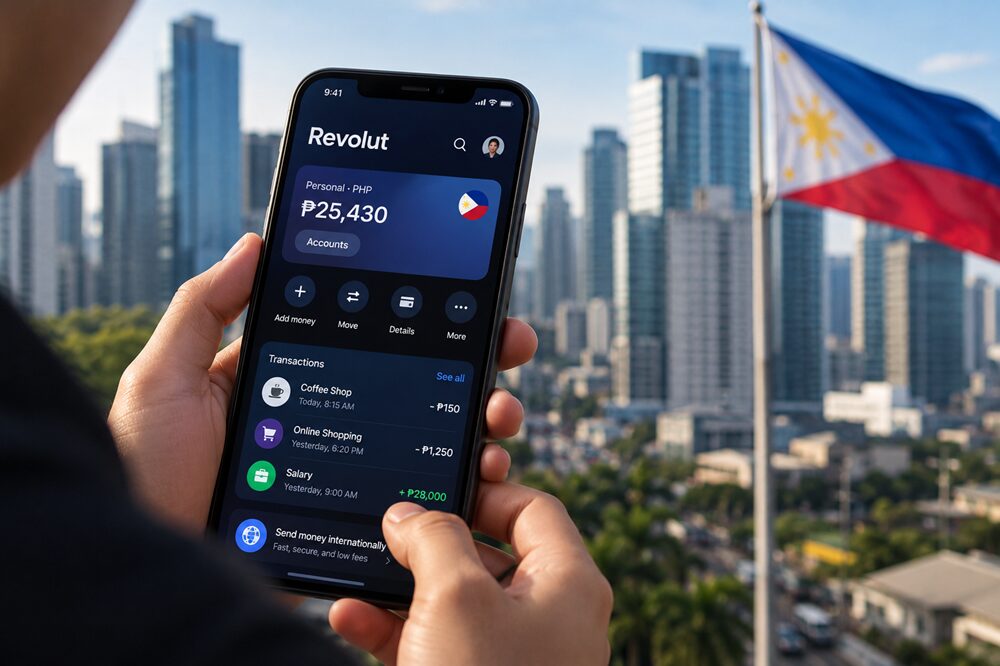
Global fintech company Revolut is exploring plans to establish a wholly owned Philippine entity as it looks to offer digital banking and electronic money issuer (EMI) services in the country.
Department of Trade and Industry (DTI) secretary Cristina Roque met with Revolut global head of government affairs Adam Gagen at the company’s headquarters in London on Oct. 2 to discuss its Philippine expansion plans. The talks covered the company’s market-entry strategy and its Global Technology Hub in Manila.
Revolut is evaluating regulatory and corporate structures that would allow it to secure digital banking and EMI licenses from the Bangko Sentral ng Pilipinas (BSP), according to the DTI.
The DTI said it offered to facilitate discussions between Revolut and relevant government agencies as the company explores the regulatory requirements for its proposed investment.
“The Philippines welcomes Revolut’s continued interest in our market. Your Global Technology Hub in Manila is a strong vote of confidence in Filipino talent, and we see even greater opportunities for collaboration in digital banking, cross-border payments, and financial inclusion,” Roque said.
“We want more Filipino entrepreneurs and consumers to benefit from secure, affordable, and innovative financial services. Companies like Revolut can help make that happen, especially as we continue to build a more digital, inclusive, and globally connected Philippine economy,” she added.
Revolut opened its Manila technology hub in July 2025 to support its operations in the UK, Europe, Asia-Pacific, and the Americas. The facility is expected to employ hundreds of workers in software engineering, data analytics, customer operations, and financial crime compliance.
The company has more than 68 million retail customers and over 760,000 business customers across 40 markets, according to the DTI. It was valued at $115 billion in July 2026.
“We want the Philippines to be a place where innovative companies can scale, create jobs, and help solve real problems for our people. For DTI, the goal is clear: make digital finance work for Filipino businesses, so they can trade, receive payments, and reach global customers with greater ease,” Roque said.


